
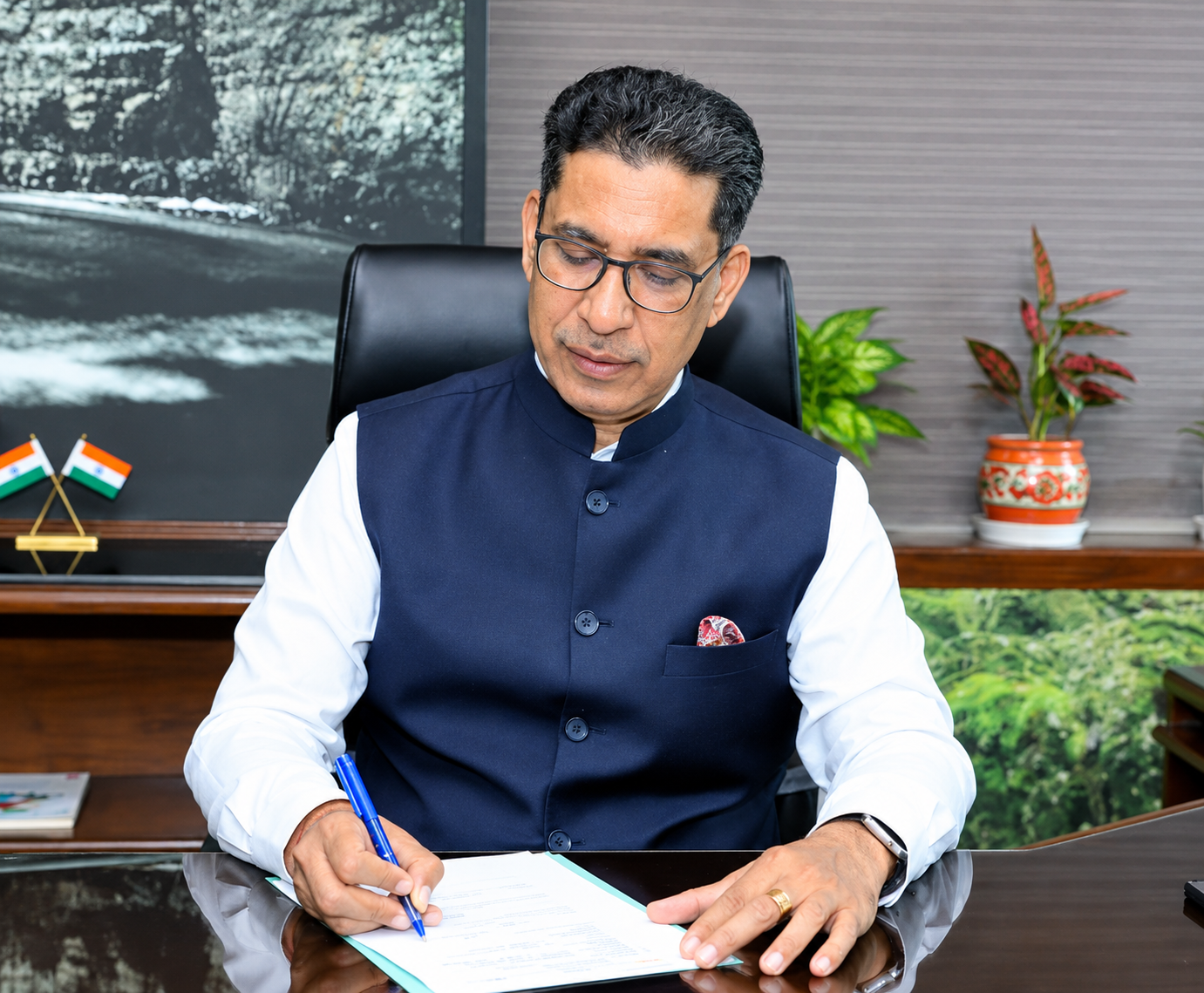
Narendra Bhooshan, a 1992-batch IAS officer from the Uttar Pradesh cadre, has officially taken charge as the new Secretary of the Ministry of Environment, Forest and Climate Change. He stepped into the role on October 1, right after Tanmay Kumar from the Rajasthan cadre retired on September 30.
Bhooshan isn’t some new face who’s just been handed a big portfolio. The man has put in over three decades in the service, bouncing between state and central postings, and he’s seen a lot of different departments. Before this, he was Secretary in the Department of Land Resources under the Ministry of Rural Development. He’d only been there since April this year, so the move came relatively quick, but that’s how these things work sometimes. The Appointments Committee of the Cabinet cleared his name, and Dilip Kumar from the Punjab cadre has moved in to take over Land Resources.
What’s interesting about Bhooshan is the range of work he’s done. In Uttar Pradesh, he was Additional Chief Secretary looking after Energy and Additional Energy Sources, and also Technical Education. Before that he handled Principal Secretary roles in Public Works, Infrastructure and Industrial Development, IT and Electronics, Science and Technology, and Panchayati Raj. He was even CEO of the Greater Noida Authority for a stretch. That’s a mix of heavy infrastructure, power sector stuff, and urban planning. Out in the districts he was District Magistrate in places like Mathura, Firozabad and Udham Singh Nagar, so he’s had the ground-level experience that a lot of senior officers talk about but not everyone actually carries.
At the Centre earlier, he worked as Deputy Director General in UIDAI, Mission Director for National Food Security Management, and Joint Secretary in the Agriculture department. There was also a stint as Officer on Special Duty at the India Trade Promotion Organisation. So energy, land, food security, agriculture, urban development – it’s all in his bag. He did his engineering in electronics and later picked up a Master’s in International Development Policy from Duke University in the US. People who’ve worked with him say he has that practical bent, the kind that comes from handling both policy files and district headaches.
Now the Environment Ministry is a different kind of beast. It’s not just about forests and pollution clearances. Climate change negotiations, wildlife protection, Project Cheetah type programmes, coastal regulation, environmental impact assessments for big projects – it all sits here. The ministry has to walk that tightrope between development pressures and conservation needs. With India still pushing infrastructure and manufacturing while also talking about net-zero goals, the person sitting in that Secretary chair ends up dealing with a lot of competing interests.
Bhooshan’s background in energy and land resources could actually be useful here. Land issues and environment are tightly linked – watershed work, climate-resilient farming, digital land records, all of that overlaps with what the Environment Ministry looks at. His time in the power sector, especially the renewable side in Uttar Pradesh, might help when the ministry has to balance green energy push with forest clearances and environmental safeguards. Of course, every new Secretary brings their own style, and the real test is always in the decisions that come out over the next few months.
The official statement from the ministry kept it straightforward – over three decades of experience across energy, infrastructure, industry, agriculture, urban development, finance and land-resource management. No big drama, just a routine succession after retirement. Still, these appointments matter because the Environment Secretary plays a quiet but important role in shaping how India presents itself in climate talks and how domestic regulations get implemented on the ground.
Folks in bureaucratic circles have been noting that Bhooshan has moved through a lot of different portfolios without getting stuck in one silo. That kind of varied experience is becoming rarer these days when officers sometimes spend long stretches in the same sector. Whether that helps in a ministry as specialised as Environment is something we’ll see. For now, he’s taken charge, the files have started moving under the new signature, and the usual work of clearances, policy notes and inter-ministerial meetings continues.
It’s one of those quiet transitions that doesn’t make big headlines but still affects how a whole set of critical issues get handled. From district collector to environment secretary – that’s a long road, and Bhooshan has walked most of it.
Sources:
Press Information Bureau (PIB) release dated 1 October 2026
Appointments Committee of the Cabinet order via Department of Personnel and Training
Reports from Economic Times, UNI, and official ministry statements
Publisher By – Rohit Manral
Written By – Anjali Pandey