
Why T.V. Somanathan got another year as Cabinet Secretary
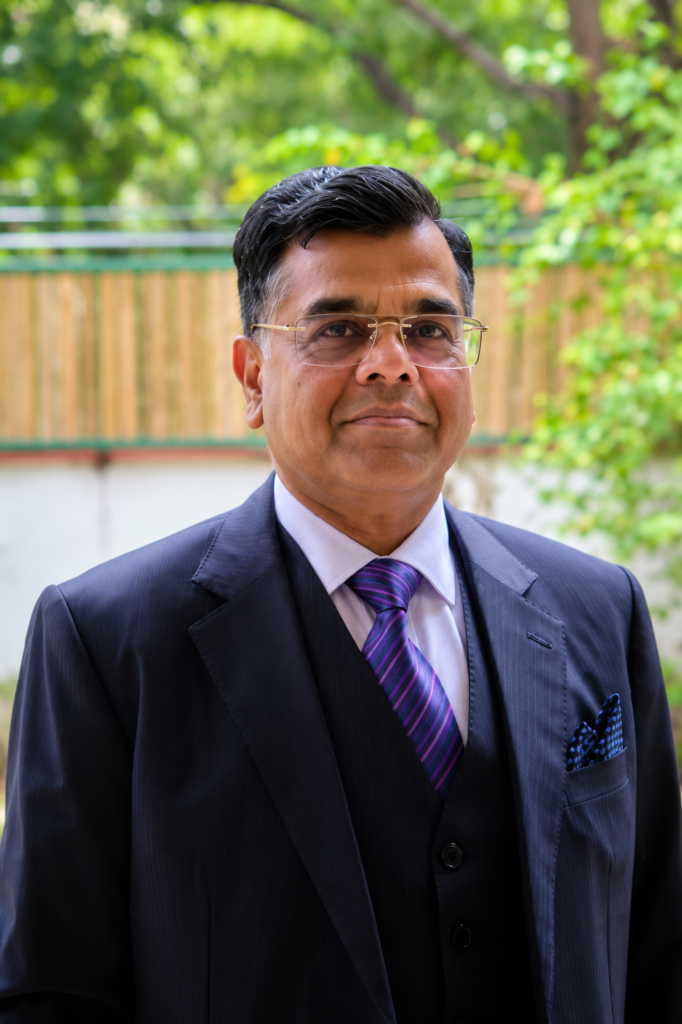
In the tightly managed world of India’s top bureaucracy, extensions at the very highest level are never casual. They say a lot about trust, the need for continuity, and a clear choice by the political leadership. On 5 August 2026, the Appointments Committee of the Cabinet, headed by Prime Minister Narendra Modi, gave Cabinet Secretary Dr T.V. Somanathan a one-year extension beyond 30 August 2026. The 1987-batch Tamil Nadu cadre IAS officer, who took charge on 30 August 2024 for an initial two-year term, will now stay on as the country’s senior-most civil servant until at least August 2027. The official order from the Department of Personnel and Training was short and formal, as these things usually are. But the decision itself carries weight. Cabinet Secretaries often get extensions when the government wants stability at the top of the administrative system, and Somanathan’s case stands out because of the quiet competence and specialized skills he has brought to the job. He did not arrive at the Cabinet Secretariat as an unknown. Before this role he had already been Finance Secretary and Secretary (Expenditure), helping shape India’s fiscal response during and after the pandemic. His clear preference for capital expenditure as a growth driver, rather than pure consumption spending, matched the government’s economic approach closely. That experience of handling tough fiscal choices under pressure made him a natural fit for the coordination work that comes with being Cabinet Secretary. People who know him often describe him as more of an economist than a typical generalist. He holds a Ph.D. in Economics from Calcutta University, is a Chartered Accountant, Cost Accountant and Company Secretary, and completed an Executive Development Program at Harvard Business School. That mix of technical depth is unusual in a post that traditionally values broad administrative experience, and it has proved useful at a time when government decisions increasingly involve complex economic, regulatory and infrastructure questions. His earlier work helps explain the confidence in him. As the founding Managing Director of Chennai Metro Rail Corporation, he secured financial closure and awarded the first contracts for a ₹14,600-crore project. At the World Bank, first as a Young Professional and later as Director, he gained international exposure to public finance and institutional management. Time in the Prime Minister’s Office between 2015 and 2017, followed by key finance roles, built a reputation for careful preparation and low-profile effectiveness—qualities that matter when the Cabinet Secretary has to align many ministries without seeking the spotlight. Extensions like this are given when the government wants institutional memory and steady hands. Somanathan’s two years as Cabinet Secretary coincided with continuing efforts to improve administrative efficiency and coordination between ministries. In late July 2026 he wrote to chief secretaries and training institutes across the country, urging officers to break free from routine and avoid turning long service into “one year’s experience repeated 30 times.” He said the Cabinet Secretariat, working with the National Centre for Good Governance, would issue practical guides on everyday administrative practices. It showed a hands-on approach to changing work culture from the top—an agenda the Centre clearly wants to keep going. More broadly, India is still managing several overlapping priorities: keeping growth high, speeding up infrastructure, dealing with global economic uncertainty, and refining regulatory frameworks. The Cabinet Secretary sits at the center of these efforts, chairing key committees, keeping policy coherent, and turning political direction into administrative action. Keeping someone with deep finance experience and proven coordination skills reduces friction at a time when continuity matters. The parallel one-year extension given to Home Secretary Govind Mohan points in the same direction. Together, the two decisions suggest a preference for experienced leadership in the most sensitive coordination roles rather than a complete change at the top. Somanathan’s rise has been marked by steady accumulation of trust rather than sudden jumps. From winning the gold medal as the best probationer of the 1987 batch, through state-level roles including Secretary to the Chief Minister of Tamil Nadu and Commissioner of Commercial Taxes during the GST rollout, to central postings in the PMO and Finance Ministry, he has consistently delivered in technically demanding jobs. Those who have worked with him note his preference for substance over visibility and his ability to turn complex economic ideas into workable policy. In the Indian system the Cabinet Secretary is both the administrative head of the civil service and the main link between the political executive and the permanent bureaucracy. Success depends less on public profile and more on quiet effectiveness, institutional knowledge, and the confidence of the leadership. Somanathan’s extension shows he has met that test. The decision also reflects a practical understanding that major administrative reforms need time to take root. Changing the senior-most civil servant midway through initiatives on efficiency, capacity-building and inter-ministerial coordination risks slowing things down. By granting the extension through relaxation of the relevant service rules, the government has chosen continuity over disruption. As Somanathan begins his extended term, the expectations remain high but familiar. He is expected to keep pushing for greater professionalism in routine administration, maintain fiscal and policy coherence across ministries, and support the government’s broader developmental agenda. His background leaves him well placed to handle the economic and institutional sides of governance that increasingly define modern administration. In the end, the extension is less about personal favour and more about institutional judgement. India’s administrative system values officers who combine domain expertise with the ability to make the machinery work. T.V. Somanathan has shown both. By keeping him for another year, the Centre has signalled that, at this moment, experience, specialised knowledge and proven coordination skills at the apex of the bureaucracy matter more than the case for change. The Civic Code wishes Dr T.V. Somanathan the very best. @Rohit Manral
Twenty Years, Twenty-Four Transfers: The Story of IAS Officer Tukaram Mundhe
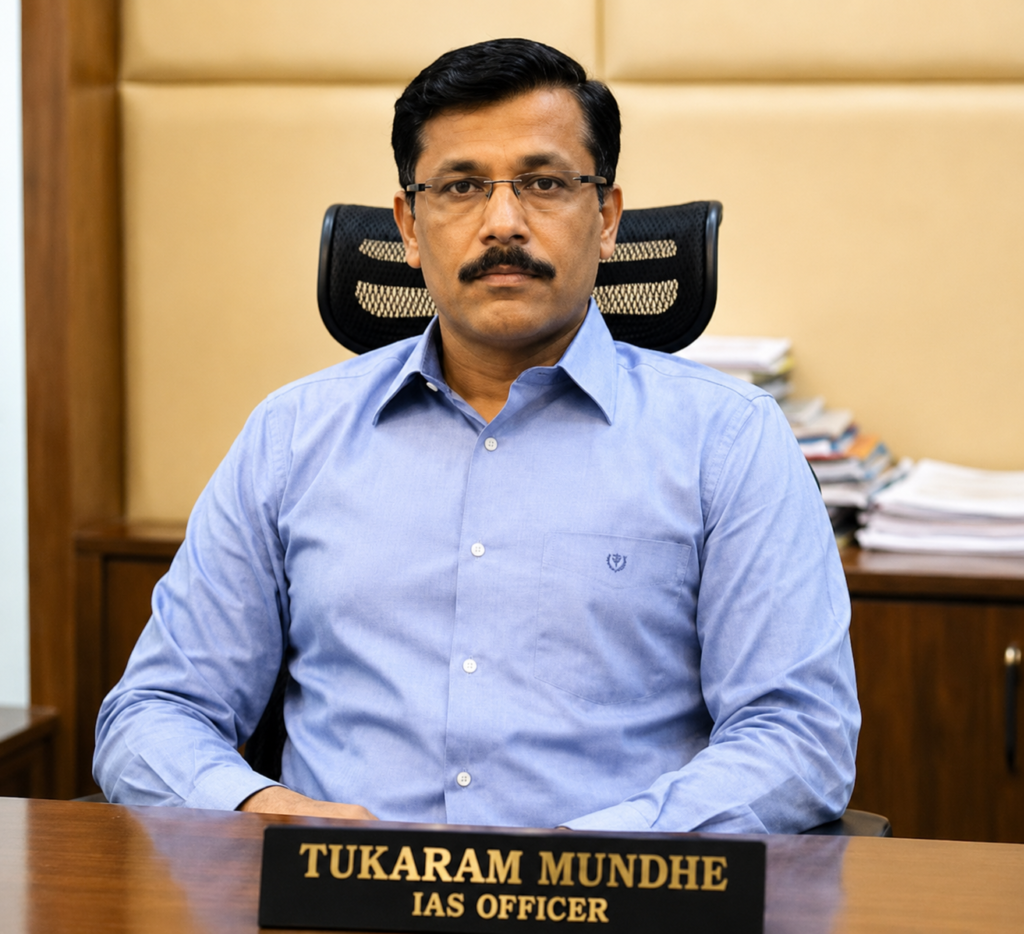
The officer who keeps getting moved: inside Tukaram Mundhe’s 20-year run against the system. Ask anyone in Maharashtra’s bureaucracy about Tukaram Mundhe, and you’ll get an opinion fast. The 2005-batch IAS officer has picked up a nickname — “Singham,” after the no-nonsense movie cop — and it’s stuck for a reason. What sets him apart isn’t just that he cracks down on illegal construction or sand mining wherever he lands. It’s how often he lands somewhere new. Depending on who’s counting, he’s been transferred somewhere north of 20 times, maybe close to 25, in a career spanning roughly two decades. To a lot of ordinary people, that record reads as proof of an officer who won’t be pushed around. To plenty of politicians, it reads as a man who doesn’t know how to bend, even a little. He didn’t start out anywhere near power. Mundhe was born on June 3, 1975, in Tadsonna, a small village in Beed district, part of Marathwada — a region that’s no stranger to drought and agrarian hardship. His family farmed, and like a lot of farming families in that belt, debt was a constant companion. As a kid, he split his time between schoolwork at the local Zilla Parishad school and helping out in the fields. Later he made his way to Aurangabad for college, earning a bachelor’s degree that combined history, political science, and sociology, then a master’s in political science from Dr. Babasaheb Ambedkar Marathwada University. An older brother already in government service seems to have nudged him toward the idea of civil service himself. He got through the Maharashtra Public Service Commission exam first, worked for a while as a Class II officer, and kept at it — eventually landing All India Rank 20 in the UPSC Civil Services Examination. That’s what got him into the IAS, Maharashtra cadre, in 2005. His very first posting, as supernumerary assistant collector in Solapur, already hinted at what was coming: he went after illegal establishments almost immediately. That instinct followed him everywhere. He ran the zilla parishads in Nagpur and Washim as CEO, served as additional tribal commissioner in Nashik, and became collector of Jalna. From 2012 to 2014 he was joint commissioner of sales tax in Mumbai, a stretch where tax recovery numbers jumped noticeably. Then, in November 2014, he went back to Solapur — this time as district collector — and threw himself into water conservation work under the Jalyukt Shivar scheme, took on the sand mafia, and helped wean several villages off water tankers. The state gave him a best-collector award for 2015–16 for that work. From there it was Navi Mumbai as municipal commissioner, then chairman and managing director of Pune’s transport corporation (PMPML), then municipal commissioner of Nashik. Same themes everywhere: tighten the finances, enforce the building codes, run a cleaner shop. “He rarely stayed anywhere longer than a year, sometimes eighteen months at most.” But it’s the transfers themselves that really define the story. He rarely stayed anywhere longer than a year, sometimes eighteen months at most. Early on it was Solapur, then Degloor subdivision in Nanded, then Nagpur’s zilla parishad, a short stint in the tribal department, Washim, Jalna. After the sales tax posting and his second run in Solapur, things moved even faster — Navi Mumbai, Pune transport, Nashik, then a string of state-level jobs in planning and AIDS control. By January 2020 he was municipal commissioner of Nagpur, and that turned out to be one of his rockiest postings yet. Corporators from across the political spectrum pushed back hard on how he handled the civic budget, development spending, and his COVID-19 response, which some called too centralized for their taste. He himself caught COVID that year, and while still recovering, got transferred out — this time to the Maharashtra Jeevan Pradhikaran, in August 2020. After that came a scattering of roles: the state human rights commission, commissioner of health services, director of the National Health Mission, and a run of secretary-level postings covering animal husbandry, language policy, unorganised labour, and disability welfare. By mid-2026, he’d taken charge of Maharashtra’s Food and Drug Administration, where his enforcement drives against unhygienic food outlets and adulteration were, once again, making headlines. How people react to all this depends a lot on where they’re standing. When he left Nashik, residents actually turned out to protest the transfer — they didn’t want him gone. In Solapur and elsewhere, locals point to real, visible improvements in water access and a drop in illegal extraction as reasons to credit him. Politicians tend to see it differently, often describing him as someone who won’t meet elected officials halfway. There have been accusations of heavy-handedness and overreach along the way too, even if the government has sometimes stood behind his record. And the transfers themselves have become part of how people talk about him — supporters treat each one as evidence he can’t be intimidated, while critics say a style that rigid was always going to create friction sooner or later. “Supporters treat each transfer as evidence he can’t be intimidated — critics say a style that rigid was always going to create friction.” What does his actual governing look like? Strict enforcement, an emphasis on transparency, and a habit of engaging directly with the public — things like randomised distribution systems designed to cut out middlemen, anti-encroachment drives, and initiatives like “Walk with the Commissioner,” meant to make him more reachable. In Nagpur, during COVID, he oversaw containment work and pointed to health outcomes that he said were better than average for the period — though that same stretch also sharpened his political conflicts. His supporters treat all of it as evidence of integrity. Critics counter that being this uncompromising about rules can slow things down and make it harder to keep colleagues and politicians on side — cooperation you often need if reforms are going to stick. It’s not surprising that young civil service aspirants bring him up as an example