
The Education Ministry Gets A New Boss Yet Again
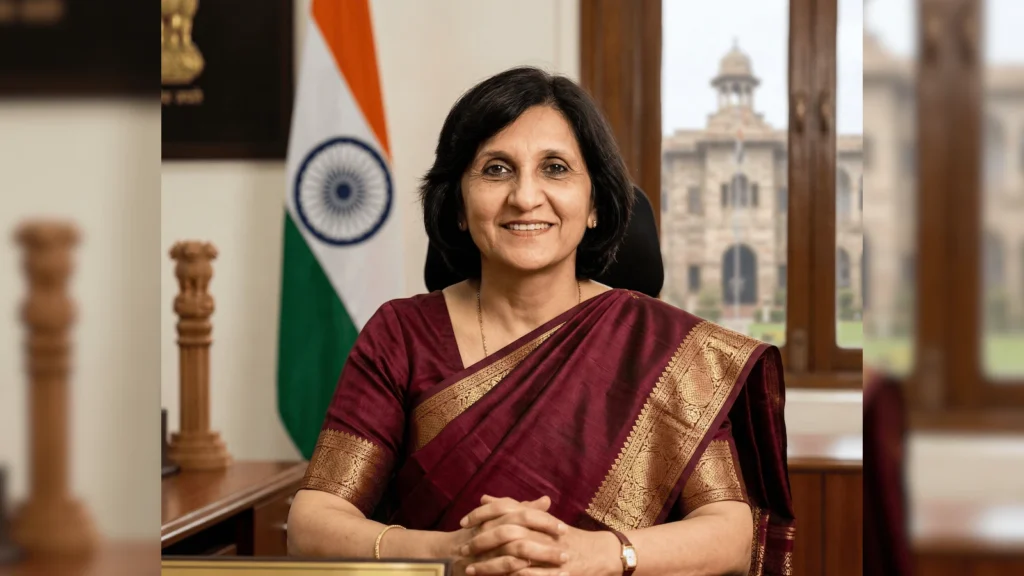
Only three weeks into the post, the government has decided to appoint a new leader for India’s higher education system. Late Monday night, the central government announced that Deepti Gaur Mukerjee, a senior IAS officer, will be the new Higher Education Secretary – making her the third education secretary this year. The post of the Higher Education Secretary has been approved by the Appointments Committee of the Cabinet (ACC). Late Monday, August 10, the Union government announced the appointment. Deepti Gaur Mukerjee, an IAS officer, has been chosen as the new Higher Education Secretary. The post was vacant since last month as the previous incumbent, Vineet Joshi, was transferred to the Mo Panchayati Raj ministry last month. Meanwhile, the appointment of Mukerjee comes against the backdrop of the government’s ongoing reshuffling of senior bureaucrats. Who is Deepti Gaur Mukerjee? Deepti Gaur Mukerjee has more than three decades of experience and has been posted in various ministries at the central and state levels. A 1993 batch IAS officer from the Madhya Pradesh cadre, Deepti has worked in various capacities in the administration, including health, and corporate affairs, and has experience in public policy and administration. She has served as the Secretary in the Ministry of Corporate Affairs and has also been the CEO of the National Health Authority (NHA), making her familiar with the inner workings of large government organizations. She has studied at prestigious institutions like JNU and London School of Economics and Political Science according to her profile. Why the big deal about the new Higher Education Secretary? This recent appointment of Mukerjee is significant because of the transition from the corporate affairs ministry to the education ministry. The higher education department has a vast portfolio ranging from the administration and accreditation of the universities to a number of national-level scholarship programs and other initiatives. As the Education Secretary, she will work closely with the ministry on higher education-related issues. Meanwhile, her work will also involve coordinating with the various universities, as well as higher-education bodies, to ensure that the administration’s policies are implemented correctly. This makes her not only the most powerful education bureaucrat but also a critical link in the implementation chain. What else do we know about this appointment? This is not the first time that the new education secretary has been discussed. In fact, the government initially appointed Naresh Pal Gangwar, a senior IAS officer from Rajasthan, to the post. However, his appointment has since been withdrawn, with the Personnel Ministry issuing a fresh order for the post. The committee approved the ACC’s proposal for the post of the Education Secretary. So, why all this drama about the higher education secretary? The Centre’s ongoing tussle over the IAS appointments has kept the bureaucratic world guessing. Why is the post of the Higher Education Secretary even important? The post is important as it is the nodal secretary for the administrative needs of the department, besides handling numerous higher education-related issues, including policy, administration, and coordination with universities and other stakeholders. Given the number of issues higher education faces and the large number of students, it is one of the biggest challenges that the administration has to deal with. It will not be an exaggeration to say that the policies and guidelines of the higher education department affect almost every aspect of the academic lives of students, researchers, and teachers across the country. Therefore, the education secretary has to have a thorough understanding of the problems facing the nation’s higher education system, as well as how to effectively implement the government’s policies. Deepti Gaur Mukerjee’s diverse experience could be a plus in this position One of the most crucial aspects of Deepti’s new role is her experience and exposure to different sectors. Having worked in the corporate affairs ministry, she would be well-versed in the legal intricacies and management practices that would be required to handle numerous issues related to higher education. Moreover, given her prior experience as a CEO of the NHA, she would also have an additional edge in dealing with large government organizations and managing public health and administration issues. Deepti has also worked in the state government, given her tenure as a state-level officer at Madhya Pradesh. That could help her in understanding the problems that arise at the state level in relation to higher education. It will be interesting to see how she handles some of the most pressing problems facing the education sector. Mukerjee takes over the education ministry’s higher-education department at a critical juncture when the issues related to university exams, student admissions, and the overall expansion of higher education are dominating the public discourse. Moreover, there is growing concern about the examination system and the administration of the competitive exams, with several recent issues in this space. It remains to be seen what changes, if any, the new education secretary has in store for the country’s higher education system. However, with her vast experience in managing government affairs, it is safe to assume that she would be able to address the concerns of the education sector, as well as the students and teachers, in due course. As an IAS officer, Mukerjee has had a roller coaster ride, with postings in various ministries at the state and central levels. The latest assignment as the Education Secretary is only the latest chapter in her illustrious career. Meanwhile, the government’s recent appointment of her also marks another phase of restructuring at the higher levels of bureaucracy. With her vast administrative experience, she is well-positioned to take on this new challenge in the education sector. And her stint as the Education Secretary will be keenly awaited by the education sector as well as the larger bureaucracy. @Rohit Manral
Not an IAS Officer, Yet Trusted at Home Affairs: Rajesh Gupta’s Extension
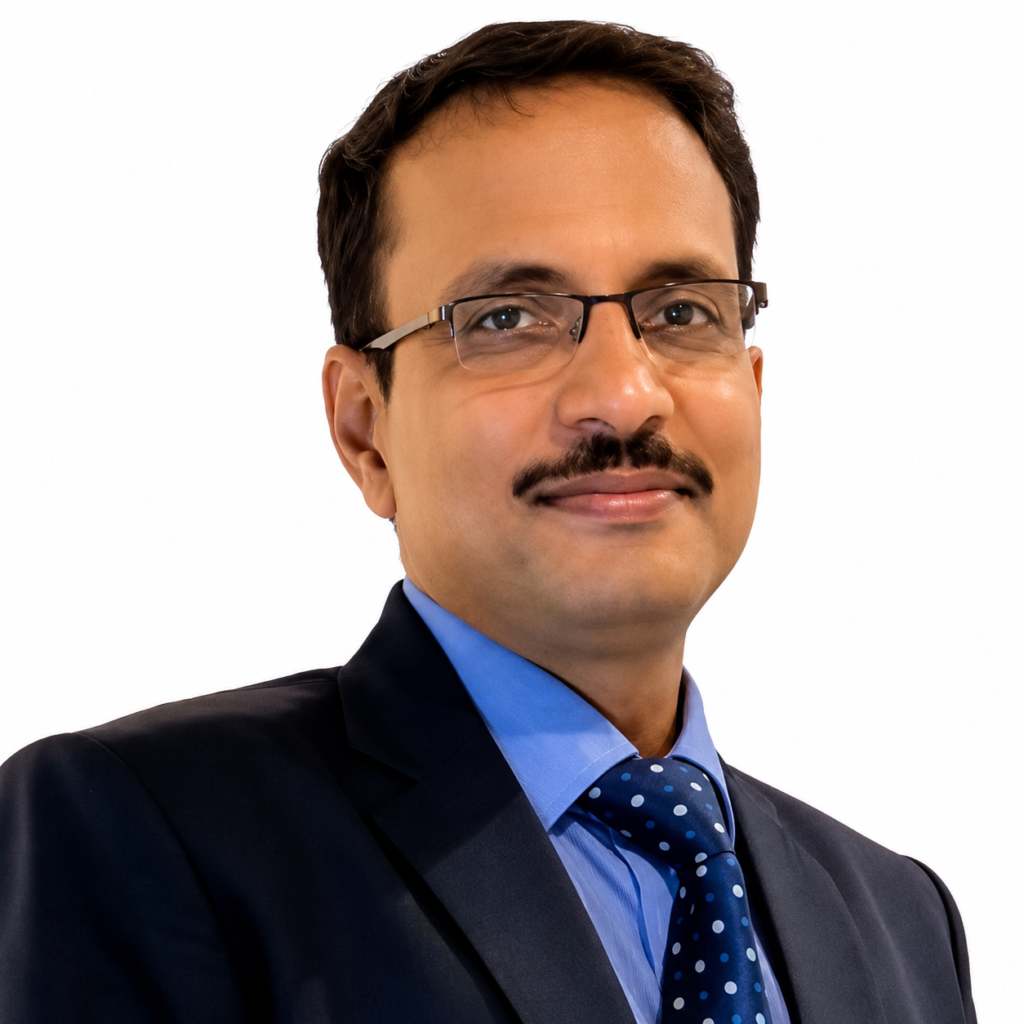
You may have seen a small news item about a government officer getting a “tenure extension.” It sounds boring. But it actually tells us something interesting about how India’s government works. This story is about Rajesh Gupta, who just got two more years in one of the most powerful ministries in the country — The Ministry of Home Affairs. What happened? The Appointments Committee of the Cabinet, or ACC, is the top body that decides who works where in senior government jobs. Think of it as the final approval office for the country’s biggest administrative posts. The ACC has now approved two more years for Rajesh Gupta, who works as Joint Secretary in the Ministry of Home Affairs. The order came from the Department of Personnel and Training on February 17, 2026. In simple words, Gupta’s term was supposed to end on April 15, 2026. Now, instead of leaving, he will stay in the same job until 2028, or until a new order changes this. Who is Rajesh Gupta? Here’s the interesting part. Most people think officers in top ministries like Home Affairs come from the IAS, the Indian Administrative Service. But Gupta’s path is different. He belongs to the Indian Railway Service of Electrical Engineers, from the 2001 batch. He started his career working with electrical systems on the railways, not with government policy. Over time, officers like him often move into bigger administrative roles. This happens through something called central deputation. It simply means one department “borrows” an officer from another department for some time. Gupta’s move from railway engineering to top-level government work is a good example of this. How he reached the Home Ministry Before joining the Home Ministry, Gupta was Director at NITI Aayog. This is the government’s top think tank, which plans India’s development strategy. He joined that post in April 2022, for a term that was meant to last five years. But in October 2024, things changed. Gupta moved from NITI Aayog to the Ministry of Home Affairs to become Joint Secretary. This too was meant to be a five-year post, ending on April 15, 2026. He took over this role from an officer named Sumant Singh. Now, with the new order, his time in this post has been extended. He will likely stay until sometime after April 2028, unless the government decides otherwise. Why does the “Joint Secretary” post matter? “Joint Secretary” may sound like just another office title. But inside India’s government, it is actually one of the most important ranks an officer can hold. Ministers and top secretaries make the big decisions. But it is Joint Secretaries who turn those decisions into real action. They coordinate between departments, talk to other ministries, and make sure files and plans actually move forward. In a ministry like Home Affairs, which handles internal security, policing, disaster management, and law and order for the whole country, this job carries even more responsibility. So when an officer gets extended in this kind of role, instead of being moved elsewhere, it usually means the government trusts their experience and wants them to continue their work. Interestingly, Gupta was not the only officer who got good news. The same order also extended the term of another officer, Nirmod Kumar, from the Ministry of Electronics and Information Technology. His term has now been extended until February 2028. Two different officers, two different ministries, but both extensions were approved together. This is quite common when the ACC clears several pending decisions at once. The bigger picture At first, a “two-year extension” might sound like simple paperwork. But these decisions actually show how the government keeps stability in its most important departments. Instead of replacing an officer in the middle of important work, the government often prefers to keep someone who already understands the job well. For Rajesh Gupta, this means two more years of important work inside one of India’s most powerful ministries — a clear sign of the trust placed in him. @Rohit Manral
Haryana Shuffles the Deck: 17 IAS Officers Handed New Postings
Chandigarh, August 8, 2026 — The Haryana government set off a fresh round of bureaucratic musical chairs on Friday, transferring 17 IAS officers and a batch of Haryana Civil Service officials in one sweep. The orders, signed off by Chief Secretary Anurag Rastogi, touch some of the state’s most sensitive departments — finance, medical education, transport, public relations, human resources, and the municipal corporations of Gurugram and Faridabad. It’s the kind of reshuffle that happens periodically in Indian states, as governments look to match officers to priorities, refresh leadership in high-pressure postings, or simply keep the administrative machine running smoothly. This time, though, one move in particular caught people’s attention for how quickly it was undone. A 24-hour reversal Pradeep Dahiya, a 2013-batch IAS officer, had barely settled into his desk as Deputy Commissioner of Rohtak — he’d been posted there just a day before — when the government reversed itself and pulled him back to Gurugram, this time as Commissioner of the Municipal Corporation and District Municipal Commissioner. It’s a vivid reminder of how quickly plans can change inside the state secretariat. The senior ranks At the top of the list, G Anupama, from the 1991 batch, picked up an additional charge as Additional Chief Secretary of Youth Empowerment and Entrepreneurship — on top of the portfolios she already runs: Social Justice, Empowerment, and Welfare of Scheduled Castes, Backward Classes and Antyodaya, plus Civil Aviation. C G Rajini Kaanthan steps in as Commissioner and Secretary of Finance, while also taking on the Central Committee of Examinations and the Medical Education and Research Department. K M Pandurang, from the 2007 batch, moves into Information, Public Relations, Languages and Culture, along with Mines and Geology, while continuing to lead the Panchkula Metropolitan Development Authority. Also from the 2007 batch, Dusmanta Kumar Behera — who had been working in revenue — takes charge of Human Resources and General Administration. Rajiv Rattan (2008 batch) becomes Secretary for Personnel, Training and Parliamentary Affairs, doubling up as an Inquiry Officer for Vigilance and Director General of Supplies and Disposals — stepping into roles vacated by Pankaj, who himself moves to head the Haryana Public Service Commission and the Haryana Power Generation Corporation. Prabhjot Singh takes over as Transport Commissioner while continuing to oversee the Environment, Forests and Wildlife Department. Out in the field Hema Sharma, a 2010-batch officer with a background in revenue and disaster management, has been posted as Commissioner of the Karnal Division. Dr Aditya Dahiya walks away with a particularly stacked portfolio — Information and Public Relations, Art and Cultural Affairs, Haryana Vidyut Prasaran Nigam, and the Department of Future, among other charges. In Faridabad, Yashendra Singh steps in as Municipal Commissioner and head of Faridabad Smart City, taking over from Dhirendra Khadgata, who moves to Medical Education and Research and State Transport. Further down the list, Sachin Gupta, Deputy Commissioner of Ambala, adds the Additional Controller of Civil Defence charge to his plate. Renu Sogan, who had been awaiting a posting, becomes Additional Secretary for Public Health Engineering, and Samwartak Singh Khangwal picks up Mines and Geology on top of his existing IT and Electronics charge. Why it matters None of this happens in a vacuum. Gurugram is one of the country’s fastest-growing economic hubs and needs steady civic leadership to keep pace with its growth. Medical education ties directly into the state’s healthcare push, and the information and PR machinery shapes how the government’s message reaches the public. What stands out about this particular list is the spread of experience on display — from Anupama, a veteran of the 1991 batch, down to officers who joined the service as recently as 2013. Several senior officers, like Anupama and Prabhjot Singh, were handed extra responsibilities rather than being moved out entirely, letting them stay the course on programmes already underway while taking on new ones. The government hasn’t offered a detailed explanation for the individual moves these things rarely come with one but the orders take effect immediately, both in the secretariat at Chandigarh and across the districts. For now, all eyes are on how smoothly the new appointees settle in, and whether the changes translate into sharper delivery on the ground in the months ahead. @Rohit Manral
Delhi’s New Commissioner Just Reshuffled 40 SHOs in Two Days. Here’s Why That’s Unusual.
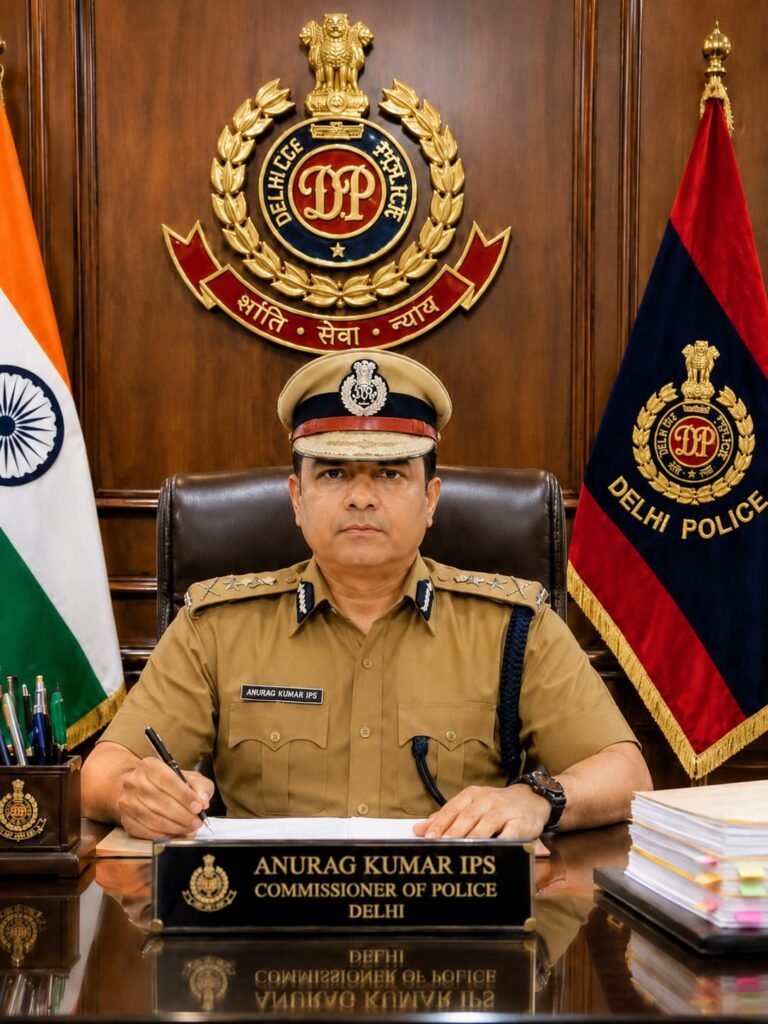
It’s been barely two weeks since Anurag Kumar took over as Delhi’s Police Commissioner, and he’s already shaken things up. On July 17, he stepped into the role, and within days — 30 transfers on one day, 10 more the next — forty Station House Officers found themselves reassigned. No grace period, no gradual handover. Officers were told to pass on charge right away and get to their new postings. For a force the size of Delhi Police, that kind of rapid, sweeping change at the station level just doesn’t happen often. What’s really caught people’s attention is the timing. Normally SHO transfers follow some kind of logic: an officer finishes a reasonable stretch in a post, or gets reassigned after a formal review. Not this time. Several of the officers moved had only been placed in their roles a few months back, under the previous commissioner. Stations like Mehrauli, Fatehpur Beri, Mayur Vihar, Govindpuri, and C.R. Park — all busy, high-traffic areas — lost their SHOs to desk-bound postings in security and PCR instead. Nobody’s given an official reason, and that silence has only made people talk more. People who’ve been watching Kumar closely since he took charge say he wasted no time making his priorities known. In his early meetings with senior officers, he was blunt about not tolerating corruption and about rebuilding professionalism in the ranks. He brought up the Delhi Police he remembered from before 2005 — a force he described as largely clean — and said that’s the standard he wants back. He also stressed that postings and transfers need to be transparent. So when 40 SHOs get moved overnight, it’s hard not to read it as something more deliberate than routine reshuffling. Could be about accountability. Could be about tightening discipline, sharpening efficiency, or simply resetting who’s running things on the ground. Probably some mix of all of it. It’s worth remembering just how much weight SHOs carry. They’re the face of policing that most people actually deal with — the ones who decide whether an FIR gets filed promptly, how seriously a complaint gets investigated, whether a neighborhood feels like it has a police presence at all. In a city as big and complicated as Delhi, who’s running the stations shapes both public trust and how well the whole system functions. Shuffling that many of them at once is Kumar’s way of saying he’s paying close attention. Kumar isn’t new to Delhi, even if he’s been away from it for a while. He’s a 1994-batch IPS officer from the AGMUT cadre, trained as an engineer in Uttar Pradesh, and he started out in field roles — a posting in Mizoram, then stints in Delhi as ACP Sadar Bazar, Additional DCP Northeast, and DCP North. In 2005, while still DCP North, he shifted into the Intelligence Bureau, and that’s largely where his career lived for the next twenty years. He climbed to Special Director, worked sensitive assignments, and stayed tied into Delhi’s security world through the Subsidiary Intelligence Bureau, among other roles. Along the way he picked up the Police Medal for Meritorious Service in 2010 and the President’s Police Medal for Distinguished Service in 2016. People who’ve worked alongside him describe someone precise, detail-driven, not the type to leave things unresolved. The job he’s stepped into is about as high-stakes as Indian policing gets. Delhi Police covers the national capital, VIP protection, major public events, and constant coordination with central agencies. And unlike most state police chiefs, who report to their state governments, Delhi’s Commissioner answers directly to the Ministry of Home Affairs. That combination — running a massive city force while being centrally accountable means decisions made here ripple well past Delhi itself. Reactions inside the force are split, as you’d expect. Some officers see this as overdue housecleaning, a signal that performance and integrity are finally going to be watched more carefully. Others are less enthusiastic, worried that swapping out station leadership this fast could disrupt ongoing investigations and day-to-day operations. Outside the force, the public reaction has been quieter but people are clearly paying attention — the sheer speed of it has left the impression that Kumar means business early on. What comes next probably matters more than the transfers themselves. If the new SHOs bring tighter oversight, faster resolution of complaints, and more transparency, this could end up strengthening the force where it’s most visible to ordinary people. And if as some reports hint — more senior-level changes are coming, this could turn out to be just the first move in a bigger overhaul. The real test will be whether stations can hang onto momentum on their cases, whether morale holds up among rank-and-file officers, and whether institutional memory survives the churn. Whatever else happens, Kumar’s first major move as Commissioner has already told the force something about how he plans to operate. Whether that translates into real, lasting change for Delhi’s policing is the bigger question — one that’ll only get answered over time. For now, though, the message is pretty clear he’s watching, and he expects the ground to respond. @Rohit Manral
Why T.V. Somanathan got another year as Cabinet Secretary
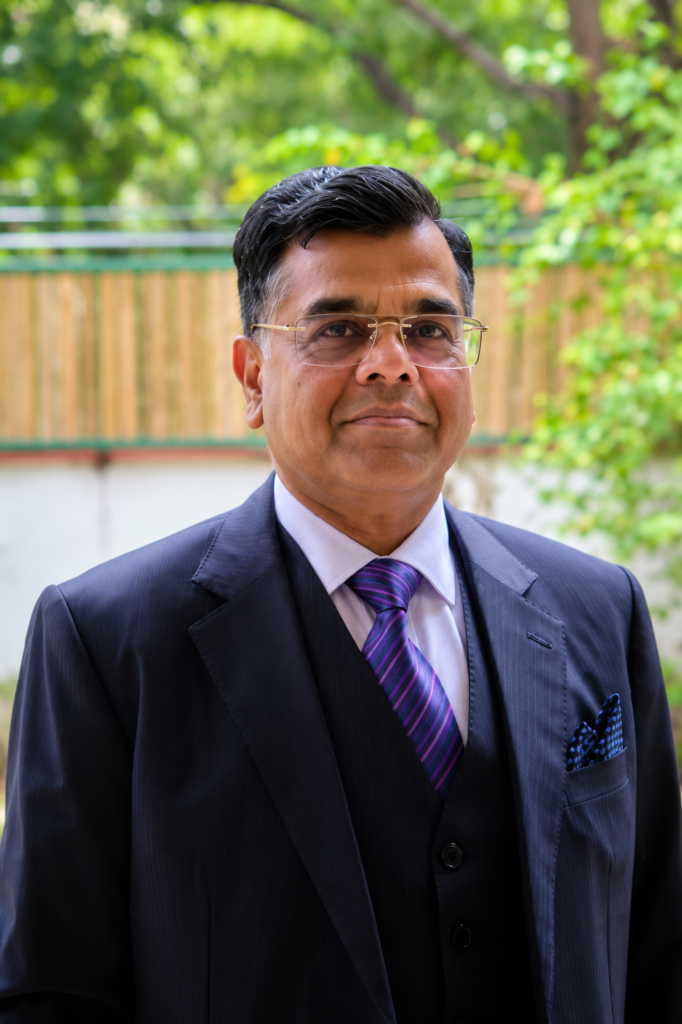
In the tightly managed world of India’s top bureaucracy, extensions at the very highest level are never casual. They say a lot about trust, the need for continuity, and a clear choice by the political leadership. On 5 August 2026, the Appointments Committee of the Cabinet, headed by Prime Minister Narendra Modi, gave Cabinet Secretary Dr T.V. Somanathan a one-year extension beyond 30 August 2026. The 1987-batch Tamil Nadu cadre IAS officer, who took charge on 30 August 2024 for an initial two-year term, will now stay on as the country’s senior-most civil servant until at least August 2027. The official order from the Department of Personnel and Training was short and formal, as these things usually are. But the decision itself carries weight. Cabinet Secretaries often get extensions when the government wants stability at the top of the administrative system, and Somanathan’s case stands out because of the quiet competence and specialized skills he has brought to the job. He did not arrive at the Cabinet Secretariat as an unknown. Before this role he had already been Finance Secretary and Secretary (Expenditure), helping shape India’s fiscal response during and after the pandemic. His clear preference for capital expenditure as a growth driver, rather than pure consumption spending, matched the government’s economic approach closely. That experience of handling tough fiscal choices under pressure made him a natural fit for the coordination work that comes with being Cabinet Secretary. People who know him often describe him as more of an economist than a typical generalist. He holds a Ph.D. in Economics from Calcutta University, is a Chartered Accountant, Cost Accountant and Company Secretary, and completed an Executive Development Program at Harvard Business School. That mix of technical depth is unusual in a post that traditionally values broad administrative experience, and it has proved useful at a time when government decisions increasingly involve complex economic, regulatory and infrastructure questions. His earlier work helps explain the confidence in him. As the founding Managing Director of Chennai Metro Rail Corporation, he secured financial closure and awarded the first contracts for a ₹14,600-crore project. At the World Bank, first as a Young Professional and later as Director, he gained international exposure to public finance and institutional management. Time in the Prime Minister’s Office between 2015 and 2017, followed by key finance roles, built a reputation for careful preparation and low-profile effectiveness—qualities that matter when the Cabinet Secretary has to align many ministries without seeking the spotlight. Extensions like this are given when the government wants institutional memory and steady hands. Somanathan’s two years as Cabinet Secretary coincided with continuing efforts to improve administrative efficiency and coordination between ministries. In late July 2026 he wrote to chief secretaries and training institutes across the country, urging officers to break free from routine and avoid turning long service into “one year’s experience repeated 30 times.” He said the Cabinet Secretariat, working with the National Centre for Good Governance, would issue practical guides on everyday administrative practices. It showed a hands-on approach to changing work culture from the top—an agenda the Centre clearly wants to keep going. More broadly, India is still managing several overlapping priorities: keeping growth high, speeding up infrastructure, dealing with global economic uncertainty, and refining regulatory frameworks. The Cabinet Secretary sits at the center of these efforts, chairing key committees, keeping policy coherent, and turning political direction into administrative action. Keeping someone with deep finance experience and proven coordination skills reduces friction at a time when continuity matters. The parallel one-year extension given to Home Secretary Govind Mohan points in the same direction. Together, the two decisions suggest a preference for experienced leadership in the most sensitive coordination roles rather than a complete change at the top. Somanathan’s rise has been marked by steady accumulation of trust rather than sudden jumps. From winning the gold medal as the best probationer of the 1987 batch, through state-level roles including Secretary to the Chief Minister of Tamil Nadu and Commissioner of Commercial Taxes during the GST rollout, to central postings in the PMO and Finance Ministry, he has consistently delivered in technically demanding jobs. Those who have worked with him note his preference for substance over visibility and his ability to turn complex economic ideas into workable policy. In the Indian system the Cabinet Secretary is both the administrative head of the civil service and the main link between the political executive and the permanent bureaucracy. Success depends less on public profile and more on quiet effectiveness, institutional knowledge, and the confidence of the leadership. Somanathan’s extension shows he has met that test. The decision also reflects a practical understanding that major administrative reforms need time to take root. Changing the senior-most civil servant midway through initiatives on efficiency, capacity-building and inter-ministerial coordination risks slowing things down. By granting the extension through relaxation of the relevant service rules, the government has chosen continuity over disruption. As Somanathan begins his extended term, the expectations remain high but familiar. He is expected to keep pushing for greater professionalism in routine administration, maintain fiscal and policy coherence across ministries, and support the government’s broader developmental agenda. His background leaves him well placed to handle the economic and institutional sides of governance that increasingly define modern administration. In the end, the extension is less about personal favour and more about institutional judgement. India’s administrative system values officers who combine domain expertise with the ability to make the machinery work. T.V. Somanathan has shown both. By keeping him for another year, the Centre has signalled that, at this moment, experience, specialised knowledge and proven coordination skills at the apex of the bureaucracy matter more than the case for change. The Civic Code wishes Dr T.V. Somanathan the very best. @Rohit Manral
Twenty Years, Twenty-Four Transfers: The Story of IAS Officer Tukaram Mundhe
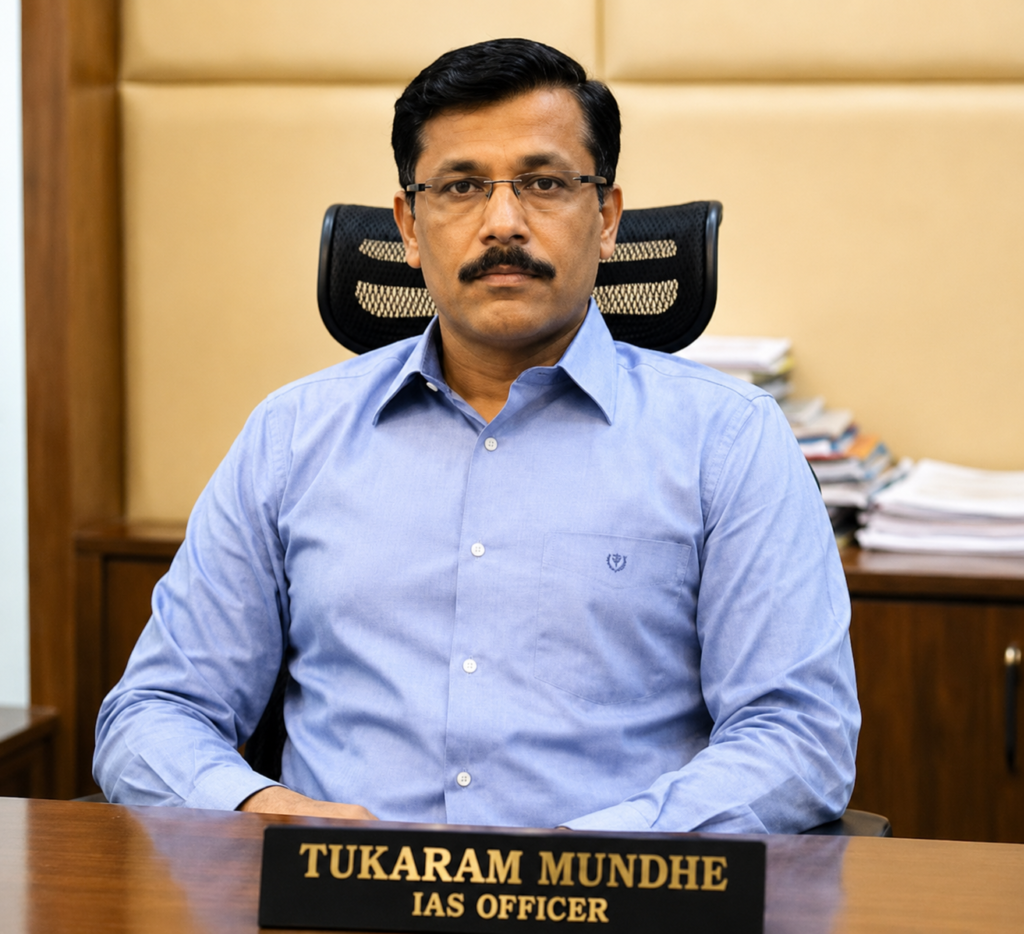
The officer who keeps getting moved: inside Tukaram Mundhe’s 20-year run against the system. Ask anyone in Maharashtra’s bureaucracy about Tukaram Mundhe, and you’ll get an opinion fast. The 2005-batch IAS officer has picked up a nickname — “Singham,” after the no-nonsense movie cop — and it’s stuck for a reason. What sets him apart isn’t just that he cracks down on illegal construction or sand mining wherever he lands. It’s how often he lands somewhere new. Depending on who’s counting, he’s been transferred somewhere north of 20 times, maybe close to 25, in a career spanning roughly two decades. To a lot of ordinary people, that record reads as proof of an officer who won’t be pushed around. To plenty of politicians, it reads as a man who doesn’t know how to bend, even a little. He didn’t start out anywhere near power. Mundhe was born on June 3, 1975, in Tadsonna, a small village in Beed district, part of Marathwada — a region that’s no stranger to drought and agrarian hardship. His family farmed, and like a lot of farming families in that belt, debt was a constant companion. As a kid, he split his time between schoolwork at the local Zilla Parishad school and helping out in the fields. Later he made his way to Aurangabad for college, earning a bachelor’s degree that combined history, political science, and sociology, then a master’s in political science from Dr. Babasaheb Ambedkar Marathwada University. An older brother already in government service seems to have nudged him toward the idea of civil service himself. He got through the Maharashtra Public Service Commission exam first, worked for a while as a Class II officer, and kept at it — eventually landing All India Rank 20 in the UPSC Civil Services Examination. That’s what got him into the IAS, Maharashtra cadre, in 2005. His very first posting, as supernumerary assistant collector in Solapur, already hinted at what was coming: he went after illegal establishments almost immediately. That instinct followed him everywhere. He ran the zilla parishads in Nagpur and Washim as CEO, served as additional tribal commissioner in Nashik, and became collector of Jalna. From 2012 to 2014 he was joint commissioner of sales tax in Mumbai, a stretch where tax recovery numbers jumped noticeably. Then, in November 2014, he went back to Solapur — this time as district collector — and threw himself into water conservation work under the Jalyukt Shivar scheme, took on the sand mafia, and helped wean several villages off water tankers. The state gave him a best-collector award for 2015–16 for that work. From there it was Navi Mumbai as municipal commissioner, then chairman and managing director of Pune’s transport corporation (PMPML), then municipal commissioner of Nashik. Same themes everywhere: tighten the finances, enforce the building codes, run a cleaner shop. “He rarely stayed anywhere longer than a year, sometimes eighteen months at most.” But it’s the transfers themselves that really define the story. He rarely stayed anywhere longer than a year, sometimes eighteen months at most. Early on it was Solapur, then Degloor subdivision in Nanded, then Nagpur’s zilla parishad, a short stint in the tribal department, Washim, Jalna. After the sales tax posting and his second run in Solapur, things moved even faster — Navi Mumbai, Pune transport, Nashik, then a string of state-level jobs in planning and AIDS control. By January 2020 he was municipal commissioner of Nagpur, and that turned out to be one of his rockiest postings yet. Corporators from across the political spectrum pushed back hard on how he handled the civic budget, development spending, and his COVID-19 response, which some called too centralized for their taste. He himself caught COVID that year, and while still recovering, got transferred out — this time to the Maharashtra Jeevan Pradhikaran, in August 2020. After that came a scattering of roles: the state human rights commission, commissioner of health services, director of the National Health Mission, and a run of secretary-level postings covering animal husbandry, language policy, unorganised labour, and disability welfare. By mid-2026, he’d taken charge of Maharashtra’s Food and Drug Administration, where his enforcement drives against unhygienic food outlets and adulteration were, once again, making headlines. How people react to all this depends a lot on where they’re standing. When he left Nashik, residents actually turned out to protest the transfer — they didn’t want him gone. In Solapur and elsewhere, locals point to real, visible improvements in water access and a drop in illegal extraction as reasons to credit him. Politicians tend to see it differently, often describing him as someone who won’t meet elected officials halfway. There have been accusations of heavy-handedness and overreach along the way too, even if the government has sometimes stood behind his record. And the transfers themselves have become part of how people talk about him — supporters treat each one as evidence he can’t be intimidated, while critics say a style that rigid was always going to create friction sooner or later. “Supporters treat each transfer as evidence he can’t be intimidated — critics say a style that rigid was always going to create friction.” What does his actual governing look like? Strict enforcement, an emphasis on transparency, and a habit of engaging directly with the public — things like randomised distribution systems designed to cut out middlemen, anti-encroachment drives, and initiatives like “Walk with the Commissioner,” meant to make him more reachable. In Nagpur, during COVID, he oversaw containment work and pointed to health outcomes that he said were better than average for the period — though that same stretch also sharpened his political conflicts. His supporters treat all of it as evidence of integrity. Critics counter that being this uncompromising about rules can slow things down and make it harder to keep colleagues and politicians on side — cooperation you often need if reforms are going to stick. It’s not surprising that young civil service aspirants bring him up as an example
Vishwesh Negi Appointed as India’s Next Ambassador to Iran
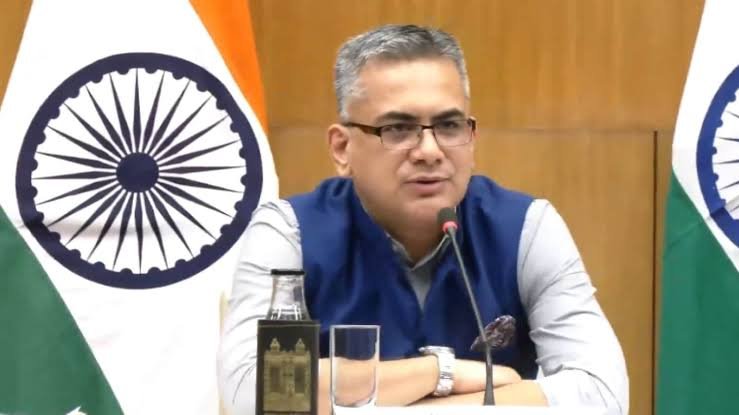
Senior diplomat with over 20 years of experience to take charge of a key posting in West Asia The Government of India has named Vishwesh Negi, a senior officer of the Indian Foreign Service (IFS), as the country’s next Ambassador to Iran. The appointment comes at an important time for India’s ties with West Asia. Ambassador appointments do not usually make big news. But this one has caught attention because of Iran’s importance to India and Negi’s long experience in foreign affairs and defence matters. Who Is Vishwesh Negi? Negi belongs to the 2002 batch of the IFS, one of India’s top civil services. IFS officers represent India abroad and work to strengthen the country’s relations with other nations. Before this new role, Negi served as Joint Secretary in the Ministry of External Affairs, where he handled matters related to the Indo-Pacific region. He also worked as Joint Secretary for International Cooperation in the Ministry of Defence, dealing with global security and defence partnerships. In these roles, he worked closely with senior government officials, military leaders and foreign representatives on important national matters. Why Iran Matters to India Iran is one of India’s most important partners in West Asia. The two countries work together on trade, energy, regional connectivity and infrastructure. A major part of this partnership is the Chabahar Port. This port gives India a route to Afghanistan and Central Asia without depending on other countries’ land routes. Given the fast-changing political situation in the region, experts say sending an experienced diplomat like Negi is a wise step to keep India-Iran relations strong. What This Appointment Shows Senior appointments like this reflect years of hard work and experience. Officers often spend decades building their skills before taking on such important roles. Negi’s career, from joining the Foreign Service to his work in the Ministry of Defence and the Ministry of External Affairs, shows this journey clearly. What Happens Next As Negi takes up his post in Tehran, attention will turn to the future of India-Iran relations. Key areas to watch include trade, energy security, regional stability and connectivity projects. This appointment is more than a routine change. It shows the important role Indian diplomats play in shaping the country’s relations with the world. @Rohit Manral