
Dr. V. Narayanan – Blueprint for a Century of Space Dominance
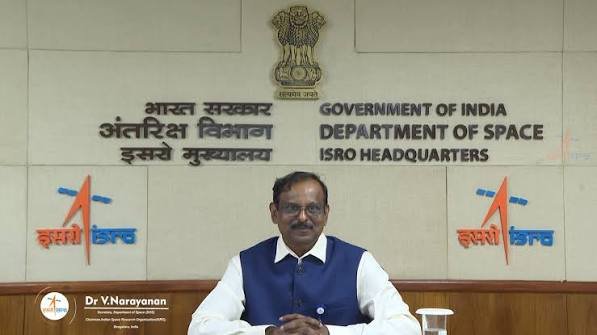
Dr. V. Narayanan is the current Chairman of the Indian Space Research Organization (ISRO) and Secretary of the Department of Space, assuming this prestigious position on January 14, 2025. He is a renowned rocket and spacecraft professional with nearly 40 years of experience in the field of rocket science and space research. Before joining ISRO, he served as the Director of the Thiruvananthapuram-based LPSC. Dr. Narayanan was born on May 14, 1964, in a village in Kanyakumari, Tamil Nadu. He studied in Tamil medium until Class 5 and obtained an M.Tech in Cryogenic Engineering from IIT Kharagpur with first rank, followed by a PhD in Aerospace Engineering. Key Roles and Achievements Chairman of ISRO and Secretary of the Department of Space, Government of India, who designed and implemented India’s entire space program. He chairs the Project Management Council (Space Transportation Systems), which makes policy decisions related to all ISRO rocket and launch vehicle projects. 2. Technical Contributions and Historic Work His most significant contribution is the development of India’s K20 cryogenic engine and SEAT 25 cryogenic stage. This technology is the very technology without which India’s heavy rockets would not have been able to reach space.He has also designed and operated propulsion systems and limited engines for large and complex missions such as Chandrayaan-2, Chandrayaan-3, and Mangalyaan. Recently, under his leadership, ISRO successfully tested a powerful semi-cryogenic engine that will help power future heavy launch vehicles. 3. Helping Future Missions His primary goal is to successfully launch Gaganyaan, India’s first human space mission.He commanded Chandrayaan 4, the complex mission to return lunar soil samples to Earth.The Indian Space Station also lays the initial and most important technological foundation for the establishment of India’s own space station by 2035. Major National and Prestigious Awards ISRO Awards
Professor-Turned BJP Veteran Asim Kumar Ghosh Appointed 19th Governor of Haryana
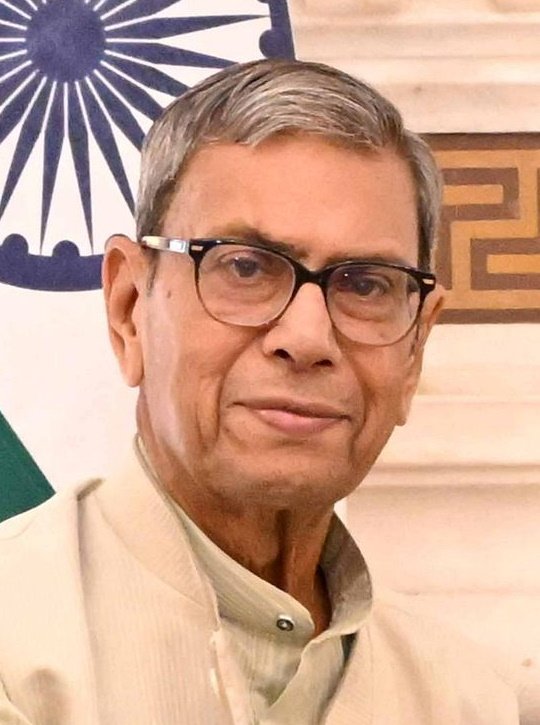
Asim Kumar Ghosh, the 19th Governor of Haryana—born on March 12, 1944, in Howrah, British India—is an Indian educationist and politician. Prior to this role, he served as the President of the West Bengal BJP from 1999 to 2002. Ghosh received his early education at the Vivekananda Institute in Howrah. He subsequently earned his Bachelor’s and Master’s degrees in Political Science from Vidyasagar College and the University of Calcutta, respectively, and worked as a Professor of Political Science starting in 1966. Asim Kumar Ghosh joined the Bharatiya Janata Party (BJP) in 1991. According to Sourav Sikdar—son of Tapan Sikdar—it was Tapan Sikdar who introduced Ghosh to politics. He became the party’s State Secretary in 1996 and later the State Vice-President in 1998. The then Prime Minister Atal Bihari Vajpayee had recommended his appointment as the party’s State President. After completing his tenure, he served as an observer for the Tripura BJP unit from 2003 to 2005. He was a member of the BJP’s National Executive from 2002 to 2006. On July 14, 2025, President Droupadi Murmu appointed him as the Governor of Haryana; he is the third Bengali to hold this office, following Birendra Narayan Chakravarty and Hari Anand Barari.
The Armoured Chief: General Dhiraj Kumar Seth and His Historic Rise to Power
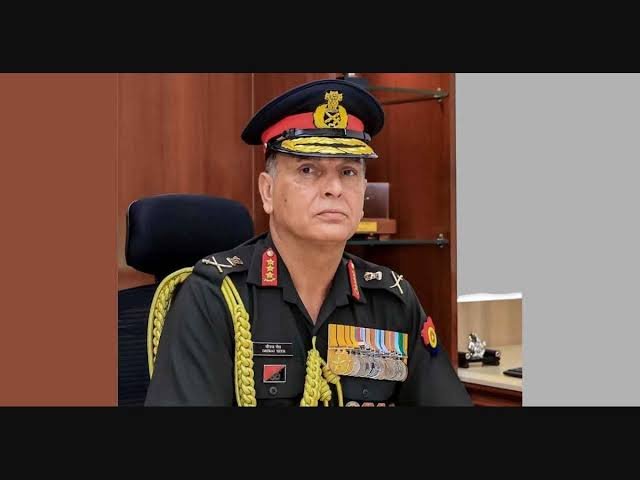
General Dheeraj Kumar Seth is the 31st Chief of the Indian Army Staff, taking over the post after the retirement of General Upendra Dwivedi on June 30, 2026. General Dheeraj Seth is the first officer from an armored unit in the history of the Indian Army to become the Chief of the Army Staff. Prior to becoming the Chief of the Army Staff, he served as the Deputy Chief of the Army Staff. He completed his basic military education at the National Defence Academy, Khadakwasla, followed by military training at the Indian Military Academy, Dehradun, and was commissioned into the Army on December 20, 1986. After completing his course at the Defence Services Staff College in 2006, he was adjudged the best all-round student. General Dheeraj Kumar Seth has held significant operational, strategic, and pacific assignments in his nearly 40-year military career. His contributions to the Indian Army are considered significant in the modernization and strategic planning of the service. Key Roles Medals and Awards Key Academic Achievements
Om Birla : Lok Sabha Speaker
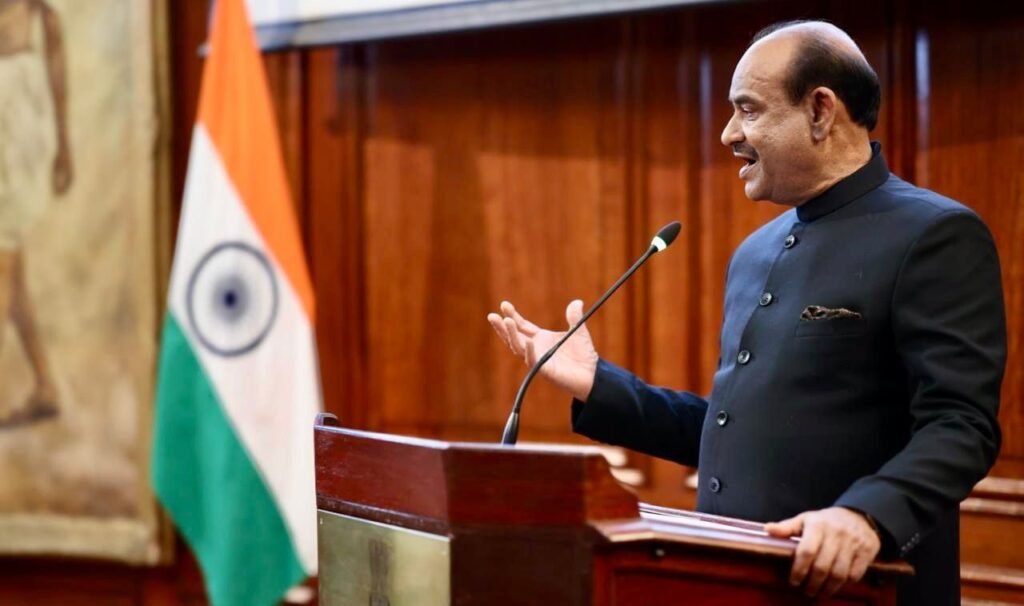
Om Birla, who is currently the 18th Speaker of the Lok Sabha of India and a senior leader of the Bharatiya Janata Party, was elected to the Lok Sabha from the Kota Bundi parliamentary constituency in Rajasthan in 2008. He was born on December 4, 1962, in Kota, Rajasthan. He received his early education at the Government Commerce College in Kota and graduated with a degree in Commerce from Maharishi Dayanand Saraswati University in Ajmer. He married Amita Birla, an Indian Civil Service officer, in 1991. As an MLA and MP, he also spearheaded numerous social welfare programs, including distributing clothes and books to vulnerable sections of society, organizing blood camps, free food programs for the poor, and a drug bank that provides free medicines. Om Birla began his political career with the Bharatiya Janata Yuva Morcha and was elected to the Rajasthan Legislative Assembly from Kota South in 2003, 2008, and 2013. He also became the Lok Sabha MP from Kota Bundi for the first time in 2014. He subsequently won the same seat in 2019 and 2024 by winning with a landslide victory. Birla has been a three-time MP from the Kota Lok Sabha constituency. He was elected to the Lok Sabha in the 16th, 17th, and 18th Lok Sabhas as a BJP candidate from the Kota constituency. In the 16th Lok Sabha, he was a member of the Standing Committee on Energy and the Advisory Committee of the Ministry of Social Justice and Empowerment. On June 19, 2019, Birla was elected Speaker of the 17th Lok Sabha following a motion by Prime Minister Modi of the Bharatiya Janata Party. He won the 2024 Lok Sabha Speaker election as the NDA candidate, subsequently becoming the Speaker of the Lok Sabha for the second consecutive term in the 18th Lok Sabha.
From SIDBI to PFRDA: S. Raman Brings Decades of Financial Leadership to India’s Pension Regulator
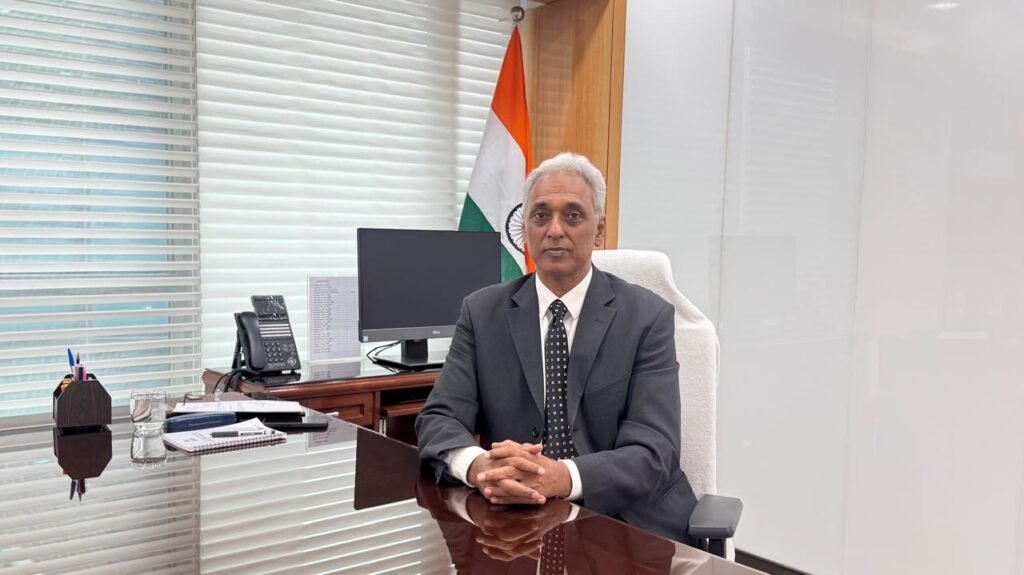
Subramaniam Raman, an IA&AS officer of the 1991 batch, serves as the Chairperson of the Pension Fund Regulatory and Development Authority (PFRDA); he assumed this role on June 20, 2025, for a five-year term. Prior to this, he held the positions of Deputy Comptroller and Auditor General and Chief Technology Officer at the Office of the Comptroller and Auditor General of India. His career has spanned the fields of public finance technology and financial regulation. Before becoming the PFRDA Chairperson, S. Raman served as the Chairman and Managing Director of the Small Industries Development Bank of India (SIDBI). He also held the positions of MD and CEO of National E-Governance Services Limited and Executive Director at the Securities and Exchange Board of India (SEBI). His leadership reflects a strong commitment to financial stability, institutional development, and inclusive economic growth. Regarding his educational and professional qualifications, S. Raman holds a B.A. in Economics from St. Stephen’s College and an MBA from the Faculty of Management Studies (FMS), Delhi. He subsequently earned an M.Sc. in Financial Regulation from the London School of Economics and Political Science and a Bachelor of Laws (LL.B.) degree from the University of Mumbai. As PFRDA Chairperson, he has focused on expanding the reach of the National Pension System (NPS) by simplifying distribution norms and designing improved payout and annuity frameworks for the accumulation phase of an individual’s financial journey. Leveraging his extensive experience in public finance and governance, he has contributed significantly to strengthening India’s financial system and enhancing transparency within it. As Deputy Comptroller and Auditor General, he worked to improve audit and accountability mechanisms, while his tenure as Chairman and Managing Director of SIDBI focused on supporting MSMEs and increasing access to finance.
From Ziro Valley to DGP: Robin Hibu Creates History as Arunachal Pradesh’s First IPS Officer to Reach the Top Rank
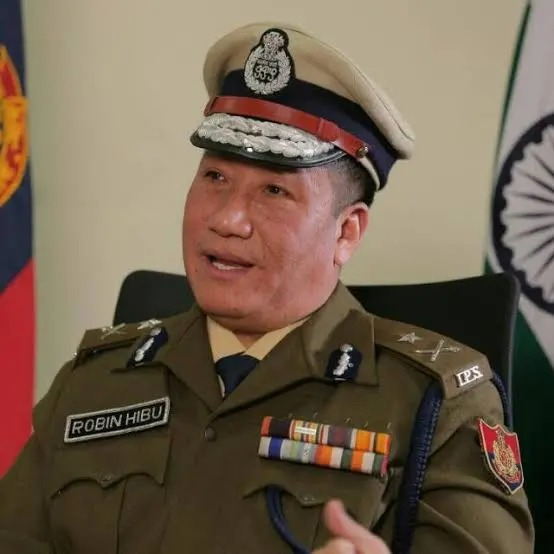
Robin Hibu, an officer of the 1993 AGMUT cadre, made history as the first IPS officer from Arunachal Pradesh. Currently serving as the Special Commissioner of Police (Human Resources) in the Delhi Police, he has recently been promoted to the rank of Director General of Police (DGP). His journey—from the remote Ziro Valley to the highest echelons of the Indian Police Service—is truly inspiring. Throughout a career spanning over three decades, Robin Hibu has built a strong bridge between law enforcement and public service. He earned his promotion to the rank of DGP based on his outstanding service, leadership capabilities, and consistently excellent Annual Confidential Reports (ACRs). He has received numerous prestigious honors, including the President’s Police Medal for Meritorious Service, the President’s Police Medal for Distinguished Service, and the Ati-Utkrisht Seva Padak (Medal for Exemplary Service). He has held several key responsibilities within the Delhi Police. He served as the Chief Security Officer (CSO) of Rashtrapati Bhavan, where he led the security arrangements for the nation’s highest constitutional institution. Additionally, as the Managing Director of the Delhi Police Housing Corporation, he made significant contributions to the welfare of police personnel and the development of infrastructure. Robin Hibu’s most notable initiative is his social organization, “Helping Hands.” This organization provides emergency assistance, legal counsel, educational support, medical aid, and rations to citizens in need, including people from the North-East. During the COVID-19 pandemic, the organization set a remarkable example of humanitarian service by delivering relief to thousands of people. He has also consistently raised his voice against issues such as racial discrimination and racial profiling faced by people from the North-East. By establishing networks like the ‘Crime Victim Group,’ ‘Student Leader Group,’ and ‘SOS Group,’ he has provided immediate aid and institutional support to victims. His efforts have strengthened the sense of security and trust among the North-Eastern community living in metropolitan cities. His commitment to public service and social causes has earned him respect across the country. His work has been appreciated by numerous national figures, including Prime Minister Narendra Modi, Arunachal Pradesh Chief Minister Pema Khandu, and world-renowned boxer Mary Kom. Today, Robin Hibu is recognized not only as a senior police officer but also as a symbol of leadership, sensitivity, and social change.
Deepshikha Sharma: The Tech-Savvy IAS Officer Driving Transparent Governance and Sustainable Development in Ferozepur
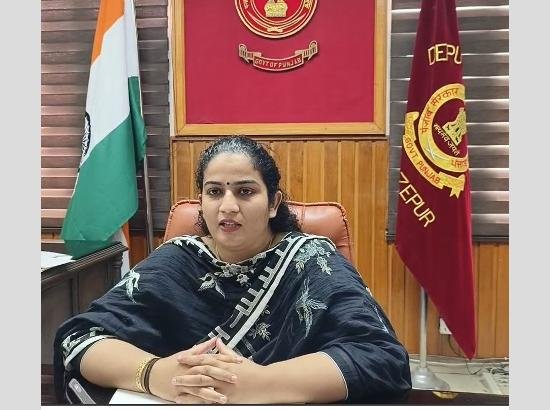
Deepshikha Sharma is a 2015-batch IAS officer (Punjab cadre) currently serving as the Deputy Commissioner and District Magistrate of Ferozepur. Since assuming office on September 13, 2024, she has focused intensely on making the administration more transparent, accountable, and citizen-centric. With a background in Electronics and Communication Engineering, she is known for integrating technology and data-driven governance into effective administrative practices. As the head of the district administration, she has accorded top priority to disaster management and public safety. Her proactive monitoring, swift decision-making, and coordinated strategies during situations such as flood threats and rising water levels have strengthened the relief and rescue mechanisms. Under her leadership, the administration has emphasized advance preparedness to mitigate risks and ensure the safety of vulnerable areas. She has also made significant contributions to the conservation of natural resources. She has promoted scientific water planning and sustainable agricultural practices, while fostering groundwater and aquifer management through initiatives like NAQUIM 2.0. Her objective has been to devise long-term solutions to water-related challenges and encourage farmers to optimize resource utilization. She has played a pivotal role in environmental conservation and the strengthening of democratic processes. To tackle the issue of stubble burning, she facilitated coordination among various departments, farmers, and experts; simultaneously, in the realm of election administration, she oversaw activities such as the Special Intensive Revision (SIR) to ensure the accuracy and transparency of electoral rolls. Her working style exemplifies an effective balance between development, environmental sustainability, and good governance.
From Ayodhya to Saharanpur: IPS Officer Ashish Tiwari’s Technology-Driven Policing Model Earns National and Global Recognition
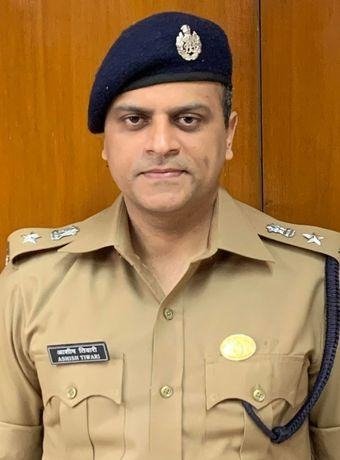
Ashish Tiwari is a 2012-batch IPS officer of the Uttar Pradesh cadre and currently serves as the Senior Superintendent of Police (SSP) of Saharanpur. He is recognized as an officer who champions technology-driven, data-based, and citizen-centric policing models. Throughout his career, he has held leadership roles in several key districts, including Jhansi, Varanasi, Mirzapur, Etah, Jaunpur, Firozabad, and Ayodhya. In these districts, he placed special emphasis on strengthening community policing, public engagement, and digital administrative systems. His tenure as the police chief of Ayodhya was particularly noteworthy. During a period of sensitive and historic significance, he played a pivotal role in maintaining law and order, fostering trust among diverse communities, and ensuring peace. An alumnus of IIT Kharagpur, Ashish Tiwari has effectively implemented technological innovations in policing. Initiatives such as monitoring and curbing fake news, establishing tech-based mechanisms to trace missing children, and institutionalizing ‘SMART’ policing have directly impacted millions of citizens in Uttar Pradesh. He also spearheaded extensive public awareness campaigns against social crimes through women-led grassroots initiatives. These efforts not only fostered trust between the community and the police but also made crime prevention a more participatory process. His innovations and leadership capabilities have garnered international recognition. He was named among the global “40 Under 40” policing leaders by the International Association of Chiefs of Police. Additionally, he has received numerous national awards for innovation in policing, digital transformation, and public service.
Radha Bahin Bhatt – The Gandhi of the Hills [UTTARAKHAND]
![Radha Bahin Bhatt - The Gandhi of the Hills [UTTARAKHAND]](https://theciviccode.com/wp-content/uploads/2026/06/radha-1024x683.jpg)
Radha Behn Bhatt, an Indian Gandhian social activist from Uttarakhand, works for environmental protection and women’s empowerment. She was born on October 16, 1931, in Dhurka village near Almora, Uttarakhand. She was influenced by Sarala Behn, a prominent Gandhian social activist and disciple of Mahatma Gandhi. She is also known as the “Gandhi of the Hills.” In 1951, she joined the Kasturba Mahila Utthan Mandal in Kausani, an ashram dedicated to the upliftment and education of women in the hills of Uttarakhand. Through Gandhian values, she played a major role in strengthening environmental protection, girls’ education, and women’s empowerment. In 1957, she actively participated in the Bhoodan movement started by Vinoba Bhave and also participated in padayatras for land reform in Uttar Pradesh and Assam. She also established vocational training schools for fellow women and taught spinning and weaving to make them self-reliant. She also led the “One Hour School” initiative to improve girls’ access to education. From 1961 to 1965, she worked on issues such as Gram Swaraj, the anti-alcohol movement, forest conservation, women’s empowerment, and the upliftment of adolescent girls who grazed cows and goats. In 1970, when conservation concerns rose in the Himalayas, she actively participated in the Chipko movement, a non-violent grassroots resistance in which villagers, primarily women, adopted the Chipko movement to prevent tree felling. She also advocated for sustainable development practices and campaigned against opencast mining and large dam construction in fragile mountain ecosystems, which threatened local ecosystems and livelihoods. In addition to protests, she led important tree-planting campaigns and contributed to the planting of over a thousand trees in Pithoragarh and. During her long career, she held important leadership positions in various national Gandhian organizations, including serving as President of the Gandhi Peace Foundation in Delhi, and was closely associated with the Himalaya Seva Sangh and the Kasturba Gandhi National Memorial Trust, promoting the principles of Gram Swaraj and Sunrise. From 2006 to 2010, she surveyed the Himalayas and rivers of Uttarakhand, during which she opposed hydropower projects being built on the rivers. She also wrote a book titled “Daughters of the Himalayas,” which was published in German and Danish. Awards and Honors
Arjan Singh: Marshal of the Indian Air Force
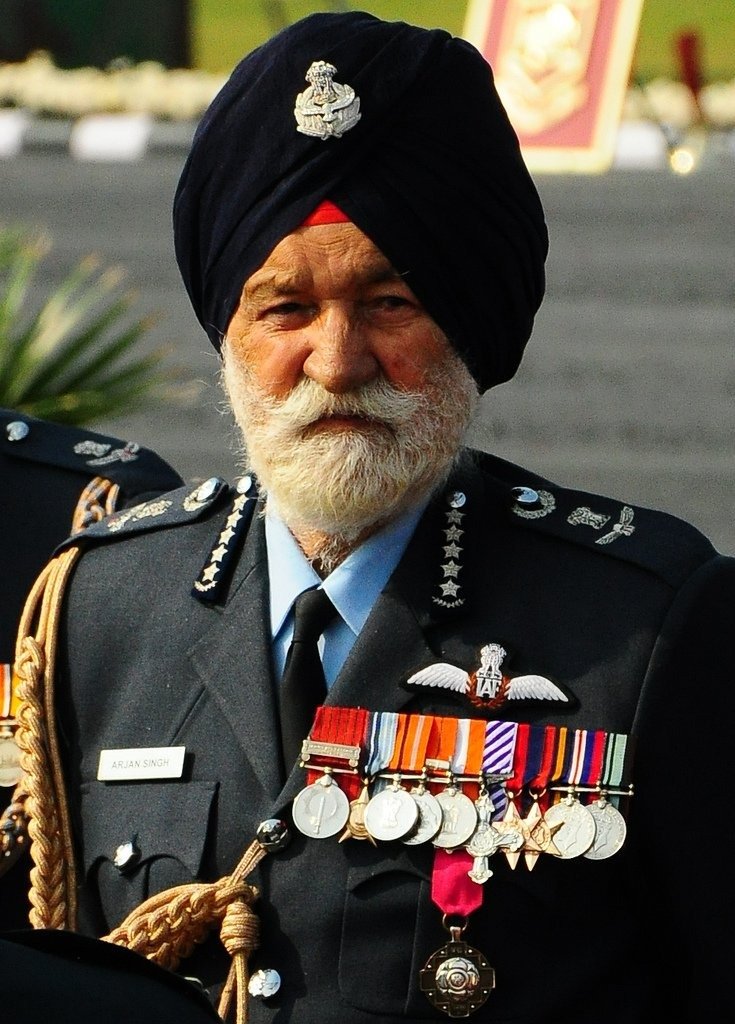
Arjan Singh—the only officer of the Indian Air Force to be promoted to the five-star rank of Marshal of the Air Force—was born on April 15, 1919, in Lyallpur, Punjab, and passed away on September 16, 2017, in Delhi. Following his retirement from the Air Force, he also served the Government of India in various political, diplomatic, and advisory capacities. From 1989 to 1990, he held the position of Lieutenant Governor of Delhi, and in 2002, he was conferred with the rank of Marshal of the Indian Air Force. He was the first officer of the Indian Air Force to hold the rank of Air Chief Marshal. Arjan received his early education in Montgomery, British India; he entered the Royal Air Force College, Cranwell, in 1938 and was commissioned as a Pilot Officer in 1939. In 1945, he commanded the Indian Air Force’s first demonstration flight. He once faced a court-martial for flying at an extremely low altitude over a populated area in Kerala. He retired from active service in 1969 at the age of 50. In 1971, he was appointed as India’s Ambassador to Switzerland. He displayed unparalleled valor and leadership during the Second World War and the Indo-Pak Wars. He played a pivotal role in establishing the Indian Air Force as a modern and formidable fighting force. After retirement, he rendered diplomatic services to the nation and continued to serve society as the Lieutenant Governor of Delhi. Additionally, he donated ₹2 crore from his personal assets to the Indian Air Force Veterans Fund. Honors and Awards