Role as India’s External Affairs Minister and Foreign Policy Leader : Subrahmanyam Jaishankar
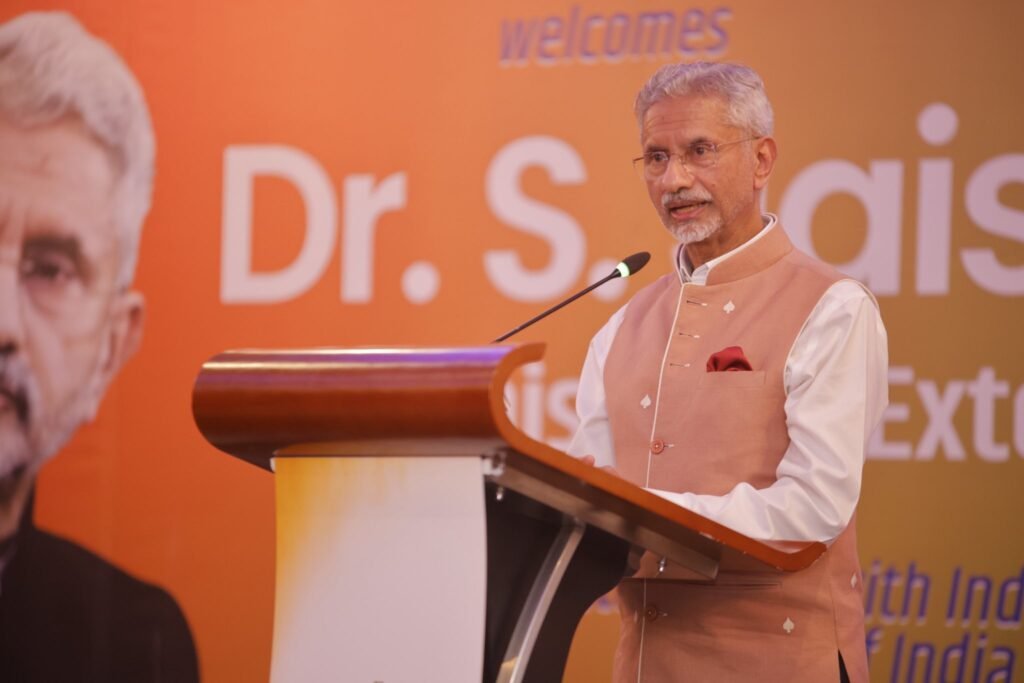
Subrahmanyam Jaishankar is an Indian diplomat and politician who is currently serving as the External Affairs Minister of India. Born on 9 January 1955 in Delhi, he joined the Indian Foreign Service in 1977 and held important diplomatic positions in countries like the United States, China, and Czech Republic. He became India’s Foreign Minister in 2019 and is known for his strong role in shaping India’s foreign policy and international relations. Diplomatic Career (1977-2018) Subrahmanyam Jaishankar joined Indian Foreign Service (IFS) in 1977 and served as a career diplomat for over four decades. He served in several important diplomatic positions in countries such as Russia, United States, Sri Lanka, Hungary, and Japan. He also worked in India’s Ministry of External Affairs and served as press secretary to former President Shankar Dayal Sharma. In 2000, he became India’s ambassador to the Czech Republic. Later, he played an important role in the 2005 Indo-U.S. civil nuclear deal and served as India’s High Commissioner to Singapore from 2007 to 2009. Ambassador of Czech Republic (2001-2004) Subrahmanyam Jaishankar served as India’s Ambassador to the Czech Republic from 2001 to 2004. During his tenure, he worked to strengthen diplomatic, economic, and cultural relations between India and the Czech Republic. He focused on improving trade cooperation, promoting Indian interests in Central Europe, and expanding bilateral ties between the two countries. Joint secretary at Ministry (2004-2007) S. Jaishankar served as Joint Secretary in India’s Ministry of External Affairs from 2004 to 2007. During this period, he handled important matters related to India’s relationship with the United States.He played a major role in negotiating the historic India–US Civil Nuclear Agreement, which helped improve cooperation between the two countries in nuclear energy and strategic affairs. His work during this time strengthened diplomatic ties between India and the United States and increased India’s global influence. Higher Commissioner to Singapore(2007-2009) From 2007 to 2009, S. Jaishankar served as India’s High Commissioner to Singapore. During his tenure, he worked to strengthen economic, strategic and cultural ties between the two countries.He helped implement the Comprehensive Economic Cooperation Agreement (CECA), which increased trade, investment and business cooperation between India and Singapore. He also oversaw a defence arrangement that allowed Singapore to keep some of its military equipment and training facilities in India.Jaishankar promoted closer people-to-people relations and encouraged the participation of the Indian community in Singapore through events like Pravasi Bharatiya Divas. His work further improved Singapore’s role as an important economic and strategic partner for India. Ambassador of China (2009-2013) S. Jaishankar served as India’s ambassador to China from 2009 to 2013, becoming India’s longest-serving envoy there. During his tenure, he worked to strengthen trade, economic and cultural ties while also handling sensitive border disputes between the two countries.He played a key role in resolving several diplomatic issues, including China’s stapled visa policy for people from Jammu and Kashmir and tensions over Chinese maps showing Arunachal Pradesh and Aksai Chin as Chinese territory. In 2013, he helped defuse the Depsang Plains standoff in Ladakh before Chinese Premier Li Keqiang visited India.Jaishankar also promoted stronger cooperation with China while insisting that India’s core interests and balanced trade relations be respected. Ambassador to the USA(2013-2014) S. Jaishankar became India’s Ambassador to the United States in September 2013 and officially took charge in December that year, succeeding Nirupama Rao.He arrived during the sensitive Devyani Khobragade incident and helped negotiate the Indian diplomat’s exit from the United States, which eased tensions between the two countries.In 2014, Jaishankar spoke at the Carnegie Endowment for International Peace, where he said India–US relations were strong but needed better public understanding. He also formally presented his diplomatic credentials to then US President Barack Obama at the White House.Jaishankar played an important role in organising Prime Minister Narendra Modi’s first visit to the United States in September 2014 and helped strengthen ties with the Indian-American community. Foreign Secretary (2015-2018) S. Jaishankar was appointed India’s Foreign Secretary on 29 January 2015 during the government of Narendra Modi. His appointment was announced after a meeting of the Cabinet Appointments Committee.His selection was unusual because it came just three days before his retirement date and also ended the tenure of then Foreign Secretary Sujatha Singh before her term was completed.During his time as Foreign Secretary, the working style of the Ministry of External Affairs changed significantly and became more active in diplomacy. However, some analysts in Nepal criticised him over the 2015 Nepal blockade issue and called him one of its main planners. His tenure ended in January 2018. President of global corporate affairs with tata groups (2018-2019) After completing his term as Foreign Secretary in 2018, S. Jaishankar joined Tata Sons. as the President of Global Corporate Affairs. In this role, he handled the company’s international relations and global business strategies. He worked on strengthening Tata Group’s connections with foreign governments, international organizations and global business partners. His diplomatic experience helped the company manage international affairs and expand its global presence. However, he held this position for only a short time because in 2019 he entered politics and became India’s External Affairs Minister in the government led by Narendra Modi. Ministry of external affairs Since (2019 -present) Member of BJP S. Jaishankar became a member of the Rajya Sabha in July 2019 during the second government of Narendra Modi. He was elected from the state of Gujarat as a representative of the Bharatiya Janata Party (BJP). After joining Parliament, he continued serving as India’s External Affairs Minister in the government led by Narendra Modi . In the Rajya Sabha, he has spoken on important foreign policy matters, including India’s relations with neighboring countries, global diplomacy, trade, and national security. He was the first former Foreign Secretary to later lead the Ministry of External Affairs as a Cabinet Minister.As minister, Jaishankar played an important role in strengthening India’s foreign relations and security partnerships. In 2020 he signed the BECA defence agreement with the United States along with Defence Minister Rajnath Singh. The agreement improved
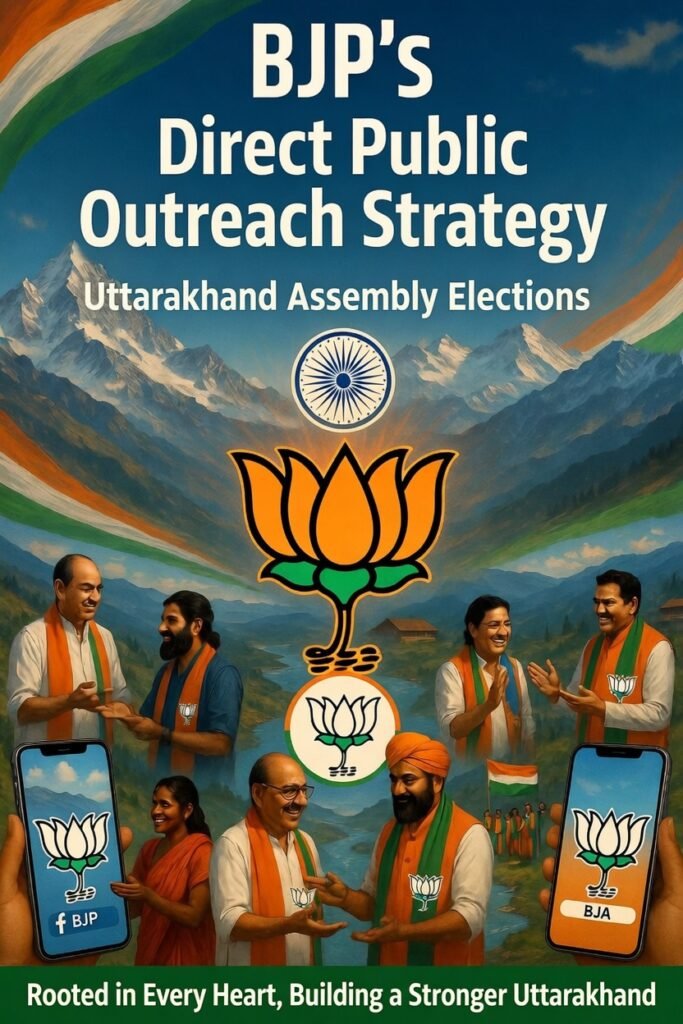
BJP’s Direct Public Outreach Strategy Ahead of Uttarakhand Assembly Elections
BJP, Uttarakhand,
Historic Shift in Bengal, BJP Storms to Power with Landslide Victory
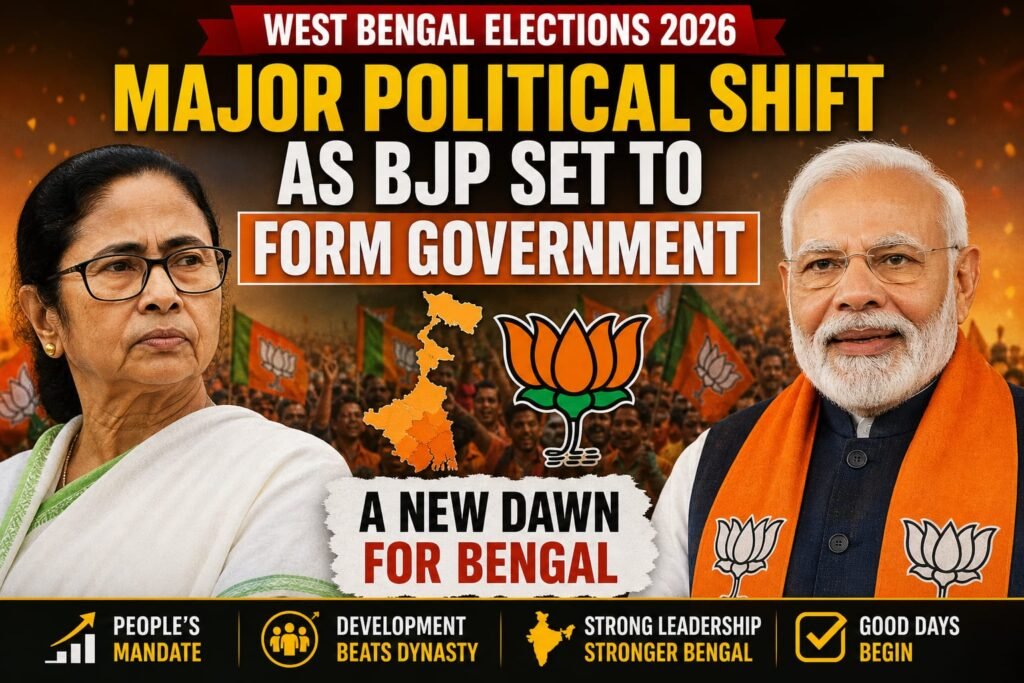
The results of the 2026 West Bengal Assembly elections have brought a significant shift in the state’s political landscape. The Bharatiya Janata Party (BJP) delivered a strong performance, winning 207 out of 294 seats and is now set to form the government in the state for the first time. On the other hand, the All India Trinamool Congress (TMC) managed to secure only 80 seats. Mamta Banjerjee defeated in Bhabanipur One of the biggest highlights of this election was the defeat of Mamata Banerjee. She lost from her stronghold, Bhabanipur, to her former aide-turned-BJP leader Suvendu Adhikari. This result is being seen as a major turning point in West Bengal politics. After the results, Mamata Banerjee raised concerns over the election process and alleged irregularities in seat outcomes. Meanwhile, Prime Minister Narendra Modi described the verdict as the people’s decision and said that West Bengal will now move forward on the path of development. Election with Controversy The election also saw controversy around the voter list. Under the Special Intensive Revision (SIR), a large number of names were removed, which added to the heated political environment. After this decisive victory, preparations are underway for the BJP’s swearing-in ceremony on May 9. This marks the beginning of a new chapter in West Bengal’s political history. It will be interesting to see how the new government shapes the state’s development and political balance in the coming years.
Thalapathy Storm, Vijay’s TVK Shakes Tamil Nadu Politics
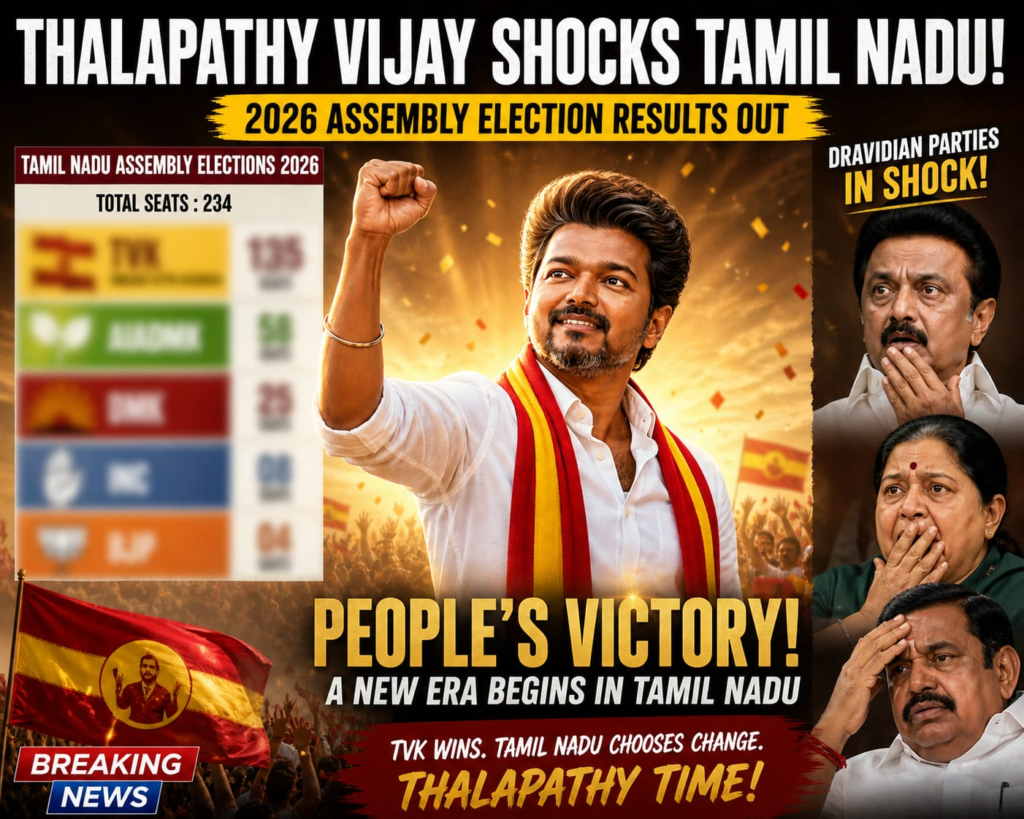
The results of the 2026 Tamil Nadu Assembly Elections have surprised everyone. Polls are being announced today for Tamil Nadu’s 234 assembly seats. Actor Vijay Thalapathy, who emerged as the biggest face of the assembly elections, has surprised the Dravidian parties in the state. Vijay’s party, the Tamil Nadu Vetti Kazhagam (TVK), is rapidly moving towards victory. So far, in the vote count, Vijay’s party, TVK, has surpassed 107, becoming the largest party. However, the counting of votes is still ongoing. The election results for the two-year-old political party have placed it in the league of legendary actor-turned-politicians like N.T. Rama Rao, M.G. Ramachandran, and Jayalalithaa. TVK’s victory marks a historic turning point and marks the beginning of a new political era, as for the first time since June 1977, a government can be formed in Tamil Nadu without the dominance of the DMK and AIADMK. With this, he has proven that a screen hero can also run a state. These election results prove that he has earned not only money but also the love of the people in his 33-year film career, which has already translated into votes for him in the election. It can be said that the public has loved Thalapathy not only on screen but also on the ground. After the trends emerged, there was tremendous support for Vijay. Meanwhile, celebrations prevailed at Vijay’s home. The family celebrated the party’s impressive performance by singing “Whistle Podu.” Workers outside the party headquarters in Chennai also celebrated with great enthusiasm as the latest trends showed his party emerging as the largest party in the Tamil Nadu Assembly elections. A large number of excited workers and supporters gathered outside the party office, waving flags and distributing sweets to celebrate the party’s success. TVK National Spokesperson Felix Gerald said, “You will see that there will be no need for any alliance. I can assure you that we will form the government on our own. There are no ifs and buts. This is a very clear mandate.” The message is clear: the public has put an end to the politics of loot, corruption, nepotism, and nepotism. This is the end of dynasty politics, this is the end of the DMK.
India’s Democracy: Voter Power vs. the Shadows of Caste, Lies, and Self-Serving Leaders
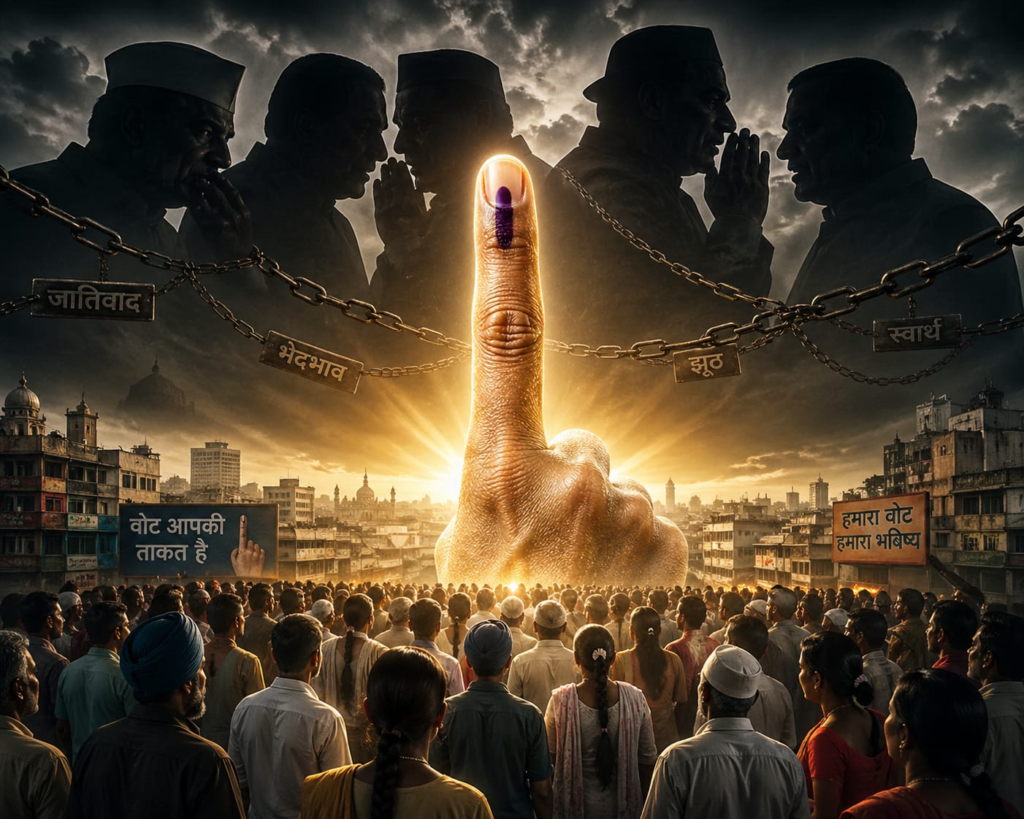
Politics entails much more than simply electing leaders or holding elections; in reality, it determines the quality of education our children receive, the standard of our hospitals, and how essential amenities—such as roads, electricity, and water—are provided. Furthermore, it is politics that determines how justice and equality are upheld within society. In simple terms, politics is inextricably linked to the everyday lives of ordinary people. Politics has two distinct facets: one is humanity, and the other is corruption. A politician, after all, is a human being; they possess their own thoughts, emotions, and limitations. Some leaders genuinely enter politics with the intention of serving and helping the public, while others step into the political arena solely for their own personal gain. If a leader introduces an affordable ration scheme for the poor, it reflects the humane aspect of politics; conversely, if a leader seeks to divide people along the lines of caste or religion, it indicates that they have entered politics solely for their own self-interest. India is a democratic nation, meaning that the public exercises its franchise to elect its most powerful leaders. In India, citizens cast their votes every five years to choose their representatives. While the act of voting to elect leaders ensures that every individual’s voice matters, the process also presents significant challenges—such as corruption, caste- and religion-based politics, and unfulfilled promises.
Bengal Election Star politics Campaign
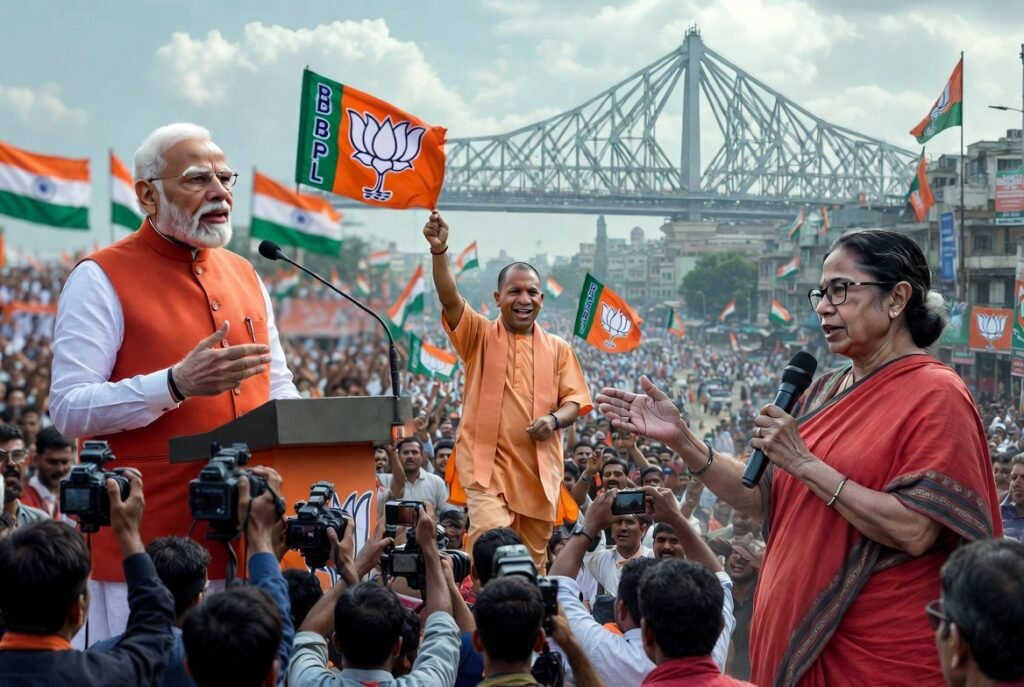
Campaigning for the second and final phase of the ongoing Assembly elections in West Bengal concludes today. In this phase, voting will take place across 142 constituencies on April 29. It is worth noting that voting for the first phase of the Bengal Assembly elections was held on April 23, witnessing a record voter turnout of 93.19%. The constituencies going to the polls in the second phase span eight electoral districts, including Kolkata North, Kolkata South, Howrah, Nadia, North 24 Parganas, South 24 Parganas, Hooghly, and Purba Bardhaman. Rallies by Star Campaigners in Bengal With the Assembly elections underway in Bengal, leaders from all major political parties are holding rallies across the state, and prominent BJP leaders have also joined the fray. Ahead of the first phase of the Assembly elections, star campaigners—such as Uttar Pradesh Chief Minister Yogi Adityanath and Defence Minister Rajnath Singh—had already addressed the people of Bengal. Today, senior BJP leader and Prime Minister Narendra Modi will address a public meeting at the Jalebi Maidan in Jagatdal, while Union Home Minister Amit Shah is scheduled to conduct two roadshows. Union Minister Amit Shah will first lead a roadshow from Behala Police Station to Manton, followed by a second roadshow organized at Chandannagar Bagbazar in Hooghly. Mamata Didi to Also Address the Public Trinamool Congress leader Mamata Banerjee also has several engagements scheduled for today; during these events, she will lead a public outreach march starting from Sukanta Setu in Jadavpur to garner support for party candidates in the Jadavpur and Tollygunge constituencies. Following the public outreach march, Mamata Banerjee will conduct a public interaction program in her own constituency, Bhabanipur. Meanwhile, Trinamool Congress All India General Secretary Abhishek Banerjee will campaign in support of party candidates in Ranaghat, Hooghly, Arambagh, and Maheshtala. Following the conclusion of the Assembly elections, the counting of votes for four states—Kerala, Assam, West Bengal, and Tamil Nadu—as well as the Union Territory of Puducherry, will take place on May 4.
What Really Happens During Election Campaigns
What Really Happens During Election Campaigns Election campaigns are a crucial part of the democratic process. They are designed to inform, influence, and engage voters before they cast their votes. During campaigns, political parties present their vision, policies, and promises to the public. This includes rallies, advertisements, social media outreach, and direct interaction with voters. Campaign strategies are carefully planned to target different sections of society. Issues such as employment, development, and public welfare are highlighted to gain support. However, campaigns are not just about promises. They also involve competition, criticism, and debates between parties. This helps voters compare options and make informed decisions. Understanding how campaigns work allows citizens to see beyond slogans and focus on actual policies and performance. Elections are not just about winning—they are about presenting a roadmap for the future.
Why Young Voices Are Shaping the Future of Indian Politics
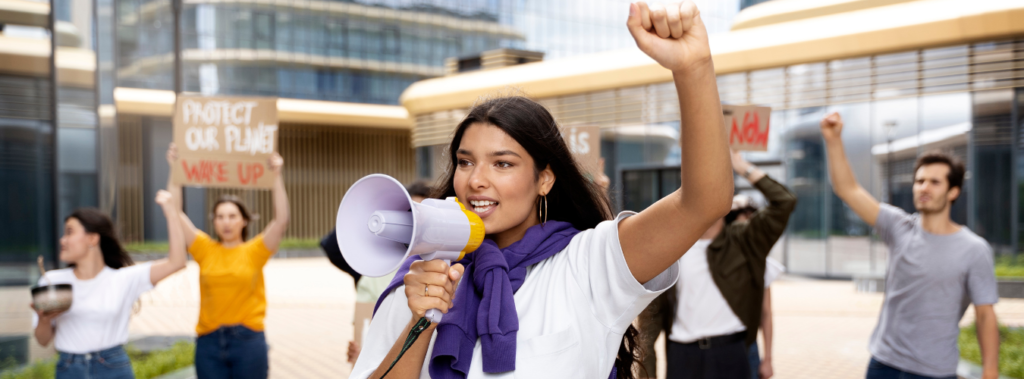
Why Young Voices Are Shaping the Future of Indian Politics The role of youth in politics has become more significant than ever before. With access to information and digital platforms, young people are actively engaging in political discussions and influencing public opinion. Unlike previous generations, today’s youth are more aware of issues such as employment, climate change, education, and digital growth. Their concerns reflect modern challenges, making their participation crucial in shaping policies. Despite this, many young individuals hesitate to enter politics due to lack of opportunities and support. There is still a perception that politics is reserved for experienced leaders, which limits fresh ideas and innovation. Social media has played a key role in changing this narrative. It has provided a platform for young voices to be heard, enabling them to question, debate, and mobilize support. Encouraging youth participation is essential for a progressive democracy. When young leaders step forward, they bring energy, creativity, and a vision for the future.
Understanding How Government Policies Impact Your Daily Life

Understanding How Government Policies Impact Your Daily Life Understanding How Government Policies Impact Your Daily Life Government policies are often seen as distant decisions made by authorities, but in reality, they directly impact everyday life. From the price of fuel to the quality of roads, policies shape the way citizens live, work, and grow. Policies are created to address specific issues such as economic growth, public welfare, healthcare, and education. For example, a change in taxation policy can affect household expenses, while infrastructure projects can improve connectivity and create job opportunities. However, many citizens find policies complex and difficult to understand. This gap between governance and public understanding often leads to confusion and misinformation. It is important for citizens to stay informed and understand how these policies work. Awareness allows people to question decisions, demand improvements, and make informed choices during elections. Simplifying policies is the first step towards building an informed society. When citizens understand governance, they become active participants rather than passive observers.
The Importance of Questioning Your Leaders
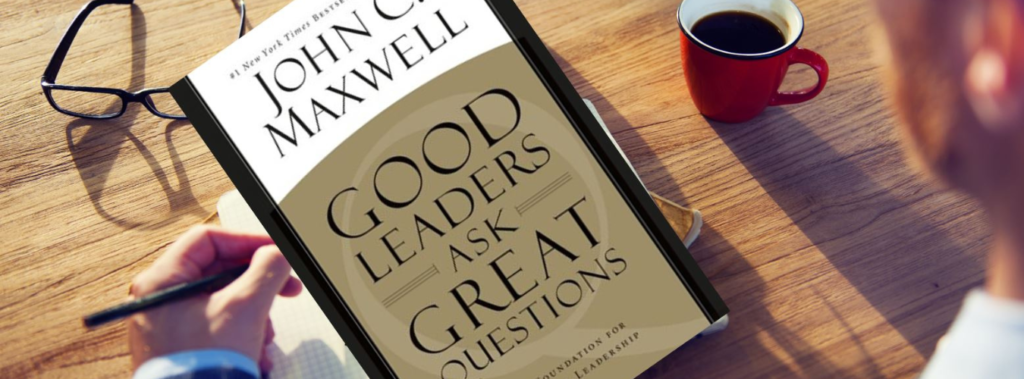
The Importance of Questioning Your Leaders Democracy is built on accountability, and accountability begins with questioning. A system where citizens do not question their leaders risks becoming weak and unbalanced. Supporting a political party or leader is a personal choice, but blind support can be harmful. True democracy encourages debate, discussion, and constructive criticism. Questioning policies and decisions ensures that leaders remain responsible and transparent. When citizens ask questions, they demand better governance. They push for clarity, efficiency, and fairness in decision-making. This ultimately leads to stronger institutions and improved public trust. It is important to understand that questioning does not mean opposing—it means participating. It reflects awareness and involvement in the democratic process. A healthy democracy is one where citizens are active, informed, and unafraid to ask questions. Silence, on the other hand, can allow inefficiencies and mistakes to go unchecked. Strong nations are not built by silent followers but by active and aware citizens.