₹504 Crore Haryana Case: When Bureaucracy Fails, Who Pays?
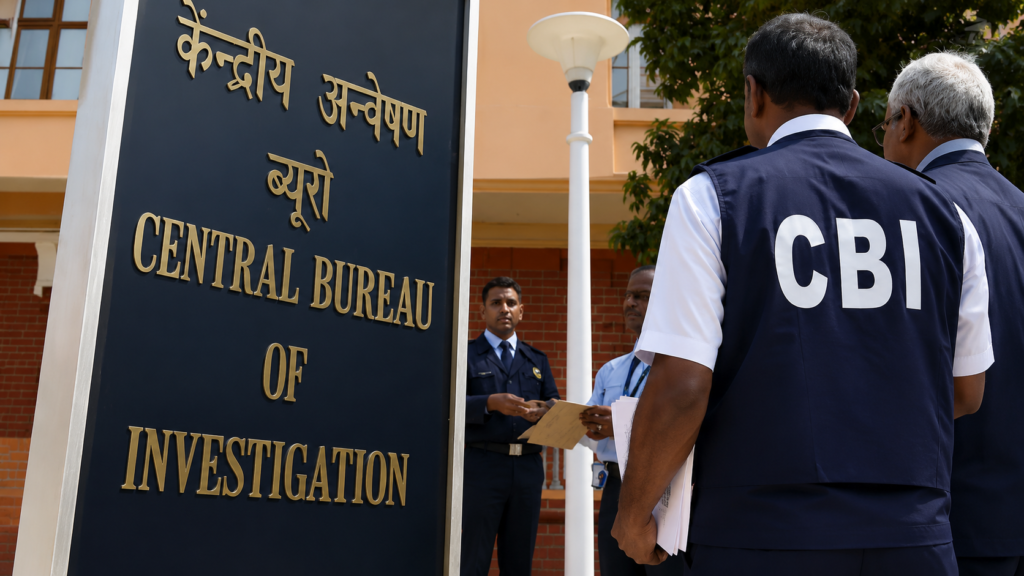
You know that feeling when you carefully put money aside for something important — school fees, a medical emergency, or just the next month’s bills — and then discover someone you trusted has quietly emptied the account? That sick, hollow feeling in the stomach? Multiply it by a few hundred crore and you get a sense of what has been unfolding in Haryana. For months now, the CBI has been peeling back layers of a scam that, on paper, looks almost clinical. Around ₹504 crore belonging to eight different Haryana government departments and boards was parked in bank accounts, mostly with IDFC First Bank’s Sector 32 branch in Chandigarh. The money was supposed to sit safely, often under the pretext of fixed deposits. Instead, investigators say it was moved through forged or non-existent FDs, debit notes, and a web of shell companies until large chunks of it simply vanished into private hands. The Haryana State Pollution Control Board alone is said to have taken the biggest hit — roughly ₹169 crore. Other departments — panchayats, municipal corporations, school education projects, labour welfare, agriculture marketing, power generation — all lost money that was never meant to leave public control. What makes this case sting is not just the scale. It is the cast of characters. Bank officials on one side. Senior public servants, including multiple IAS officers, on the other. Chargesheets have already named dozens of people. Arrests have happened. Gold worth around ₹20 crore has been seized. The bank itself has returned hundreds of crores. On the surface it looks like the system is working — CBI steps in, people get charged, some money comes back. But sit with it for a minute and a quieter, more uncomfortable question rises: how did so much public money move so freely for so long without anyone in the chain raising a red flag? This is not a story of one clever thief and a few careless clerks. It is a story of process failure dressed up as routine administration. Surplus funds of government departments are not supposed to float around like spare change. There are rules about where they can be parked, how much can be transferred, who has to sign off, and how the balances must be reconciled. Yet accounts were opened in ways that apparently violated finance department guidelines. Large transfers went through. Fixed deposits that should have existed on paper somehow did not. And the people whose job it was to notice — the officers inside the departments and the bankers handling the accounts — either looked the other way or actively participated. When bureaucracy fails at this level, the loss is never abstract. It is not “government money.” It is the money that should have gone into cleaner air monitoring, better schools, stronger panchayat infrastructure, labour welfare schemes, or power projects. Every rupee that disappears is a classroom that stays overcrowded a little longer, a road that remains broken, a pollution control measure that never gets funded. The public does not get to choose whether the loss happens. We only get to live with the consequences. There is a deeper pattern here that should worry us more than the specific names in the chargesheets. We have built a system that trusts too much in paper trails and hierarchical signatures while remaining surprisingly weak at real-time verification. A senior officer can authorise the movement of crores. A bank official can process the debit. Shell entities can receive the money. And for a long stretch of time, the only people who seem to notice are the ones who eventually audit the books — often months or years later. By then the money has already been layered, converted, and spent. The recovery of funds by the bank is welcome. The arrests are necessary. But recovery after the fact is not the same as prevention. And punishment of individuals, while important, does not automatically repair the habits and incentives that allowed the fraud to take root. We have seen versions of this story before in different states and different departments. The amounts change. The methods evolve. The underlying problem remains: when the people entrusted with public money face weak internal checks and soft consequences for negligence, the temptation becomes structural rather than personal. So who ultimately pays? Not primarily the officers who may eventually face trial. Not the private individuals who allegedly enriched themselves. The real bill lands on ordinary citizens — through delayed development, higher future taxes to plug gaps, and a slow erosion of trust in the institutions that are supposed to work for us. Every time a large public fund disappears without immediate detection, the message that travels through the system is that vigilance is optional until someone gets caught. What would actual accountability look like beyond the current investigation? Stronger, independent concurrent audit of government bank accounts. Real-time alerts when large transfers happen outside approved limits. Clear personal liability for officers who authorise irregular investments. Banks handling government funds held to higher standards of verification, not just after a scam surfaces. And a culture that treats the movement of public money with the same seriousness we demand when our own salaries are delayed. The Haryana case is still unfolding. More chargesheets may come. Courts will take their time. Some of the accused will claim they were only following procedure or that they were misled. That is how these stories usually go. But the numbers are already large enough, and the pattern familiar enough, that we should stop treating each new scam as an isolated scandal. ₹504 crore is not a small rounding error. It is a reminder that when the bureaucracy meant to protect public resources fails, the cost does not stay inside government files. It walks out into the streets, into the schools, into the air we breathe, and into the quiet sense that the system is not quite on our side. The question is no longer only who stole the money. It is whether we