Ajit Doval: A Life Spent Working Out of Sight
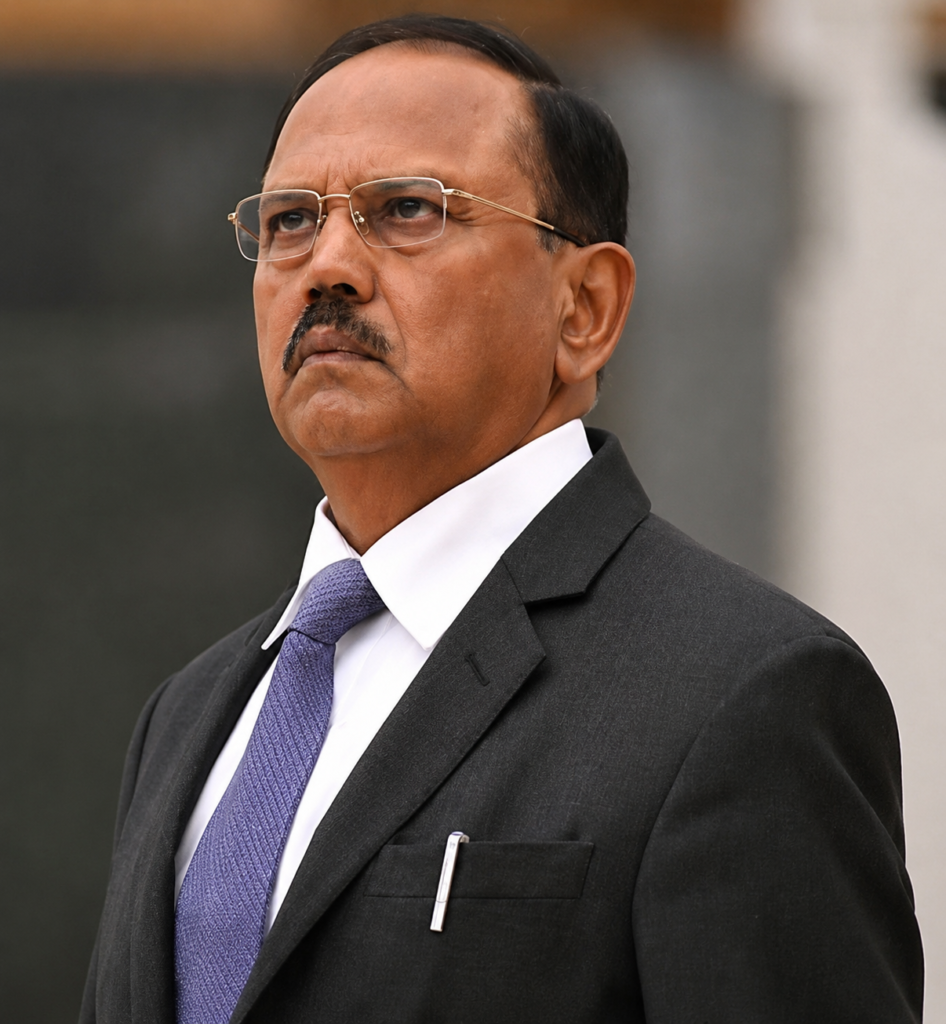
The Spy Who Never Sought the Spotlight : Ajit Dovals’s Untold Journey Some people spend their careers chasing recognition. Ajit Doval spent his avoiding it. For more than five decades, he has worked in some of the most dangerous corners of India’s recent history – insurgent camps in Mizoram, the height of militancy in Punjab, the tarmac in Kandahar during a hijacking that held the country’s attention for over a week — and walked away from each one without asking for credit. Today, as India’s National Security Advisor, he’s talked about almost like a legend. But before the title, and before the films loosely inspired by his career, he was a boy from a small village in the Himalayas who grew up believing that discipline could take you further than luck ever would. This isn’t the story of a superhero. It’s the story of someone who kept choosing service over comfort, for more than fifty years. Growing Up in the Hills Long before his name meant anything in security circles, Ajit Doval was a kid growing up on the pine-covered slopes of Pauri Garhwal. Life there wasn’t easy — it asked for a kind of resilience and patience that city life rarely teaches. His father, Major G. N. Doval, served in the Indian Army, and the uniform hanging in their home was more than clothing. It was a daily reminder of what duty and sacrifice actually looked like. Doval picked up these values less from what his father said and more from what he watched — the discipline, the composure, the sense that responsibility wasn’t optional. Growing up somewhere that demanded real grit taught him early that comfort had to be earned. That upbringing laid the groundwork for the self-control that would shape the rest of his career. School, University, and Joining the Police Doval’s education started at Ajmer Military School; an institution built around discipline long before its students ever wore a uniform of their own. Structure, punctuality, and physical endurance became second nature to him there. He later studied at Agra University, earning a master’s degree in Economics with distinction — the kind of record that usually points toward a safe, conventional career. Instead, in 1968, he cleared the civil services exam of that era and joined the Indian Police Service, posted to the Kerala cadre. No one could have known it at the time, but the decision would quietly reshape the course of India’s security establishment. Choosing Intelligence Work Over a Visible Career Most young IPS officers want the kind of postings that come with recognition command roles, public profile, a name people know. Doval went the other way. In 1972, he moved into the Intelligence Bureau, India’s internal intelligence agency, where success rarely gets noticed and failure is never forgiven. Why give up a path with clear rewards for one where you can’t even tell your own family what you do? Doval has said, in different ways over the years, that real service doesn’t need an audience. Intelligence work came with no medals, no headlines, and often not even the benefit of the doubt. What it offered instead was the chance to protect the country at its most vulnerable moments — and for him, that mattered more than a conventional career ever could. The Difficult Years The Mizo Insurgency In the 1970s, Doval was sent into the middle of the Mizo insurgency, one of India’s most complicated internal conflicts. Working undercover — often alone, unarmed, and inside hostile territory — he built relationships within insurgent networks that took patience most people don’t have. That groundwork helped bring key Mizo leaders to the negotiating table, easing a conflict that had dragged on for years. The Punjab Insurgency The 1980s brought Punjab close to the edge, as militancy and violence spread across the state. Doval took on a covert role during this period, including intelligence work connected to Operation Black Thunder in 1988 — the operation that cleared the Golden Temple complex of militants with minimal loss of life. It’s still studied today for how precisely it was carried out. Counterterrorism Operations Over the following decades, Doval was called back repeatedly whenever India’s internal security came under threat, from counter-militancy operations to intelligence coordination during periods of heightened terror activity. Every assignment carried real risk, with no guarantee that things would go well. The Kandahar Hijacking Crisis In December 1999, when Indian Airlines Flight IC-814 was hijacked and flown to Kandahar, Doval was one of the officials involved in the negotiations to secure the passengers’ release. It was a situation where every word carried weight, and it became one of the clearest examples of how he handled pressure. Shaping National Security Policy After retiring from the Intelligence Bureau — where he served as Director from 2004 to 2005, following more than a decade running its operations wing — Doval didn’t step back from public life. In 2009, he founded the Vivekananda International Foundation, a think tank that grew into a serious platform for strategic thinking on India’s security challenges. It quietly set the stage for what came next. Becoming National Security Advisor In May 2014, Prime Minister Narendra Modi appointed Doval as India’s National Security Advisor, putting him at the center of the country’s strategic decisions. It was recognition, decades in the making, for a career built on substance rather than visibility. He was reappointed in 2019, making him the first person to serve more than one term as NSA, and was later given Cabinet rank. Under his leadership, India’s approach to counter-terrorism, border security, and strategic doctrine has been described as more assertive and more coordinated than before. What stands out isn’t just the position itself — it’s that someone who spent decades working in near-total anonymity now shapes decisions that affect an entire country. The Dhurandhar Effect In recent years, public interest in Doval’s life found its way into popular culture through the film Dhurandhar, directed by Aditya Dhar and starring Ranveer Singh alongside R.