
The Education Ministry Gets A New Boss Yet Again
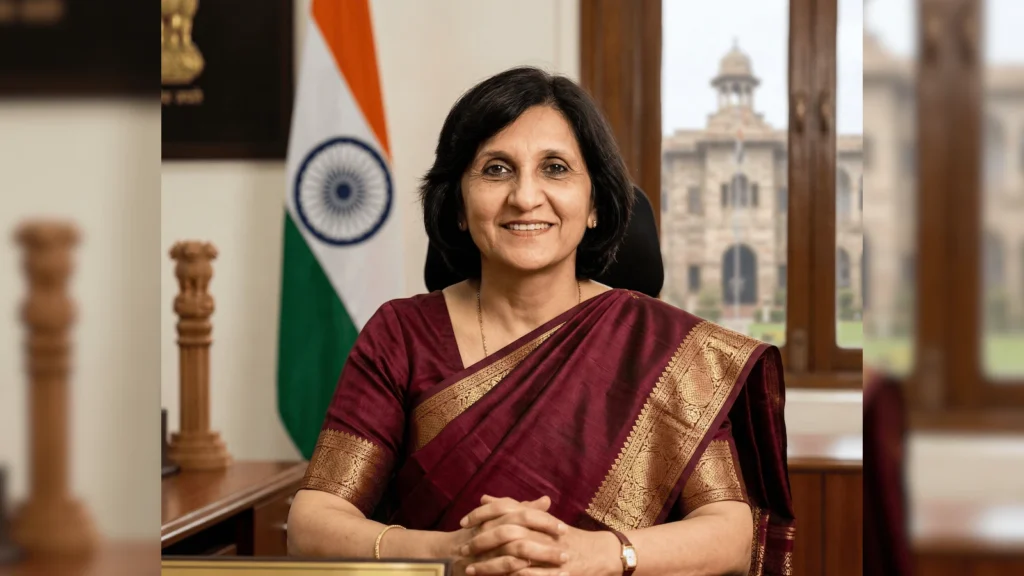
Only three weeks into the post, the government has decided to appoint a new leader for India’s higher education system. Late Monday night, the central government announced that Deepti Gaur Mukerjee, a senior IAS officer, will be the new Higher Education Secretary – making her the third education secretary this year. The post of the Higher Education Secretary has been approved by the Appointments Committee of the Cabinet (ACC). Late Monday, August 10, the Union government announced the appointment. Deepti Gaur Mukerjee, an IAS officer, has been chosen as the new Higher Education Secretary. The post was vacant since last month as the previous incumbent, Vineet Joshi, was transferred to the Mo Panchayati Raj ministry last month. Meanwhile, the appointment of Mukerjee comes against the backdrop of the government’s ongoing reshuffling of senior bureaucrats. Who is Deepti Gaur Mukerjee? Deepti Gaur Mukerjee has more than three decades of experience and has been posted in various ministries at the central and state levels. A 1993 batch IAS officer from the Madhya Pradesh cadre, Deepti has worked in various capacities in the administration, including health, and corporate affairs, and has experience in public policy and administration. She has served as the Secretary in the Ministry of Corporate Affairs and has also been the CEO of the National Health Authority (NHA), making her familiar with the inner workings of large government organizations. She has studied at prestigious institutions like JNU and London School of Economics and Political Science according to her profile. Why the big deal about the new Higher Education Secretary? This recent appointment of Mukerjee is significant because of the transition from the corporate affairs ministry to the education ministry. The higher education department has a vast portfolio ranging from the administration and accreditation of the universities to a number of national-level scholarship programs and other initiatives. As the Education Secretary, she will work closely with the ministry on higher education-related issues. Meanwhile, her work will also involve coordinating with the various universities, as well as higher-education bodies, to ensure that the administration’s policies are implemented correctly. This makes her not only the most powerful education bureaucrat but also a critical link in the implementation chain. What else do we know about this appointment? This is not the first time that the new education secretary has been discussed. In fact, the government initially appointed Naresh Pal Gangwar, a senior IAS officer from Rajasthan, to the post. However, his appointment has since been withdrawn, with the Personnel Ministry issuing a fresh order for the post. The committee approved the ACC’s proposal for the post of the Education Secretary. So, why all this drama about the higher education secretary? The Centre’s ongoing tussle over the IAS appointments has kept the bureaucratic world guessing. Why is the post of the Higher Education Secretary even important? The post is important as it is the nodal secretary for the administrative needs of the department, besides handling numerous higher education-related issues, including policy, administration, and coordination with universities and other stakeholders. Given the number of issues higher education faces and the large number of students, it is one of the biggest challenges that the administration has to deal with. It will not be an exaggeration to say that the policies and guidelines of the higher education department affect almost every aspect of the academic lives of students, researchers, and teachers across the country. Therefore, the education secretary has to have a thorough understanding of the problems facing the nation’s higher education system, as well as how to effectively implement the government’s policies. Deepti Gaur Mukerjee’s diverse experience could be a plus in this position One of the most crucial aspects of Deepti’s new role is her experience and exposure to different sectors. Having worked in the corporate affairs ministry, she would be well-versed in the legal intricacies and management practices that would be required to handle numerous issues related to higher education. Moreover, given her prior experience as a CEO of the NHA, she would also have an additional edge in dealing with large government organizations and managing public health and administration issues. Deepti has also worked in the state government, given her tenure as a state-level officer at Madhya Pradesh. That could help her in understanding the problems that arise at the state level in relation to higher education. It will be interesting to see how she handles some of the most pressing problems facing the education sector. Mukerjee takes over the education ministry’s higher-education department at a critical juncture when the issues related to university exams, student admissions, and the overall expansion of higher education are dominating the public discourse. Moreover, there is growing concern about the examination system and the administration of the competitive exams, with several recent issues in this space. It remains to be seen what changes, if any, the new education secretary has in store for the country’s higher education system. However, with her vast experience in managing government affairs, it is safe to assume that she would be able to address the concerns of the education sector, as well as the students and teachers, in due course. As an IAS officer, Mukerjee has had a roller coaster ride, with postings in various ministries at the state and central levels. The latest assignment as the Education Secretary is only the latest chapter in her illustrious career. Meanwhile, the government’s recent appointment of her also marks another phase of restructuring at the higher levels of bureaucracy. With her vast administrative experience, she is well-positioned to take on this new challenge in the education sector. And her stint as the Education Secretary will be keenly awaited by the education sector as well as the larger bureaucracy. @Rohit Manral
Not an IAS Officer, Yet Trusted at Home Affairs: Rajesh Gupta’s Extension

You may have seen a small news item about a government officer getting a “tenure extension.” It sounds boring. But it actually tells us something interesting about how India’s government works. This story is about Rajesh Gupta, who just got two more years in one of the most powerful ministries in the country — The Ministry of Home Affairs. What happened? The Appointments Committee of the Cabinet, or ACC, is the top body that decides who works where in senior government jobs. Think of it as the final approval office for the country’s biggest administrative posts. The ACC has now approved two more years for Rajesh Gupta, who works as Joint Secretary in the Ministry of Home Affairs. The order came from the Department of Personnel and Training on February 17, 2026. In simple words, Gupta’s term was supposed to end on April 15, 2026. Now, instead of leaving, he will stay in the same job until 2028, or until a new order changes this. Who is Rajesh Gupta? Here’s the interesting part. Most people think officers in top ministries like Home Affairs come from the IAS, the Indian Administrative Service. But Gupta’s path is different. He belongs to the Indian Railway Service of Electrical Engineers, from the 2001 batch. He started his career working with electrical systems on the railways, not with government policy. Over time, officers like him often move into bigger administrative roles. This happens through something called central deputation. It simply means one department “borrows” an officer from another department for some time. Gupta’s move from railway engineering to top-level government work is a good example of this. How he reached the Home Ministry Before joining the Home Ministry, Gupta was Director at NITI Aayog. This is the government’s top think tank, which plans India’s development strategy. He joined that post in April 2022, for a term that was meant to last five years. But in October 2024, things changed. Gupta moved from NITI Aayog to the Ministry of Home Affairs to become Joint Secretary. This too was meant to be a five-year post, ending on April 15, 2026. He took over this role from an officer named Sumant Singh. Now, with the new order, his time in this post has been extended. He will likely stay until sometime after April 2028, unless the government decides otherwise. Why does the “Joint Secretary” post matter? “Joint Secretary” may sound like just another office title. But inside India’s government, it is actually one of the most important ranks an officer can hold. Ministers and top secretaries make the big decisions. But it is Joint Secretaries who turn those decisions into real action. They coordinate between departments, talk to other ministries, and make sure files and plans actually move forward. In a ministry like Home Affairs, which handles internal security, policing, disaster management, and law and order for the whole country, this job carries even more responsibility. So when an officer gets extended in this kind of role, instead of being moved elsewhere, it usually means the government trusts their experience and wants them to continue their work. Interestingly, Gupta was not the only officer who got good news. The same order also extended the term of another officer, Nirmod Kumar, from the Ministry of Electronics and Information Technology. His term has now been extended until February 2028. Two different officers, two different ministries, but both extensions were approved together. This is quite common when the ACC clears several pending decisions at once. The bigger picture At first, a “two-year extension” might sound like simple paperwork. But these decisions actually show how the government keeps stability in its most important departments. Instead of replacing an officer in the middle of important work, the government often prefers to keep someone who already understands the job well. For Rajesh Gupta, this means two more years of important work inside one of India’s most powerful ministries — a clear sign of the trust placed in him. @Rohit Manral