
Delhi’s New Commissioner Just Reshuffled 40 SHOs in Two Days. Here’s Why That’s Unusual.
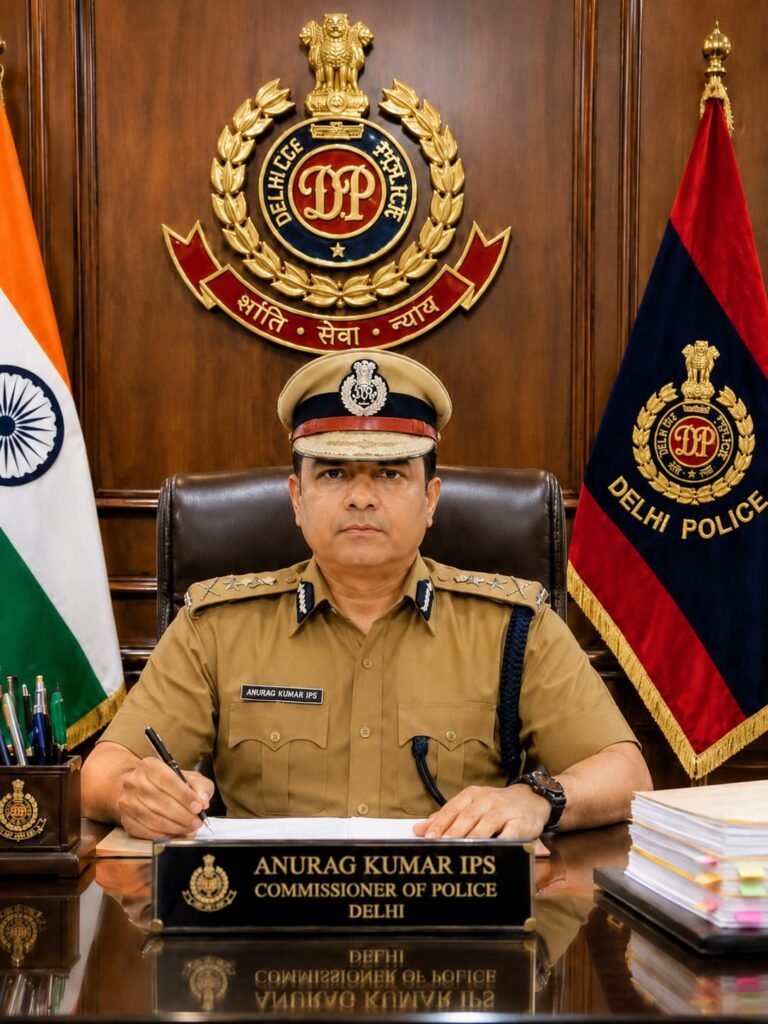
It’s been barely two weeks since Anurag Kumar took over as Delhi’s Police Commissioner, and he’s already shaken things up. On July 17, he stepped into the role, and within days — 30 transfers on one day, 10 more the next — forty Station House Officers found themselves reassigned. No grace period, no gradual handover. Officers were told to pass on charge right away and get to their new postings. For a force the size of Delhi Police, that kind of rapid, sweeping change at the station level just doesn’t happen often. What’s really caught people’s attention is the timing. Normally SHO transfers follow some kind of logic: an officer finishes a reasonable stretch in a post, or gets reassigned after a formal review. Not this time. Several of the officers moved had only been placed in their roles a few months back, under the previous commissioner. Stations like Mehrauli, Fatehpur Beri, Mayur Vihar, Govindpuri, and C.R. Park — all busy, high-traffic areas — lost their SHOs to desk-bound postings in security and PCR instead. Nobody’s given an official reason, and that silence has only made people talk more. People who’ve been watching Kumar closely since he took charge say he wasted no time making his priorities known. In his early meetings with senior officers, he was blunt about not tolerating corruption and about rebuilding professionalism in the ranks. He brought up the Delhi Police he remembered from before 2005 — a force he described as largely clean — and said that’s the standard he wants back. He also stressed that postings and transfers need to be transparent. So when 40 SHOs get moved overnight, it’s hard not to read it as something more deliberate than routine reshuffling. Could be about accountability. Could be about tightening discipline, sharpening efficiency, or simply resetting who’s running things on the ground. Probably some mix of all of it. It’s worth remembering just how much weight SHOs carry. They’re the face of policing that most people actually deal with — the ones who decide whether an FIR gets filed promptly, how seriously a complaint gets investigated, whether a neighborhood feels like it has a police presence at all. In a city as big and complicated as Delhi, who’s running the stations shapes both public trust and how well the whole system functions. Shuffling that many of them at once is Kumar’s way of saying he’s paying close attention. Kumar isn’t new to Delhi, even if he’s been away from it for a while. He’s a 1994-batch IPS officer from the AGMUT cadre, trained as an engineer in Uttar Pradesh, and he started out in field roles — a posting in Mizoram, then stints in Delhi as ACP Sadar Bazar, Additional DCP Northeast, and DCP North. In 2005, while still DCP North, he shifted into the Intelligence Bureau, and that’s largely where his career lived for the next twenty years. He climbed to Special Director, worked sensitive assignments, and stayed tied into Delhi’s security world through the Subsidiary Intelligence Bureau, among other roles. Along the way he picked up the Police Medal for Meritorious Service in 2010 and the President’s Police Medal for Distinguished Service in 2016. People who’ve worked alongside him describe someone precise, detail-driven, not the type to leave things unresolved. The job he’s stepped into is about as high-stakes as Indian policing gets. Delhi Police covers the national capital, VIP protection, major public events, and constant coordination with central agencies. And unlike most state police chiefs, who report to their state governments, Delhi’s Commissioner answers directly to the Ministry of Home Affairs. That combination — running a massive city force while being centrally accountable means decisions made here ripple well past Delhi itself. Reactions inside the force are split, as you’d expect. Some officers see this as overdue housecleaning, a signal that performance and integrity are finally going to be watched more carefully. Others are less enthusiastic, worried that swapping out station leadership this fast could disrupt ongoing investigations and day-to-day operations. Outside the force, the public reaction has been quieter but people are clearly paying attention — the sheer speed of it has left the impression that Kumar means business early on. What comes next probably matters more than the transfers themselves. If the new SHOs bring tighter oversight, faster resolution of complaints, and more transparency, this could end up strengthening the force where it’s most visible to ordinary people. And if as some reports hint — more senior-level changes are coming, this could turn out to be just the first move in a bigger overhaul. The real test will be whether stations can hang onto momentum on their cases, whether morale holds up among rank-and-file officers, and whether institutional memory survives the churn. Whatever else happens, Kumar’s first major move as Commissioner has already told the force something about how he plans to operate. Whether that translates into real, lasting change for Delhi’s policing is the bigger question — one that’ll only get answered over time. For now, though, the message is pretty clear he’s watching, and he expects the ground to respond. @Rohit Manral