
She Walked Away from the Life Many Dream Of: Divya Mittal’s 13-Year Journey

An IIT- IIM graduate who left her finance career in the UK to join the civil services recalls the people, files and moments that stayed with her after her decision to resign in August 2026 In the summer of 2023, in a remote hill village in Mirzapur, an elderly woman stood by a newly installed tap that brought water for the first time in living memory. She said nothing. She simply raised her trembling hands, touched the head of the district magistrate and blessed her. That would stay with Divya Mittal long after the files she carried were closed and the postings she held changed. Thirteen years ago, Mittal had been working in London. After studying a degree in engineering physics at IIT Delhi and completing her MBA at IIM Bangalore, she joined JP Morgan as an associate, handling complex derivatives. For her it was a fitting end to a stellar academic and professional journey. But something felt missing. Being away from India troubled her. In her own words, her education, confidence and ability to walk with her head held high anywhere in the world felt like a debt she owed to this soil. She wanted to make her handprints on the bricks that would build the India she had dreamed of. So she returned. She prepared for the civil services without formal coaching. In her first attempt in 2012 she qualified for the Indian Police Service. She appeared again the next year and secured All India Rank 68, joining the Indian Administrative Service in the 2013 batch, allotted to the Uttar Pradesh cadre. She joined the service on September 2013. Her early postings took her through the normal training and subordinate roles: sub-divisional magistrate in Sitapur and Meerut, a short stint as assistant secretary at NITI Aayog where she presented ideas on citizen-centric monitoring, chief development officer in Gonda, joint managing director at the UP State Industrial Development Corporation. Then came a longer assignment as vice-chairperson of the Bareilly Development Authority from early 2019 to September 2020. When she took charge the authority had a substantial bank loan of around ₹32 crore. Over the next 19 months the debt was cleared as well as long pending land compensation to farmers began to move. The work was technical and often quiet but it restored a measure of financial breathing room to the organisation. It was the postings in districts that led her into the daily texture of people’s lives. As district magistrate of Sant Kabir Nagar for nearly two years, then Mirzapur from September 2022 to September 2023, and later Deoria from July 2024 to May 2026, Mittal moved from offices and scheme documents to villages, complaints and the slow work of making systems respond. In Mirzapur one problem stood outLahuriadah (also referred to as Lahuria Dah or Lahuriya Deh), a village of roughly 1,200 people in the rocky hills of Halia block, had never received regular piped water since the time of Independence. Residents relied on a spring that dried in summer and expensive tankers. Earlier attempts, including a project costing several crores had failed. Technical experts had considered the terrain too difficult. Mittal visited, brought in geophysicists and engineers from Banaras Hindu University, combined leftover infrastructure with a revised design and pushed a new proposal under the Jal Jeevan Mission. In late August 2023 the pipes brought water to homes. She turned on a tap herself, the elderly woman’s silent blessing became the image she later carried with her. In Deoria the challenge was different: Large stretches of government land – roads, drains, ponds, paths between fields – had been under illegal occupation for years. In March 2025 the administration launched Operation Kabza Mukti. Instead of relying solely on force, the administration used public meetings, measurement, persuasion and voluntary compliance. Over the following weeks more than 900 instances of encroachment were cleared across hundreds of villages without reported violence or major confrontation. In one village, reclaimed land was redistributed to 137 landless families from the Musahar community. Public spaces reopened, pathways that had been blocked for decades became usable again. Mittal described the campaign as having become a people’s movement, rather than a purely official exercise. Across these postings, her working style, as reflected in contemporary reports and her own social-media updates, emphasised direct contact. She held public meetings in remote areas, used social media to share scheme details and respond to complaints and saw files as connected to specific peoplefamilies waiting for land rights, persons with disabilities seeking dignity, farmers seeking water. She later wrote that the true peace of the work showed in the eyes of those who finally received what was long due. By May 2026 she had been posted to special secretary in the Uttar Pradesh Revenue Department in Lucknow. On 30 August 2026 she announced her voluntary resignation on X. The post, written in Hindi, reviewed the journey without drama. She described growing up in modest surroundings, the years in London, the sense of incompleteness, the return, the lessons of the districts: Deoria – that standing with what was right is a duty, not an option; Mirzapur – that “impossible” is only an opinion. She recalled the families who received land rights for the first time, the person with disability who found dignity, the farmer whose fields got water. “I was foolish to think I had come to give something,” she wrote. “The truth is, I received the most.” She ended with the memory of the elderly woman in Lahuriadah and a quiet statement that while the position might end, the touch and the dream given by the country’s soil would remain. In subsequent comments to reporters she said the decision was considered, driven by priorities, interests and family responsibilities. She is a mother of two daughters. She stated there was no sudden trigger or external pressure. The resignation remains subject to formal acceptance by the Union Ministry of Home Affairs on the recommendation of the state government. Speculation about the possibility
From JP Morgan to Village Taps: Divya Mittal’s 13-Year Journey of Service Comes to an End.
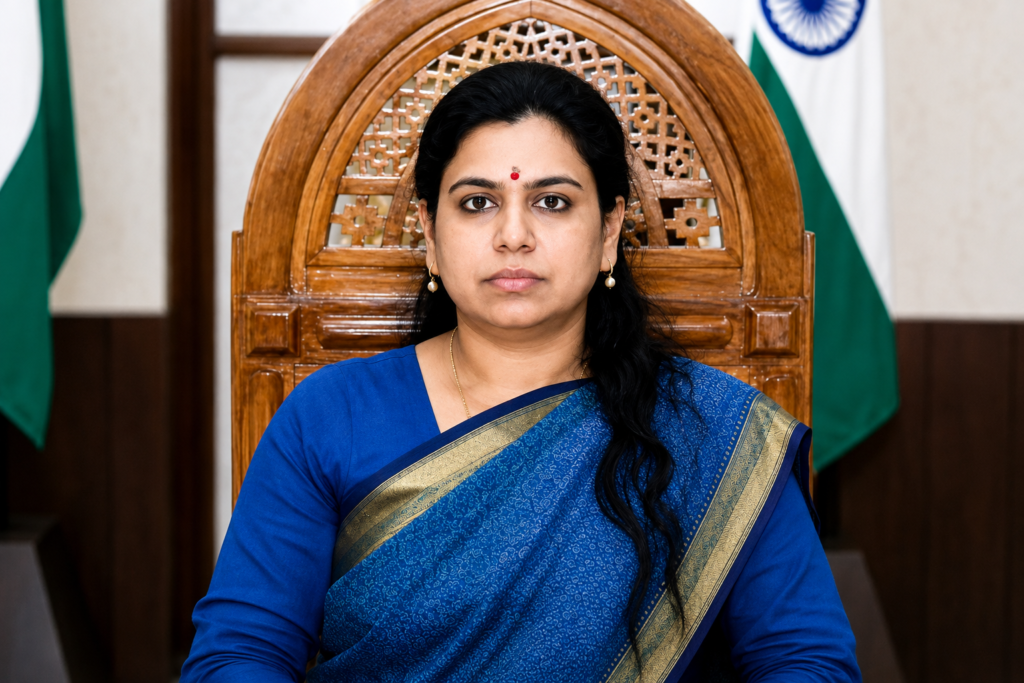
On Sunday, late August 2026 Divya Mittal, a 2013-batch IAS officer from Uttar Pradesh cadre put up a post announcing her voluntary resignation from the IAS, concluding an incredible 13-year-old administrative career. “Today I have voluntarily resigned from IAS, an unforgettable journey of 13 years,” she posted with no allegations, no drama, but a sense of completion as she prepared to move on to other aspects of life she paused for the service to the nation. Divya, who was born on 23 November 1983 and raised in a joint family in Rewari, Haryana, had a typical aspirations of a bright career and settled for nothing less than the best. Completing her B.Tech in Engineering Physics from IIT Delhi as the second runner-up, she went on to secure an MBA from IIM Bangalore. Divya then joined the financial markets as an associate in exotic derivatives at JP Morgan in London, England. However, not being in her own country “used to trouble” Divya, and she felt that the best way to utilise her IIT-Bangalore and IIM Bangalore credentials was to settle back in India and pay back to the nation some of what she had been given. She appeared for the UPSC Civil Services exam in 2012 and was allotted the Indian Police Service. But Divya Mittal appeared again for the exam in 2013 and was among the top 68 candidates on the All-India merit list and joined the Indian Administrative Service in the Uttar Pradesh cadre in 2013. She had no intention of staying in London, working in finance markets was thrilling but she longed to do “something bigger for the country”. During her 13-years in the IAS, Divya held several key posts including sub-divisional magistrate, magistrate in development authorities as well as the District Magistrate in Sant Kabir Nagar, Mirzapur and Deoria. It was in Mirzapur that one of her most memorable acts took place as the people of Lahuriadah (also spelt Lahuria Dah) village in the remote hills got piped water after 75 years of hardship, waiting for “some officials to bring them water”. Divya, who is married to former civil servant Gagandeep Singh Dhillon and has two daughters has described her decision to quit as a personal choice that took into account the family needs. “IAS job is just one aspect of life,” Divya told reporters. There are no plans to turn to politics or take up a corporate job as of now; however, close sources say that Divya would like to pursue academics and writing. In a country where politicians and bureaucrats seem to spend their time and effort on vying for positions of power and influence, Divya Mittal has chosen to step down from one such post and bid adieu to the world of IAS. While doing so, she acknowledged the tremendous opportunity that came her way as she moved from classrooms, IIT Delhi, to a trading desk in London, England and then to remote villages in search of ways to help others. But for Divya the service to the nation, however, came with a price and she knew the time to move on was now. The post that brought her joy and thrill has ended, but Divya Mittal has reminded us all that the dream offered by the soil of the motherland will always remain with us. For many who followed her illustrious career that moved from IIT classes to London’s financial markets to the dusty lanes of villages in search of development, Divya’s graceful act will always remain the most memorable. @Rohit Manral