
Five IAS Officers from UP Cadre Have Resigned, Nine Took VRS – Divya Mittal’s Story Is Hitting Hard
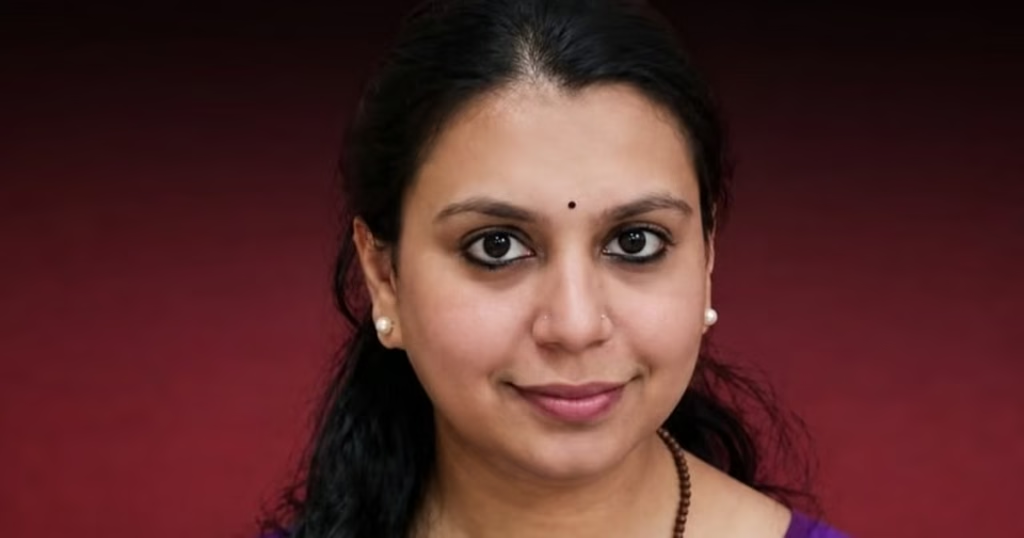
Honestly, some news just sits with you for a while. Divya Mittal’s resignation is one of those. On 30 August 2026 she put up a long, quiet post on X saying she had voluntarily left the IAS after 13 years. No anger, no big drama. Just a warm, almost personal letter that felt like she was talking to people she had met along the way. She grew up in a simple home in Rewari, Haryana. Dreamed of a good life, worked hard, got into IIT Delhi, then IIM Bangalore, and later landed a job in London with JP Morgan. Everything looked sorted. Yet something kept pulling at her. She felt she owed this country the education and confidence it had given her. So she came back, cleared UPSC on her second try (AIR 68 in 2013 – she had already got IPS the year before), and joined the Uttar Pradesh cadre. Over the years she served in Meerut, Gonda, Kanpur Nagar, Bareilly, Sant Kabir Nagar. Then she became District Magistrate of Mirzapur and later Deoria. People still remember the day she managed to get piped water into Lahuriadah, a remote hill village in Mirzapur. Residents had waited for decades, living on tanker water. When the taps finally ran, an old woman just touched Divya’s head with trembling hands and blessed her. That single moment, she wrote, will stay with her longer than any designation. In her farewell note she said she had once thought she was coming to give something to people. The truth turned out the opposite – she received far more. Love, respect, the quiet understanding that every government file has a real human being behind it. Deoria taught her that standing up for what is right is not a choice, it is a duty. Mirzapur taught her that “impossible” is often just an opinion people keep repeating. Later she told journalists the decision was purely personal. She is a mother of two girls. Priorities change. Interests shift. “The IAS job is just one chapter of my life, not the whole book,” she said. No sudden trigger, no pressure she wanted to talk about. She simply felt this chapter was complete and she was ready for the next one – maybe writing, maybe teaching. She has already written a book on UPSC preparation. What makes her exit stand out is the larger picture it sits inside. In the last four-five years roughly 13 officers from the UP cadre have left the service. Nine took voluntary retirement (VRS). Five, including Divya, resigned. The names that keep coming up among those who resigned are S. Muthu Shalini, Rigzin Samphel, Vidya Bhushan, Abhishek Singh and now Divya Mittal. Among those who opted for VRS are R.P. Singh, Rajiv Agarwal, Mohammad Mustafa, Amod Kumar, Renuka Kumar, Juthika Patankar, Vikas Gothalwal, Rigzin Samphel and Anamika Singh. Some went into the corporate world, some returned to quieter personal lives, a few tried politics. Abhishek Singh, for example, tested the political waters after resigning. Official reasons are almost always “personal,” yet in bureaucratic circles people quietly talk about heavy work pressure, fewer chances of central deputation, and the constant balancing act with political expectations in a big state like Uttar Pradesh. Divya’s case feels different because she was still relatively young in the service and had built a public reputation for being hands-on. Her transfer from Deoria to a Special Secretary post in the Revenue Department in May this year is sometimes mentioned in passing. Field work had given her the direct contact with people that she clearly valued. A desk job in Lucknow was a different rhythm altogether. Her resignation still needs formal acceptance from the Union Home Ministry after the state government’s recommendation. Until then the papers remain open. Meanwhile the conversation continues – why are officers who once saw the IAS as the best way to serve beginning to walk away? It is easy to romanticise the service. It is harder to sit with the daily reality – endless files, sudden transfers, the quiet friction that comes with political oversight. Divya did not attack anyone in her note. She simply closed the chapter with gratitude. That restraint itself says a lot. For the young people still grinding through UPSC books, her story is both inspiring and a little sobering. She left a comfortable London life because she felt incomplete. Thirteen years later she left the IAS because another incompleteness had appeared – this time around family, personal growth, and the quiet need to write her own next page. Whether more officers follow, or whether the system finds ways to keep good people longer, is still an open question. For now Divya Mittal has simply said thank you and stepped aside. The water that reached Lahuriadah is still flowing. The people she served still remember. And the chapter she closed continues to be read. Sources: @Rohit Manral
From JP Morgan to Village Taps: Divya Mittal’s 13-Year Journey of Service Comes to an End.
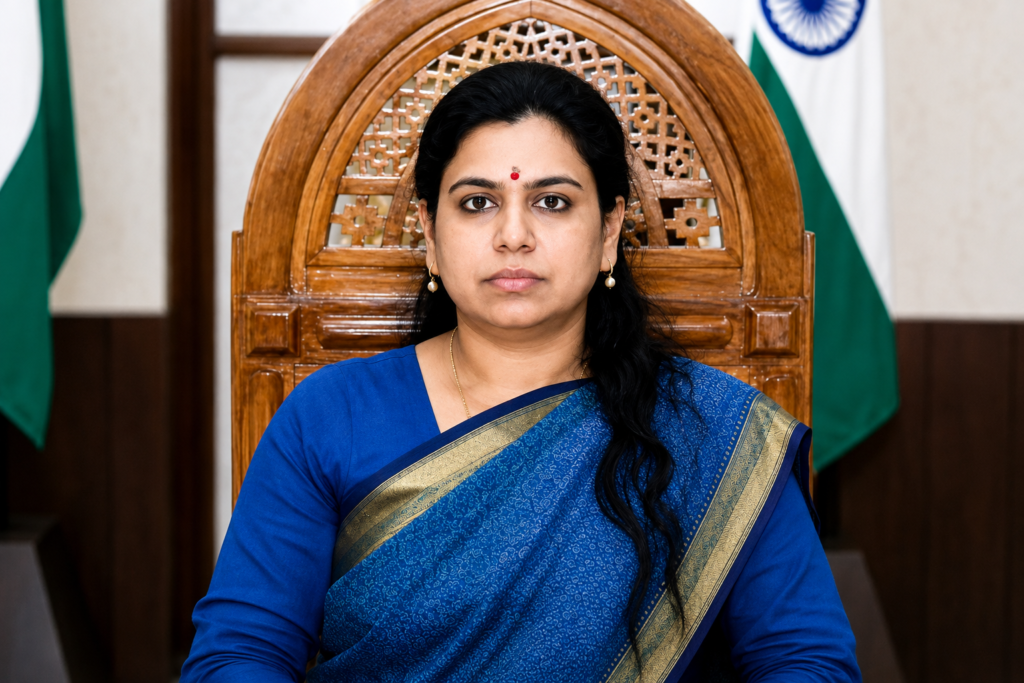
On Sunday, late August 2026 Divya Mittal, a 2013-batch IAS officer from Uttar Pradesh cadre put up a post announcing her voluntary resignation from the IAS, concluding an incredible 13-year-old administrative career. “Today I have voluntarily resigned from IAS, an unforgettable journey of 13 years,” she posted with no allegations, no drama, but a sense of completion as she prepared to move on to other aspects of life she paused for the service to the nation. Divya, who was born on 23 November 1983 and raised in a joint family in Rewari, Haryana, had a typical aspirations of a bright career and settled for nothing less than the best. Completing her B.Tech in Engineering Physics from IIT Delhi as the second runner-up, she went on to secure an MBA from IIM Bangalore. Divya then joined the financial markets as an associate in exotic derivatives at JP Morgan in London, England. However, not being in her own country “used to trouble” Divya, and she felt that the best way to utilise her IIT-Bangalore and IIM Bangalore credentials was to settle back in India and pay back to the nation some of what she had been given. She appeared for the UPSC Civil Services exam in 2012 and was allotted the Indian Police Service. But Divya Mittal appeared again for the exam in 2013 and was among the top 68 candidates on the All-India merit list and joined the Indian Administrative Service in the Uttar Pradesh cadre in 2013. She had no intention of staying in London, working in finance markets was thrilling but she longed to do “something bigger for the country”. During her 13-years in the IAS, Divya held several key posts including sub-divisional magistrate, magistrate in development authorities as well as the District Magistrate in Sant Kabir Nagar, Mirzapur and Deoria. It was in Mirzapur that one of her most memorable acts took place as the people of Lahuriadah (also spelt Lahuria Dah) village in the remote hills got piped water after 75 years of hardship, waiting for “some officials to bring them water”. Divya, who is married to former civil servant Gagandeep Singh Dhillon and has two daughters has described her decision to quit as a personal choice that took into account the family needs. “IAS job is just one aspect of life,” Divya told reporters. There are no plans to turn to politics or take up a corporate job as of now; however, close sources say that Divya would like to pursue academics and writing. In a country where politicians and bureaucrats seem to spend their time and effort on vying for positions of power and influence, Divya Mittal has chosen to step down from one such post and bid adieu to the world of IAS. While doing so, she acknowledged the tremendous opportunity that came her way as she moved from classrooms, IIT Delhi, to a trading desk in London, England and then to remote villages in search of ways to help others. But for Divya the service to the nation, however, came with a price and she knew the time to move on was now. The post that brought her joy and thrill has ended, but Divya Mittal has reminded us all that the dream offered by the soil of the motherland will always remain with us. For many who followed her illustrious career that moved from IIT classes to London’s financial markets to the dusty lanes of villages in search of development, Divya’s graceful act will always remain the most memorable. @Rohit Manral