
Zero-Tolerance Approach to Dilapidated Schools – Sabeen Bansal
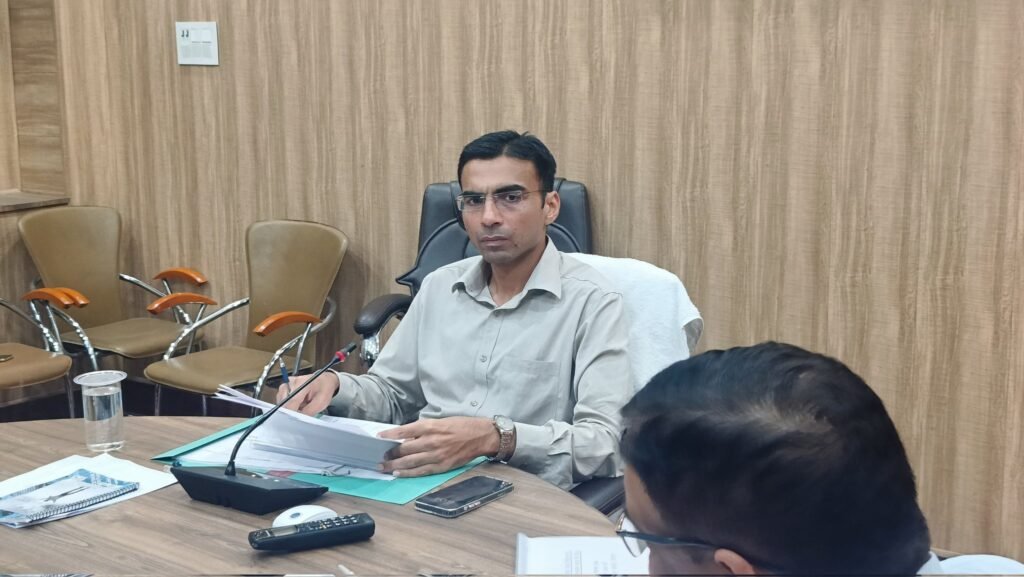
Sabeen Bansal, a popular IAS officer of the 2009 batch of the Uttarakhand cadre, is known for his direct engagement with the public, his tough decisions, and his exceptional work ethic. He currently serves as Secretary, Excise Department, and Secretary, Planning, in the Uttarakhand government. He was born on August 23, 1984, in the state of Haryana. He received his early education from DAV Public College, Ambala, Haryana. He completed his mechanical engineering from NIT Kurukshetra University and his master’s degree in Risk and Resilience from the world-renowned University College London, London, UK. He passed the Civil Services Examination without any interruption in 2008, securing an All India Rank of 34.He also completed his IAS foundation and administrative training from the Lal Bahadur Shastri National Academy of Administration, Mussoorie. He has served as the District Magistrate of Almora, Nainital, and most recently, Dehradun in Uttarakhand, and has also held important positions as Additional Secretary in various state government departments. He has also been the project director of the disaster management project run in Uttarakhand with the cooperation of the World Bank and the Asian Development Bank. Key Tasks During his tenure in Dehradun, he prioritized the safety of children and ordered the demolition and renovation of 79 dilapidated government school buildings. He also upgraded primary schools with modern furniture, whiteboards, digital screens, and mandatory outdoor activities. He also launched a special initiative to provide financial assistance of up to ₹100,000 to promising female students struggling with difficult circumstances. To strengthen women’s safety, he established dedicated pick-up police squads in urban areas and launched a large-scale rescue and rehabilitation campaign to rescue children from beggary and reconnect them with mainstream education. To address the parking problem in a city like Dehradun, he implemented a modern mechanical parking system and allocated a special budget for the installation of charging stations in the city’s main centers to promote environmentally friendly electric vehicles. Upon seeing the systemic changes in the monitoring of cleanliness and garbage collection in the Municipal Corporation, he changed the working system that had been in place for 21 years and redefined its responsibility and gave a strict 45-day ultimatum to private companies for improvement. In Nainital, he himself visited the liquor shop as a common customer and suspended and punished the sellers who were over-charging on the spot. While serving as Additional Secretary at the state level in Disaster Management, he successfully led a major disaster rehabilitation and risk reduction project funded by the World Bank and the Asian Development Bank in Uttarakhand. Honors and Awards
Professor-Turned BJP Veteran Asim Kumar Ghosh Appointed 19th Governor of Haryana
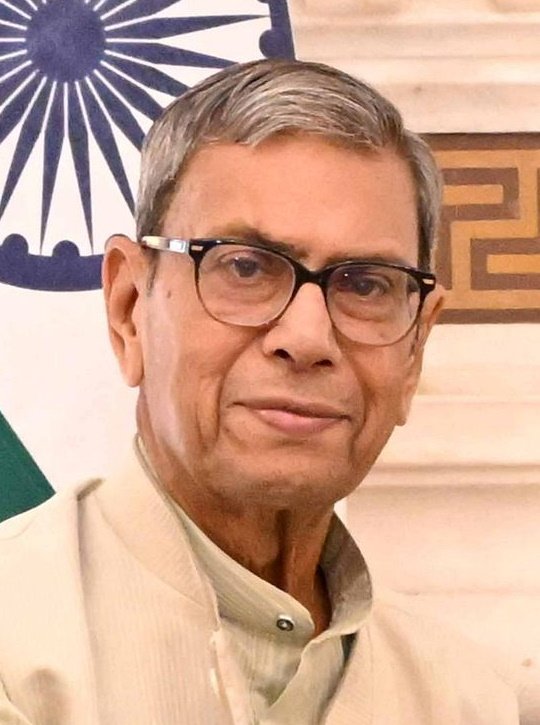
Asim Kumar Ghosh, the 19th Governor of Haryana—born on March 12, 1944, in Howrah, British India—is an Indian educationist and politician. Prior to this role, he served as the President of the West Bengal BJP from 1999 to 2002. Ghosh received his early education at the Vivekananda Institute in Howrah. He subsequently earned his Bachelor’s and Master’s degrees in Political Science from Vidyasagar College and the University of Calcutta, respectively, and worked as a Professor of Political Science starting in 1966. Asim Kumar Ghosh joined the Bharatiya Janata Party (BJP) in 1991. According to Sourav Sikdar—son of Tapan Sikdar—it was Tapan Sikdar who introduced Ghosh to politics. He became the party’s State Secretary in 1996 and later the State Vice-President in 1998. The then Prime Minister Atal Bihari Vajpayee had recommended his appointment as the party’s State President. After completing his tenure, he served as an observer for the Tripura BJP unit from 2003 to 2005. He was a member of the BJP’s National Executive from 2002 to 2006. On July 14, 2025, President Droupadi Murmu appointed him as the Governor of Haryana; he is the third Bengali to hold this office, following Birendra Narayan Chakravarty and Hari Anand Barari.