
DM Mahender Pal’s Roadmap for Fair Municipal Elections in Hisar
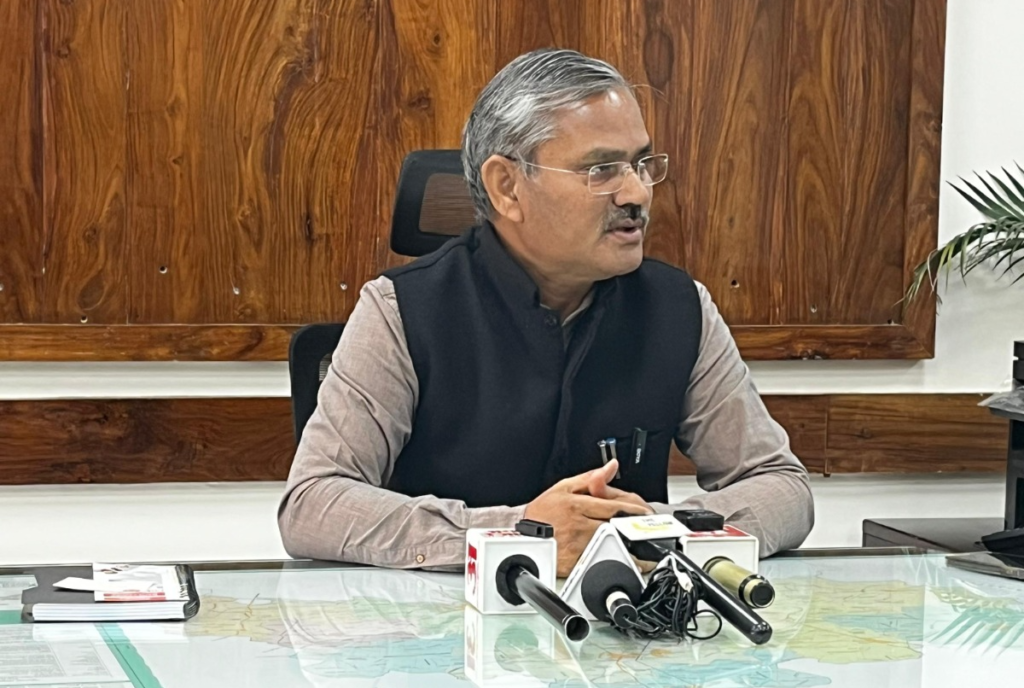
Mahendra Pal is an Indian Administrative Service officer currently serving as the Deputy Commissioner of Hisar district in Haryana. He is a 2017 batch IAS officer of the Haryana cadre, promoted from the State Civil Service to the IAS rank. He has been serving as the Deputy Commissioner of Hisar since November 30, 2025. He graduated with a degree in History and also holds a Master of Science degree in the subject. This master’s degree in both humanities and science provided him with a strong academic foundation for entering the administrative service. He has also led several notable development and law and order initiatives. Key Tasks He focused on ensuring that public grievances were resolved transparently and without delay. He also issued directives to provide relief to ordinary citizens by eliminating the need to repeatedly visit government offices for their work. He ensured timely completion of ongoing infrastructure projects in Hisar, such as roads, electricity, water, and civic amenities. He also regularly reviewed pending government projects and schemes, helping to expedite their completion. He instructed officers across all departments to work in a team spirit and be sensitive to public concerns. He also outlined a framework for each commendable officer to understand their responsibilities and implement government schemes at the grassroots level. As the District Chief, he worked to ensure better coordination between the Army and the local administration to resolve issues related to the welfare of soldiers, veterans, and the general public. He also worked with the District Police Administration, Mrs. Siddhant Jain, IPS, to maintain peace throughout Hisar district. Administrative officers typically receive awards for their efforts in specific civic reforms, election management, and grassroots implementation of government schemes. Major Awards Honors
Professor-Turned BJP Veteran Asim Kumar Ghosh Appointed 19th Governor of Haryana
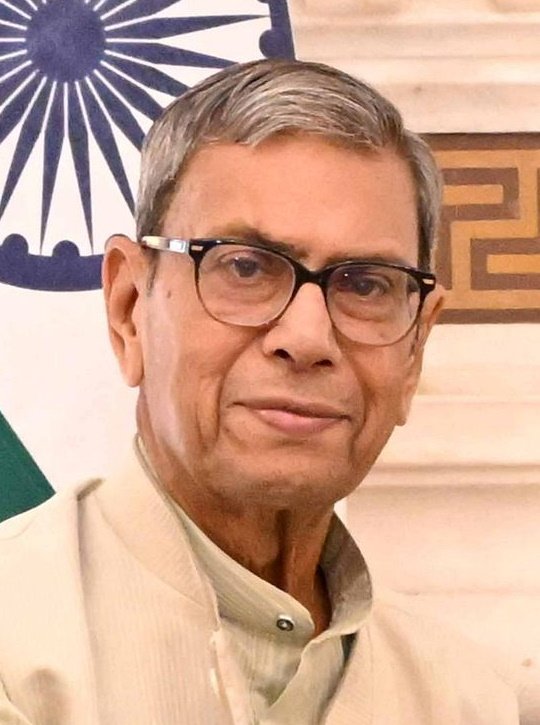
Asim Kumar Ghosh, the 19th Governor of Haryana—born on March 12, 1944, in Howrah, British India—is an Indian educationist and politician. Prior to this role, he served as the President of the West Bengal BJP from 1999 to 2002. Ghosh received his early education at the Vivekananda Institute in Howrah. He subsequently earned his Bachelor’s and Master’s degrees in Political Science from Vidyasagar College and the University of Calcutta, respectively, and worked as a Professor of Political Science starting in 1966. Asim Kumar Ghosh joined the Bharatiya Janata Party (BJP) in 1991. According to Sourav Sikdar—son of Tapan Sikdar—it was Tapan Sikdar who introduced Ghosh to politics. He became the party’s State Secretary in 1996 and later the State Vice-President in 1998. The then Prime Minister Atal Bihari Vajpayee had recommended his appointment as the party’s State President. After completing his tenure, he served as an observer for the Tripura BJP unit from 2003 to 2005. He was a member of the BJP’s National Executive from 2002 to 2006. On July 14, 2025, President Droupadi Murmu appointed him as the Governor of Haryana; he is the third Bengali to hold this office, following Birendra Narayan Chakravarty and Hari Anand Barari.
Transferred 57 Times, Never Compromised: The Anti-Corruption Crusade of IAS Officer Ashok Khemka
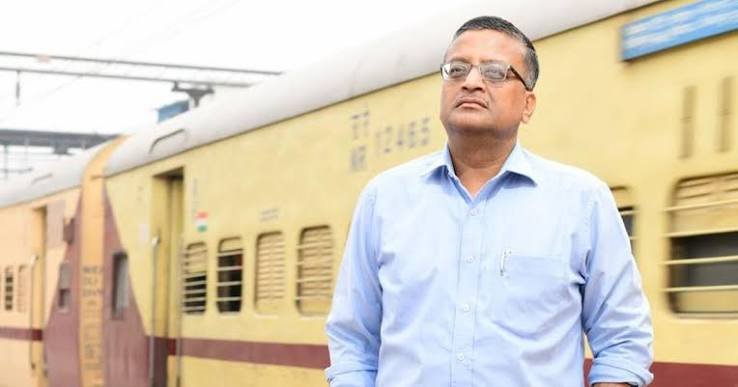
Ashok Khemka, a senior administrative officer in the Indian state of Haryana, is an IAS officer who has been transferred 57times throughout his career. He was born on April 30, 1965, in Kolkata, the capital of the northeastern state of Bengal. He graduated from the Indian Institute of Technology (IIT) Kharagpur in 1988 and obtained a PhD in Computer Science as well as an MBA from the Tata Institute of Fundamental Research (TIFR) in Mumbai. A 1991-batch IAS officer, Khemka has exposed corruption across various departments. Serving in his home cadre of Haryana, he has faced frequent transfers by successive state governments, having been transferred 57 times over a span of 34 years. In Haryana, Khemka was transferred repeatedly whenever a new government took office. The longest tenure of his career was a 15-month stint as Director of the Department of Labour, Employment, and Training. He frequently expressed his displeasure with the government through the media regarding these constant transfers. Dr. Khemka was transferred multiple times during the Bansi Lal-led government. Under the leadership of Om Prakash Chautala, he was transferred nine times in five years. He also faced multiple transfers during the Congress government led by Bhupinder Singh Hooda. Subsequently, during the BJP government led by Manohar Lal Khattar, he was transferred another six to seven times. During his career, Dr. Ashok Khemka also received death threats. He was threatened with death after taking action regarding suspicious land deals between Robert Vadra—son-in-law of Congress President Sonia Gandhi—and the real estate company DLF; a complaint regarding this was lodged with the Panchkula police by K.R. Sharma, a Chief Manager at HSD. Dr. Ashok Khemka was honored with the Jindal Prize in 2011 for his crusade against corruption. Additionally, he received a cash award of ₹10 lakh, shared with Sanjiv Chaturvedi, in recognition of his determined efforts to expose corruption in high places. Ashok Khemka retired on April 30, 2025. He was serving as the Additional Chief Secretary of the Transport Department at the time, and it was from this position that he retired.
From Prison Reforms to Article 370 Verdict: Justice Surya Kant Leaves Strong Mark on Indian Judiciary
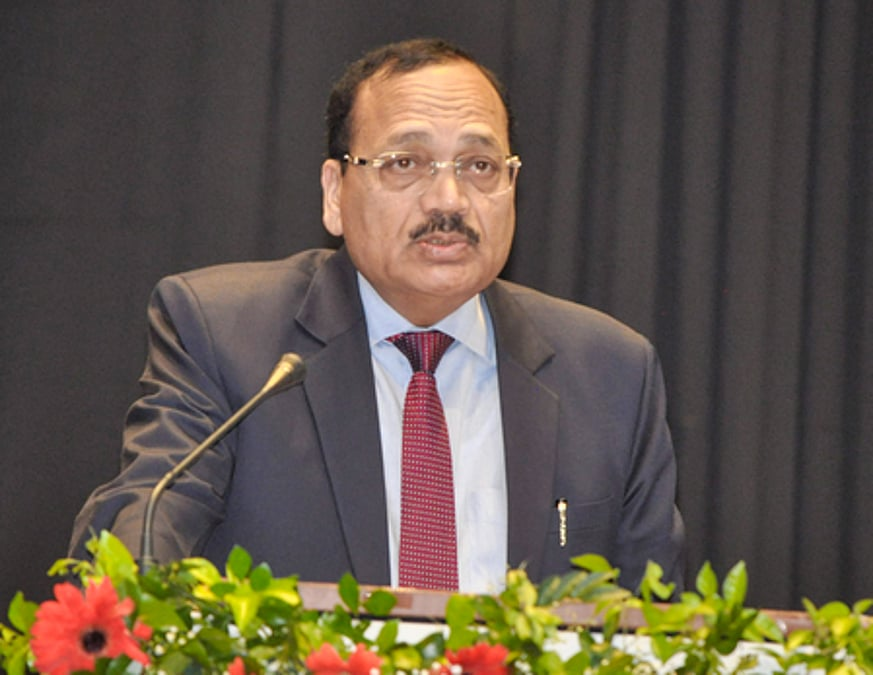
Justice Surya Kant serves as the head of the Supreme Court of India and the highest-ranking official of the Indian judiciary, currently holding the office of the 53rd Chief Justice of India. He was born in 1962 in the village of Petwar, located in the Hisar district of Haryana. In 1984, he completed his graduation in Law from Maharshi Dayanand University, Rohtak; subsequently, in 2011, he secured the first position with First Class honors in his Master of Laws (LL.M.) from Kurukshetra University. Prior to becoming a judge, he served as a Senior Advocate and also held the position of Advocate General for the State of Haryana. Positions Held January 9, 2004: Appointed as a Judge of the Punjab and Haryana High Court. February 23, 2007: Nominated as a Member of the National Legal Services Authority (NALSA) for two terms. October 5, 2018: Took the oath as the Chief Justice of the Himachal Pradesh High Court. May 9, 2019: The Supreme Court Collegium, headed by Chief Justice Ranjan Gogoi, recommended his elevation to the Supreme Court of India. May 24, 2019: Took the oath as a Judge of the Supreme Court. Notable Work Justice Surya Kant has delivered significant judgments concerning human rights, gender justice, legal education, and prison reforms. During his tenure at the Punjab and Haryana High Court, he issued directives to the State of Punjab to constitute a Prison Reforms Committee, aimed at formulating a scheme to facilitate conjugal and family visits for prison inmates. His notable contributions include upholding the constitutional validity of the Electoral Bonds Scheme, adjudicating the Pegasus spyware case, ordering the suspension of the Sedition Law, and ruling on the abrogation of Article 370 of the Constitution, which revoked the special status previously accorded to the erstwhile State of Jammu and Kashmir. Honors and Awards Maharshi Dayanand University Honor: In 2026, Maharshi Dayanand University conferred the ‘Distinguished Alumnus Award’ upon Justice Surya Kant—a former student of the institution—in recognition of his impartiality, human sensitivity, and unwavering faith in the Constitution. Delhi High Court Bar Association Honor: He was felicitated by the Delhi High Court Bar Association on the occasion of his appointment as the 53rd Chief Justice of India.