
From a Farmer’s Daughter to IAS Officer: The Quiet Journey of Priya Rani
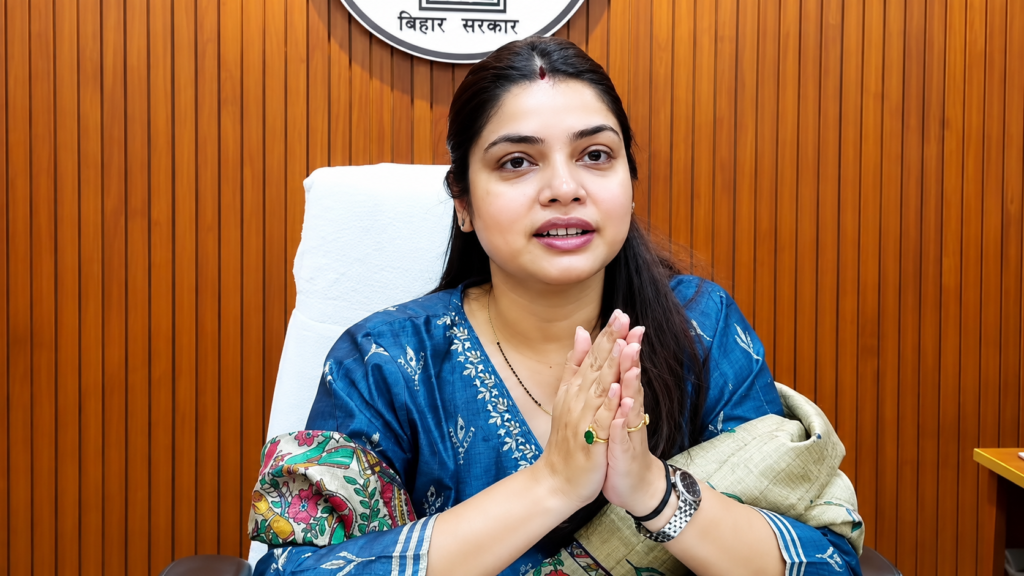
Who is she? There’s this girl named Priya Rani. Ordinary name, but her story hits different. She’s a farmer’s daughter from a small village in Bihar who somehow became an IAS officer. Not the dramatic movie kind of story—just steady, stubborn, and real. Rank 69 in UPSC 2023, Bihar cadre, 2024 batch. Right now she’s the SDM of Sasaram in Rohtas. That’s her. Early life and education She was born on 1 August 1994 in Kurkuri village, Phulwari Sharif, near Patna. Father Abhay Kumar tills the land, mother stays at home. In that village a lot of people thought girls studying too much was unnecessary. They would say things, try to pull her back. Her grandfather, Surendra Prasad Sharma, wasn’t having it. He basically told everyone to mind their business and made sure she got proper schooling in Patna. Primary school at Don Bosco, Class 12 from St. Michael’s. Then she went to BIT Mesra in Ranchi and finished B.Tech in Electrical and Electronics Engineering in 2018. After that she landed a good software job in Bengaluru—Oracle, the kind of place where the salary looks nice on paper. But after some time she felt empty. Money was coming, future looked sorted, yet something inside kept saying this isn’t it. So she quit. Family was upset at first, obviously. Leaving a stable job for UPSC is scary when your background is modest. She still did it, moved to Delhi, prepared hard. She gave the exam four times. In 2021 she got rank 284 and joined IDES. That was already a big thing, but she wanted IAS. Kept going. Fourth attempt, 2023, rank 69. Optional was Economics. She scored decent marks—807 written, 193 in interview. Total thousand. Mostly self-study, NCERTs, newspapers, previous papers. No big coaching drama. Biography table Family table Family is simple. No big connections, just a farming household that somehow managed to support a daughter who refused to settle. Personal life She keeps things quiet. Likes reading books on economics and self-improvement, cooks Magadhi food, goes for morning walks with her father, writes poems sometimes. When the rank 69 result came, her father video-called her and cried. She still talks about those tears like they meant more than the rank itself. No public talk about marriage or anything personal like that. She just focuses on work—listening to people properly, making sure schemes actually reach them, keeping things transparent. FAQs Q.How many attempts? Four. Cleared twice. Q.Did she really leave a high-paying job? Yes. Straight up quit and started preparing. Q.What was the hardest part? Village people trying to stop her from studying when she was a kid, and later her own family worrying when she left the job. Q.Where is she now? SDM of Sasaram. Q.Any advice she gives? Keep it consistent. Don’t get carried away by coaching hype. Basic books done properly and previous papers analysed carefully go a long way. And don’t let one bad attempt finish you. That’s Priya Rani. Not some perfect hero. Just a girl from a farming family who kept walking even when people said stop. Quiet, determined, and still doing the work. Publisher By – Rohit Manral Written By- Anjali Pandey
From a Sleepy Village to IAS – Surabhi Gautam’s Story
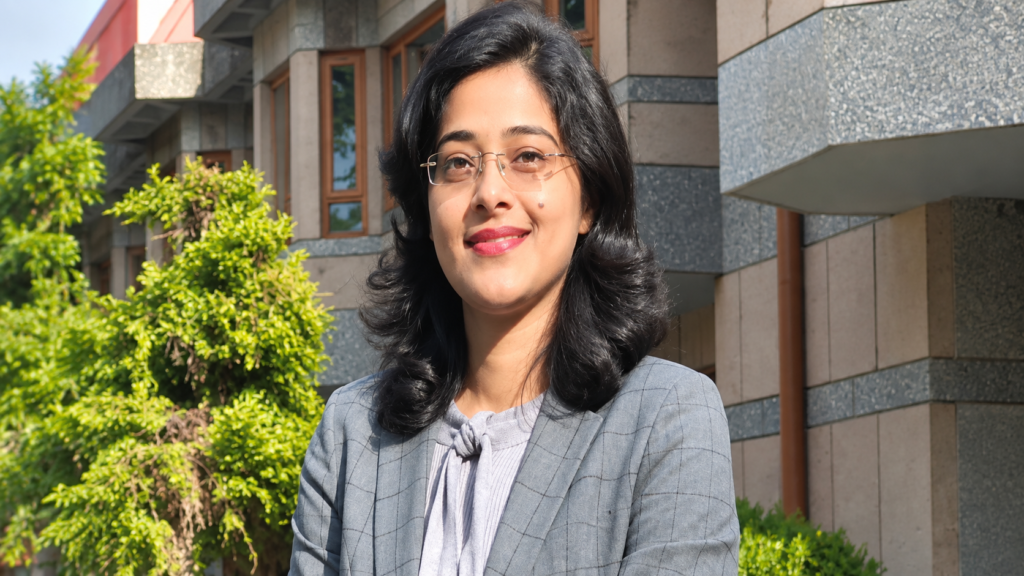
From a Sleepy Village to IAS – Surabhi Gautam’s Story You know those stories that make you stop and think, if she could do it from there, what’s stopping me? Surabhi Gautam’s journey is exactly that. Who is Surabhi Gautam? She comes from Amdara, a small village in Satna district of Madhya Pradesh. Barely a thousand people lived there when she was growing up. Born in the rainy month of August into a big joint family of more than thirty members. Only her parents were happy that day. For the rest of the family it was just another ordinary birth. Her father was a lawyer in the Maihar civil court. Hermother, Dr. Sushila Gautam, taught in the local higher secondary school. They didn’t have much, but they believed in education. School was the government Hindi-medium school in the village. No fancy buildings, books often came late, and many nights she studied by the light of a lantern because electricity was never reliable. Still she was sharp. In class 5 she scored full marks in maths and the teacher told her she was special. That stayed with her. In class 10 she got 93.4 percent with perfect 100s inMaths and Science. Her name came in the state merit list. Around that time a local newspaperasked her what she wanted to become. She said “Collector.” The dream started there. Early life and Education: Class 12 was tough. She got rheumatic fever and had to travel 150 kilometres to Jabalpur every fifteen days for injections. Even then she scored well, got the Abdul Kalam scholarship, and cleared the state engineering entrance. She went to Bhopal for Electronics and Communication Engineering. College was a shock. Hindi-medium background meant her English was weak. On the first day they asked her to introduce herself and explain something in physics. People laughed. She felt small. But instead of giving up she started learning ten new English words every day. Stuck notes on the walls, forced herself to read and speak. By the end of the first semester she had topped the university and got the gold medal. She finished as a gold medalist. After college she worked for a year as a nuclear scientist at BARC. She cleared so many exams – GATE, ISRO, SAIL, MPPSC, SSC, Delhi Police, FCI. In 2013 she topped the Indian Engineering Services with All India Rank 1. She could have settled into a comfortable life, but the dream of becoming a collector was still there. In 2016 she wrote the UPSC Civil Services exam for the first time and got All India Rank 50. Gujarat cadre, 2017 batch. No coaching, pure self-study. She chose Electrical Engineering as optional. Here’s a quick look at her basic details: And her family: Her Personal life: She keeps her personal life quiet. Work comes first. When she went back to the village as an IAS officer the same people who barely noticed her birth welcomed her with garlands and slogans – “Gaon ki beti kaisi ho? Surabhi Gautam jaisi ho!” She still talks about wanting better electricity, better medical facilities, and more chances for girls in places like her village. That quiet fire is still there. Some common questions people ask: Did she really struggle with English? Yes. They mocked her in college. She turned it around by learning ten words a day and wrote the UPSC papers in English. @Rohit Manral FAQs: How many attempts for UPSC? Only one. Rank 50 in the first try. Did she clear other exams? Yes – lots of them, including AIR 1 in IES. Any coaching? None. Just school, self-study and her parents’ support. What keeps her going? The memory of studying under a lantern and the wish that other village kids get better chancesthan she had. Surabhi’s story is not about magic. It’s about showing up every day when people laugh, when the lights go out, when your own body fights you. From a girl whose birth almost went unnoticed to an IAS officer who makes her whole village proud – she simply refused to stay small. And that is why her journey still lights a fire in so many others.
She Walked Away from the Life Many Dream Of: Divya Mittal’s 13-Year Journey
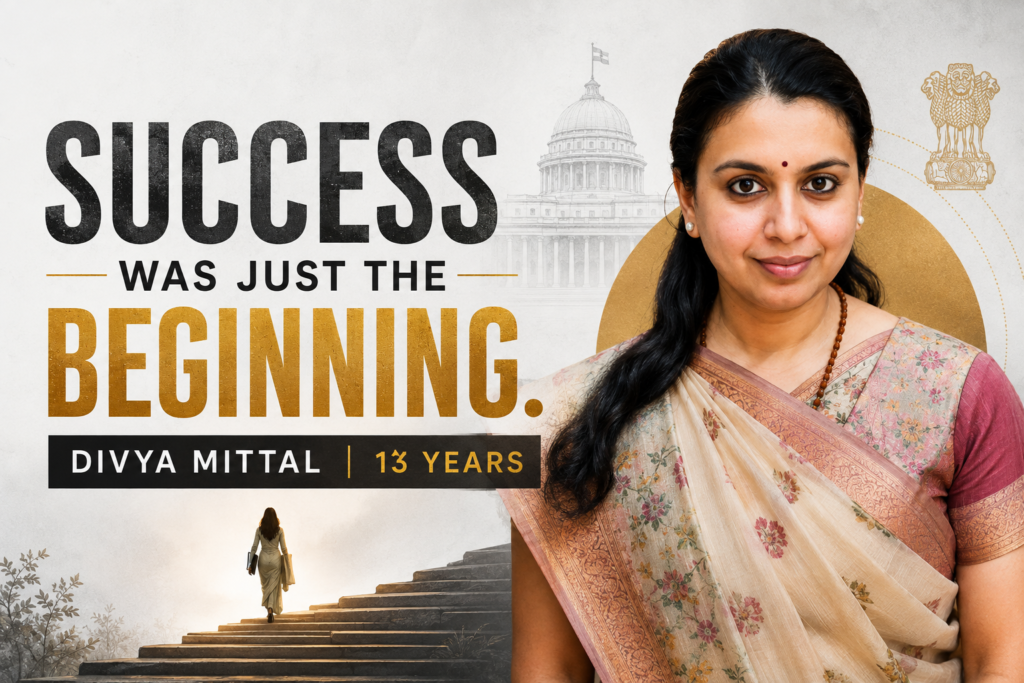
An IIT- IIM graduate who left her finance career in the UK to join the civil services recalls the people, files and moments that stayed with her after her decision to resign in August 2026 In the summer of 2023, in a remote hill village in Mirzapur, an elderly woman stood by a newly installed tap that brought water for the first time in living memory. She said nothing. She simply raised her trembling hands, touched the head of the district magistrate and blessed her. That would stay with Divya Mittal long after the files she carried were closed and the postings she held changed. Thirteen years ago, Mittal had been working in London. After studying a degree in engineering physics at IIT Delhi and completing her MBA at IIM Bangalore, she joined JP Morgan as an associate, handling complex derivatives. For her it was a fitting end to a stellar academic and professional journey. But something felt missing. Being away from India troubled her. In her own words, her education, confidence and ability to walk with her head held high anywhere in the world felt like a debt she owed to this soil. She wanted to make her handprints on the bricks that would build the India she had dreamed of. So she returned. She prepared for the civil services without formal coaching. In her first attempt in 2012 she qualified for the Indian Police Service. She appeared again the next year and secured All India Rank 68, joining the Indian Administrative Service in the 2013 batch, allotted to the Uttar Pradesh cadre. She joined the service on September 2013. Her early postings took her through the normal training and subordinate roles: sub-divisional magistrate in Sitapur and Meerut, a short stint as assistant secretary at NITI Aayog where she presented ideas on citizen-centric monitoring, chief development officer in Gonda, joint managing director at the UP State Industrial Development Corporation. Then came a longer assignment as vice-chairperson of the Bareilly Development Authority from early 2019 to September 2020. When she took charge the authority had a substantial bank loan of around ₹32 crore. Over the next 19 months the debt was cleared as well as long pending land compensation to farmers began to move. The work was technical and often quiet but it restored a measure of financial breathing room to the organisation. It was the postings in districts that led her into the daily texture of people’s lives. As district magistrate of Sant Kabir Nagar for nearly two years, then Mirzapur from September 2022 to September 2023, and later Deoria from July 2024 to May 2026, Mittal moved from offices and scheme documents to villages, complaints and the slow work of making systems respond. In Mirzapur one problem stood outLahuriadah (also referred to as Lahuria Dah or Lahuriya Deh), a village of roughly 1,200 people in the rocky hills of Halia block, had never received regular piped water since the time of Independence. Residents relied on a spring that dried in summer and expensive tankers. Earlier attempts, including a project costing several crores had failed. Technical experts had considered the terrain too difficult. Mittal visited, brought in geophysicists and engineers from Banaras Hindu University, combined leftover infrastructure with a revised design and pushed a new proposal under the Jal Jeevan Mission. In late August 2023 the pipes brought water to homes. She turned on a tap herself, the elderly woman’s silent blessing became the image she later carried with her. In Deoria the challenge was different: Large stretches of government land – roads, drains, ponds, paths between fields – had been under illegal occupation for years. In March 2025 the administration launched Operation Kabza Mukti. Instead of relying solely on force, the administration used public meetings, measurement, persuasion and voluntary compliance. Over the following weeks more than 900 instances of encroachment were cleared across hundreds of villages without reported violence or major confrontation. In one village, reclaimed land was redistributed to 137 landless families from the Musahar community. Public spaces reopened, pathways that had been blocked for decades became usable again. Mittal described the campaign as having become a people’s movement, rather than a purely official exercise. Across these postings, her working style, as reflected in contemporary reports and her own social-media updates, emphasised direct contact. She held public meetings in remote areas, used social media to share scheme details and respond to complaints and saw files as connected to specific peoplefamilies waiting for land rights, persons with disabilities seeking dignity, farmers seeking water. She later wrote that the true peace of the work showed in the eyes of those who finally received what was long due. By May 2026 she had been posted to special secretary in the Uttar Pradesh Revenue Department in Lucknow. On 30 August 2026 she announced her voluntary resignation on X. The post, written in Hindi, reviewed the journey without drama. She described growing up in modest surroundings, the years in London, the sense of incompleteness, the return, the lessons of the districts: Deoria – that standing with what was right is a duty, not an option; Mirzapur – that “impossible” is only an opinion. She recalled the families who received land rights for the first time, the person with disability who found dignity, the farmer whose fields got water. “I was foolish to think I had come to give something,” she wrote. “The truth is, I received the most.” She ended with the memory of the elderly woman in Lahuriadah and a quiet statement that while the position might end, the touch and the dream given by the country’s soil would remain. In subsequent comments to reporters she said the decision was considered, driven by priorities, interests and family responsibilities. She is a mother of two daughters. She stated there was no sudden trigger or external pressure. The resignation remains subject to formal acceptance by the Union Ministry of Home Affairs on the recommendation of the state government. Speculation about the possibility