SSP Ajay Singh Initiated Financial Inquiries Against Dehradun’s Drug Mafia..
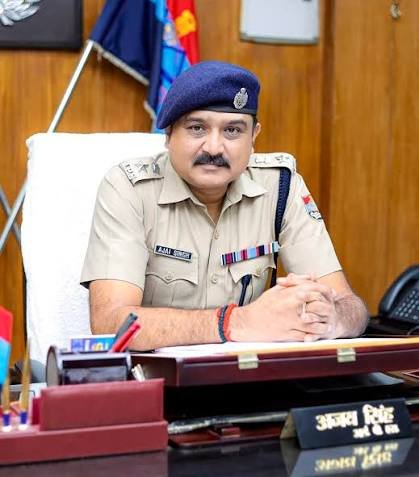
Ajay Singh is a 2014 batch Indian Police Service officer of the Uttarakhand cadre. He currently serves as the Senior Superintendent of Police of the Uttarakhand Special Task Force. He previously served as the Superintendent of Police of Dehradun from September 2023 to February 2026. In 2018, he was promoted from the State Police Service to the IPS. In February 2026, the Uttarakhand government transferred 20-year-old police officers to strengthen law and order. As part of this reshuffle, Ajay Singh was assigned to the STF, and IPS officer Parminder Singh Doval was appointed the new SP of Dehradun. Regarding his schooling, he completed his intermediate education in his home state. After obtaining an engineering degree, he passed the Provincial Police Service exam and joined the police force as a Deputy Superintendent of Police in 2005. Based on his excellent work and experience, he received a promotion in 2018 and was allocated the 2014 batch IPS cadre. Major Tasks During his previous tenure with the Special Task Force (STF), he exposed the Uttarakhand Subordinate Services Selection Commission (SSSC) recruitment exam scam. Under his leadership, the STF took a tough stand in this high-profile case, arresting and jailing over 54 accused of cheating mafia. While serving as the Superintendent of Police (SP) of Dehradun and Haridwar, he launched major campaigns such as the Drug Trust and surgical strikes against the sale of illegal narcotics at medical stores, under the Chief Minister’s vision of a Drug-Free Devbhoomi. He also organized a Saturday Chaupal in police stations to gather direct feedback from the public and dismantle the drug network by keeping the names of complainants confidential. After taking charge of Dehradun, he initiated operations, conducting extensive checking to apprehend all criminals and suspects who had come from other states without verification or with fake documents. He took strict action against land fraud and active land mafias and provided relief to those affected by illegal encroachments. He emphasized the need for a friendly police attitude towards the general public by ensuring prompt hearing of complaints at police stations. He was also honored with the FICCI Smart Policing Award in New Delhi for his efforts in excellent policing and traffic improvement. Honors and Awards He was specially honored by the State Government and the Chief Minister with the Chief Minister’s Meritorious Service Medal for his historic and impartial action as the Chief of the Special Task Force (STF) in the Uttarakhand Subordinate Services Selection Commission paper leak and recruitment exam scam.
Dr. Manjunath T.C.: A Doctor’s Inspiring Path to the Indian Police Service
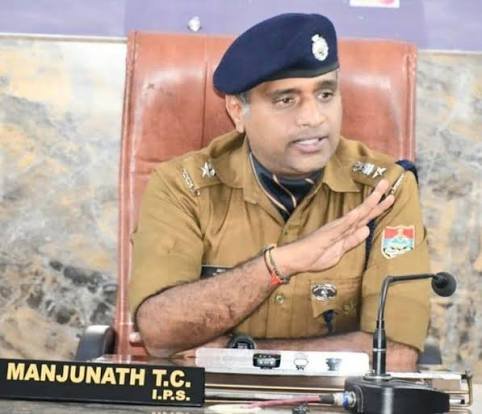
Dr. Manjunath T.C. is a 2014-batch Indian Police Service (IPS) officer belonging to the Uttarakhand cadre. Originally from Karnataka, his journey—spanning from medical practice to the police service—stands as an inspiring example of dedication, discipline, and public service. Education Dr. Manjunath T.C. obtained his MBBS (Bachelor of Medicine and Bachelor of Surgery) degree in Karnataka. During his medical education, he gained expertise in understanding the human body and the diagnosis and treatment of diseases. After completing his studies, he worked as a cardiologist at the prestigious Sir Ganga Ram Hospital in Delhi. While working in the medical field, he treated numerous patients and made significant contributions to healthcare services. Although he had a promising future in medicine, a desire to serve society and the nation on a broader scale motivated him to prepare for the Union Public Service Commission (UPSC) Civil Services Examination. Through hard work and determination, he cleared the UPSC Civil Services Examination in 2014 and secured a place in the Indian Police Service (IPS). Police Service (IPS Career) Upon becoming an IPS officer, Dr. Manjunath T.C. was allotted the Uttarakhand cadre. Serving in various administrative and police capacities, he has discharged significant responsibilities in areas such as maintaining law and order, crime control, police modernization, and public safety. Throughout his service, he has held leadership roles across various districts and units. According to available public records, he has served in key positions such as Commandant of the 2nd Indian Reserve Battalion (IRB), Senior Superintendent of Police (SSP) of Udham Singh Nagar, SP (Security) at Police Headquarters, and currently working as the Superintendent of Police (SP) of Nainital. Work Style Dr. Manjunath T.C. is known for his calm, disciplined, and professional work style. Drawing from his medical background, he places special emphasis on policing with a humane approach. Alongside maintaining law and order, he has placed special emphasis on sensitive interaction with the public, effective crime prevention, and strengthening the dialogue between the police and the community. Honours and Awards Publicly available official records do not indicate that Dr. Manjunath T.C. has received any national or state-level individual awards or police medals. Should he receive the President’s Police Medal, the Police Medal (for Meritorious Service), or other government honours in the future, this information will be updated in the relevant official records. Dr. Manjunath T.C.’s life exemplifies how a successful medical professional can pivot their career towards the broader goal of serving the nation. His journey from being a doctor to an IPS officer serves as an inspiring example of dedication, hard work, and a spirit of service for the youth.
From Ayodhya to Saharanpur: IPS Officer Ashish Tiwari’s Technology-Driven Policing Model Earns National and Global Recognition
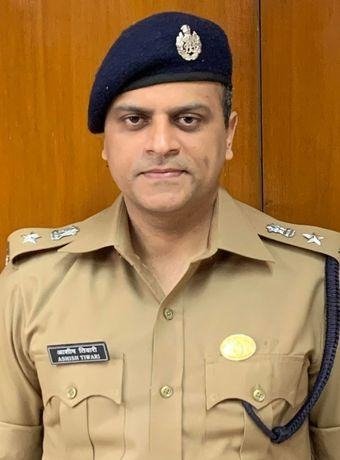
Ashish Tiwari is a 2012-batch IPS officer of the Uttar Pradesh cadre and currently serves as the Senior Superintendent of Police (SSP) of Saharanpur. He is recognized as an officer who champions technology-driven, data-based, and citizen-centric policing models. Throughout his career, he has held leadership roles in several key districts, including Jhansi, Varanasi, Mirzapur, Etah, Jaunpur, Firozabad, and Ayodhya. In these districts, he placed special emphasis on strengthening community policing, public engagement, and digital administrative systems. His tenure as the police chief of Ayodhya was particularly noteworthy. During a period of sensitive and historic significance, he played a pivotal role in maintaining law and order, fostering trust among diverse communities, and ensuring peace. An alumnus of IIT Kharagpur, Ashish Tiwari has effectively implemented technological innovations in policing. Initiatives such as monitoring and curbing fake news, establishing tech-based mechanisms to trace missing children, and institutionalizing ‘SMART’ policing have directly impacted millions of citizens in Uttar Pradesh. He also spearheaded extensive public awareness campaigns against social crimes through women-led grassroots initiatives. These efforts not only fostered trust between the community and the police but also made crime prevention a more participatory process. His innovations and leadership capabilities have garnered international recognition. He was named among the global “40 Under 40” policing leaders by the International Association of Chiefs of Police. Additionally, he has received numerous national awards for innovation in policing, digital transformation, and public service.
Ajit Kumar Doval: India’s ‘James Bond’ and Mastermind Behind Surgical Strikes & Balakot Operations
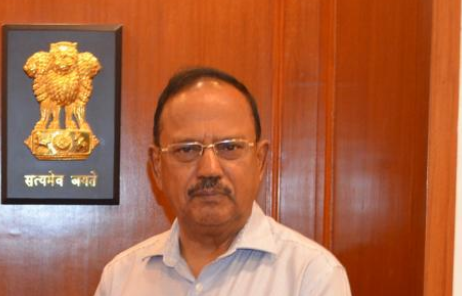
Ajit Kumar Doval currently serves as India’s National Security Advisor. He is widely regarded as India’s “James Bond” and the “Chanakya” of the modern era. Ajit Doval has held the position of National Security Advisor since May 30, 2014, making him the fifth individual to hold this office. Regarding his early life and education, Ajit Kumar Doval was born on January 20, 1945, in the village of Ghiri Banelsyun in the Pauri Garhwal district of Uttarakhand. His father, Major G.N. Doval, was also an officer in the Indian Army. He received his early education at the Ajmer Military School in Rajasthan and graduated with a degree in Economics from Agra University in 1967. In 1968, Doval cleared the Civil Services Examination and joined the Indian Police Service (IPS) under the Kerala cadre. Shortly after beginning his career, he was credited with single-handedly restoring peace—without the use of force—during the 1971 communal riots in Thalassery, Kerala, by engaging with local leaders. Subsequently, in 1972, Doval moved to the Intelligence Bureau, shifting his focus from traditional policing to covert operations and counter-terrorism. He played a pivotal role in quelling the insurgency led by the Mizo National Front and successfully reintegrated numerous insurgents into the mainstream. Furthermore, Doval spent several years working undercover, a period that included living clandestinely in Pakistan. During Operation Black Thunder in 1988, he infiltrated the Golden Temple in Amritsar disguised as a rickshaw puller; this operation helped gather critical intelligence that played an instrumental role in flushing out the terrorists. Additionally, in 1988, Doval became the first police officer to be awarded the Kirti Chakra, an honor recognizing his distinguished record of covert service. In 1999, Doval was one of the three negotiators involved in the talks for the release of passengers from the hijacked IC-814 aircraft in Kandahar. He was involved in resolving 15 aircraft hijackings involving Indian Airlines that occurred between 1971 and 1999. In January 2005, Ajit Doval retired from the post of Director of the Intelligence Bureau. Following his retirement, Doval was appointed as India’s fifth National Security Advisor on May 30, 2014. In July 2014, he ensured the safe return of 46 Indian nurses who were held captive in a hospital in Tikrit, Iraq. He is the longest-serving incumbent in this position and a powerful bureaucrat holding the rank of a Cabinet Minister. Strategic Achievements: He played a pivotal role in several major strategic and diplomatic initiatives, such as the 2016 ‘Surgical Strikes,’ the 2019 ‘Balakot Airstrikes,’ and the abrogation of the special status accorded to Jammu and Kashmir.