
Karnataka KPSC Recruitment Scam: IAS Officer Suspended Amid Veterinary Jobs Scandal
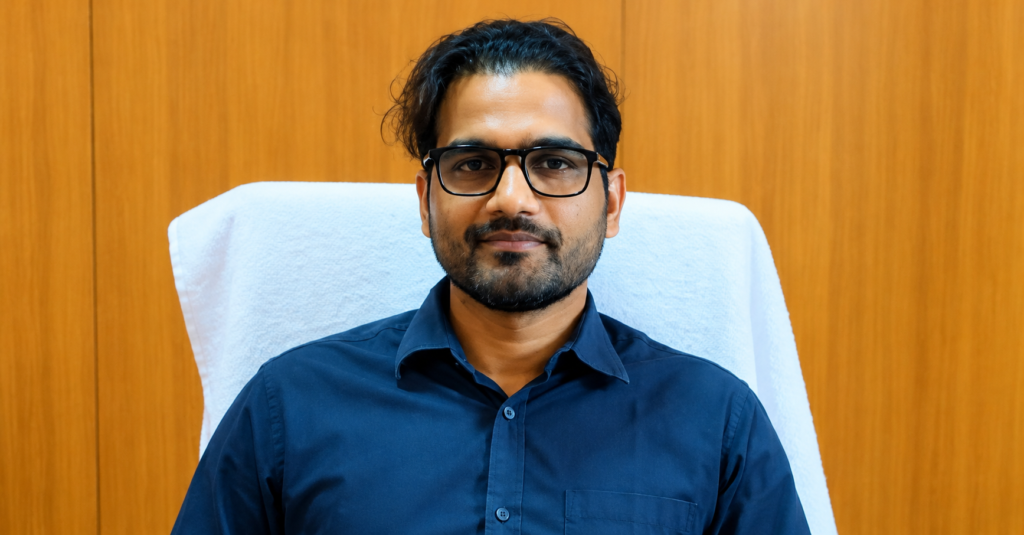
It’s one of those stories that just keeps getting messier, and the latest twist is that the government has gone ahead and suspended an IAS officer who’s already behind bars. I’m talking about Gyanendra Kumar Gangwar. The man was serving as Controller of Examinations at the KPSC during the time this alleged recruitment fraud for veterinary officers took place, and now he’s been formally suspended pending further investigation. So here’s the background. The KPSC conducted an exam on 8 January this year for 400 posts of veterinary officers in the Animal Husbandry and Fisheries Department. Results came out on 17 July. Almost immediately, unsuccessful candidates started crying foul. They claimed that some people who scored low or didn’t even seem prepared somehow made it into the final list. Allegations flew around of question papers being leaked, answer sheets being manipulated, and candidates being offered government jobs for huge sums of money — figures of ₹40 lakh to ₹80 lakh were being mentioned. Some aspirants allegedly stayed in resorts or hotels just before the exam and were handed the papers. There were also claims that certain candidates left their OMR sheets blank on purpose so that middlemen could fill them later. The complaints snowballed. FIRs were registered. The Criminal Investigation Department took over. And then, on 29 August, CID arrested Gangwar. He’s a 2016-batch Karnataka-cadre IAS officer originally from Uttar Pradesh. At the time of his arrest he was posted as Director of the Micro, Small and Medium Enterprises department, but earlier he had been the man in charge of the examinations at KPSC from February 2024 till March 2026 — exactly the period when this veterinary recruitment happened. Investigators say he was in frequent contact with a key middleman, Basavaraj Kannale, who was himself arrested later while trying to leave the country for Uzbekistan from Delhi airport. The CID has sent hundreds of OMR sheets for forensic examination to check for tampering. On 3 September the state government issued the suspension order. They cited both the CID investigation and a letter from the Enforcement Directorate. The ED had earlier conducted searches and told the government that material recovered under the Prevention of Money Laundering Act pointed to corruption in KPSC recruitments that was “solely attributable” to the then Controller of Examinations — Gangwar. Since he had already spent more than 48 hours in custody, the government said his conduct violated the All India Services (Conduct) Rules. So under the Discipline and Appeal Rules he has been placed under suspension with immediate effect. He’ll get subsistence allowance but can’t leave headquarters without written permission. This doesn’t happen in isolation. Remember, the KPSC Chairman, Shivashankarappa S. Sahukar, was already suspended by the Governor earlier over a completely different set of allegations — that his own daughters got selected for government posts, one of them allegedly using a false income certificate to claim reservation benefits. The ED has been looking into that as well. So the entire commission has been under a cloud for weeks. Opposition parties have been hammering the government, demanding a CBI probe, while the ruling side has been pointing fingers at the previous regime under which Sahukar was appointed. Classic Karnataka politics, really. What makes this particularly ugly is the nature of the posts involved. These are veterinary officer jobs — work that actually matters for farmers, livestock health, and rural livelihoods. When people start believing that such positions can be bought, the damage goes beyond one exam. Youngsters who studied hard, spent money on coaching, travelled for the test — they feel cheated. And once trust in a body like the KPSC starts eroding, it’s hard to rebuild. The investigation is still going on. More people could be questioned or arrested. The forensic reports on those OMR sheets will be crucial. Gangwar has largely remained quiet, according to reports. Whether the money trail leads higher up or stops with the middlemen and a few officials is something only the CID and ED can establish in the coming weeks and months. For now, the suspension of a serving IAS officer who’s already in judicial custody sends a strong signal that the government is at least trying to show seriousness. But people on the ground are watching closely. They’ve seen too many recruitment scandals come and go with little lasting reform. If this one ends with a few suspensions and some arrests but no real change in how the KPSC functions — better secrecy around papers, stricter monitoring of evaluation, zero tolerance for conflict of interest — then the next scandal is only a matter of time. It’s a sad reminder of how deep the rot can go when recruitment becomes a marketplace instead of a fair process. Honest candidates deserve better. The system is supposed to protect merit, not reward the highest bidder. Let’s hope the probe goes all the way and doesn’t get diluted by political pressure from any side. @Rohit Manral
₹80 Lakh for a Government Job? KPSC Recruitment Probe Reaches Bareilly
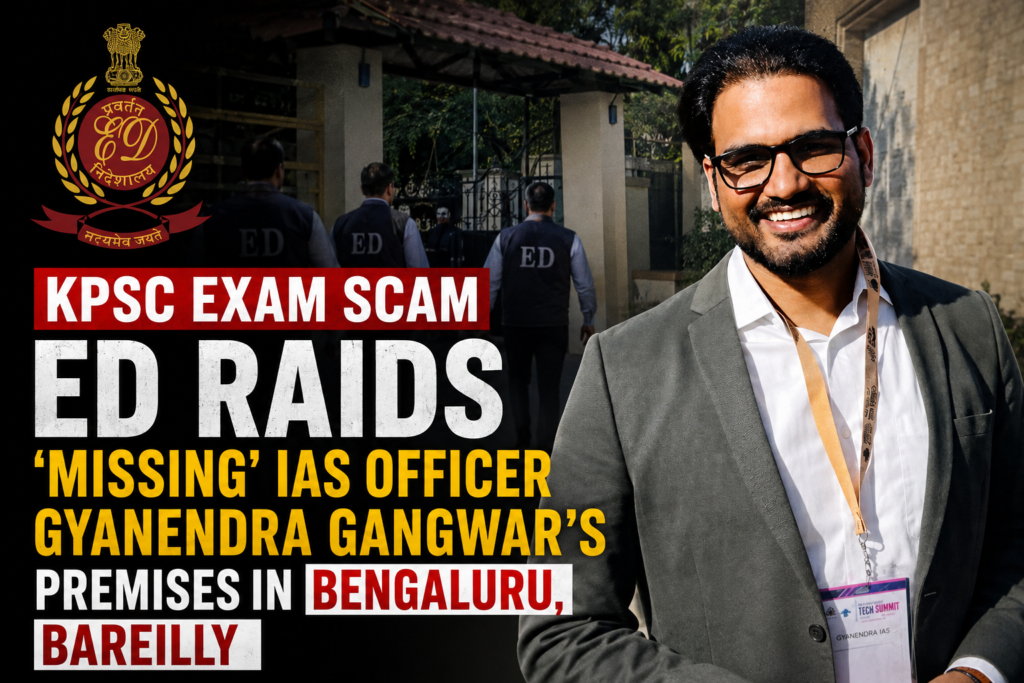
Bengaluru/Bareilly, August 24, 2026: ₹80 lakh for a government job is the allegation that is leading the KPSC recruitment probe that is now moving towards Bareilly. Enforcement Directorate (ED) has searched the premises of IAS officer Gyanendra Kumar Gangwar in Bengaluru and Bareilly as part of their probe into allegations of corruption in the Karnataka Public Srvice Commission (KPSC) recruitment examination.The probe is related to the recruitment of Veterinary Officers and questions surrounding bribery, leakage of question paper and manipulation of OMR answer sheets are being probed As per the Enforcement Directorate’s investigation, intermediaries were demanding sums of ₹70-80 lakh from aspirants in return for helping them get selected.The allegations, however, are yet to be proven in a court of law. But why is an IAS officer being investigated? Gangwar has been questioned due to his prior association with the KPSC. The 2016-batch IAS officer is currently the Director of Micro, Small and Medium Enterprises in Karnataka’s Industries and Commerce Department. He was earlier serving as the Controller of Examinations, KPSC, prior to being transferred last March. Since the post of the Controller of Examinations falls under the direct jurisdiction of the KPSC chief, Gangwar’s involvement in the alleged scam becomes apparent. However, as of now, the officer has not been found guilty of any crime as the Enforcement Directorate continues its probe. From examination to money trail While the controversy around the alleged rigging of the KPSC examination is grabbing attention, the Enforcement Directorate has moved on to investigating the possible money trail in connection to the alleged scam under the Prevention of Money Laundering Act. The probe has turned towards ascertaining whether any money had changed hands during the alleged recruitment scam, and if so, how the funds had been utilised. This is also the reason why the ED has expanded its jurisdiction to Bareilly as the probe takes a turn from questioning the credibility of the examination to tracking the money trail, if any. The Enforcement Directorate has previously searched the premises of the KPSC, as well as those of former KPSC chief Shivashankarappa S. Sahukar, and KPSC member Shanta Hosmani, among others What does it mean for the candidates? While the allegations around the KPSC recruitment examination have been doing rounds in the media, there is another pertinent question that continues to linger- what does it mean for the candidates? A government job examination, particularly one conducted by the state, can be a long-drawn process requiring months, if not years, of preparation for the candidates. This, in turn, means a hefty amount of expenditure for the candidates, with coaching fees, study materials and more. If an examination is cancelled or ruled to be invalid for any reason, the candidates – who have invested both their time and money in the process are left with little to no answers. This is especially true in cases relating to state-level examinations where the final selection of candidates depends on the performance in the examination and the subsequent cut-off marks. If the allegations around the KPSC recruitment examination prove to be true, the state government will also be left with similar questions around the selection process and whether the selected candidates will continue to serve under the government.For now, no such action has been taken Why does this even matter The issue of the alleged corruption in the organisation of the KPSC recruitment examination goes beyond that of mere process and protocol. When it comes to government job examinations, it is not enough for the system to merely function it needs to be able to inspire trust and confidence amongst the general public Any allegations of irregularities, particularly around the question paper, answer sheet, and bribery, can raise questions around the credibility of the entire government job recruitment process. It is why the very fact that the Karnataka government has acted against the KPSC – with reports suggesting that the state Cabinet has recommended the suspension of KPSC chairman Shivashankarappa S. Sahukar are also crucial steps in the larger process of restoring public trust. The Enforcement Directorate’s probe is expected to move ahead, with officials also examining digital data and other financial transactions as part of the probe. For now, the focus of the investigation has turned to examining the alleged money trail, if any It is still unclear whether the recruitment process will truly hold the level of integrity it claims to, or whether the government job examinations will continue to be a black-box process where no one not even the candidates can find out what happens inside. However From the candidate’s perspective, it is vital that the process delivers a fair opportunity. @Rohit Manral