Meet Lieutenant Commander Yashasvi Solanki, the First Woman Naval ADC to the President of India
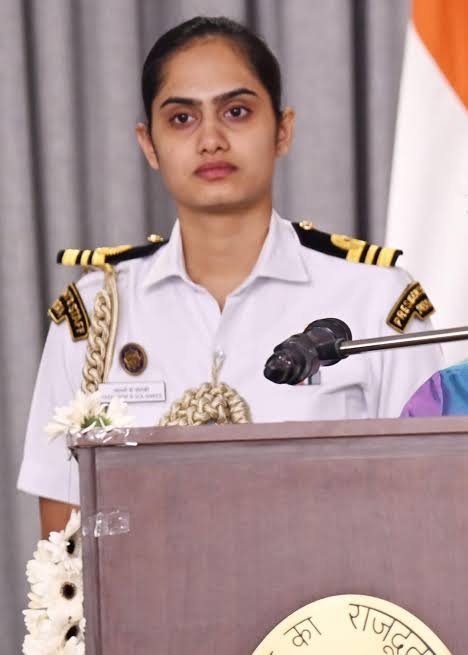
Lieutenant Commander Yashasvi Solanki, currently serving as the Aide-de-Camp (ADC) to the President of India, is the first female officer from the Indian Navy to hold this position. Her appointment is not merely a personal achievement but reflects the evolving role of women and the growing confidence placed in them within the Indian Armed Forces. Early Life and Education Yashasvi Solanki was born into an ordinary family in Haryana. Her father was a government school teacher; consequently, values of discipline, education, and a spirit of service to the nation were instilled in her from childhood. She decided as early as the seventh grade that she wanted to serve the country in uniform. From that moment on, she began aligning her studies and physical training with her goal. During her school days, she was active in sports alongside her academics. She had a particular interest in badminton and participated in numerous competitions. After completing her schooling, she joined the National Defence Academy (NDA). Upon completing rigorous military training, she was selected for the Indian Navy, where she began her career as an officer. Career in the Indian Navy Yashasvi Solanki was commissioned into the Indian Navy in 2012 through the Short Service Commission. She was assigned to the Navy’s Logistics branch, where her duties involved managing military resources, supply chains, administrative coordination, and providing essential support for naval operations. She successfully discharged various administrative and operational responsibilities within the Indian Navy. Her work ethic—characterized by discipline, punctuality, and a strong sense of responsibility—led to her being entrusted with significant duties. It was this outstanding service record that made her a prime candidate for a prestigious role at Rashtrapati Bhavan. Historic Journey to Becoming the President’s ADC In May 2025, Lieutenant Commander Yashasvi Solanki was appointed as the Aide-de-Camp (ADC) to the President of India, Droupadi Murmu. She is the first female officer from the Indian Navy to be appointed to this position. To become an ADC to the President, one must meet several criteria, including an excellent service record, leadership qualities, discipline, and professional competence. The role of an ADC extends beyond merely accompanying the President at formal events; it involves coordinating the President’s military engagements, ensuring adherence to protocol at official ceremonies, facilitating coordination between various military units and the President’s Secretariat, and serving as the President’s military aide at significant domestic and international events. Awards and Honors Her appointment as the first female Naval ADC to the President of India is considered a significant milestone in the history of the Indian Armed Forces and is widely recognized as a mark of honor and distinction.
General Upendra Dwivedi Assumes Charge as 30th Army Chief, Bringing Vast Counter-Insurgency Experience
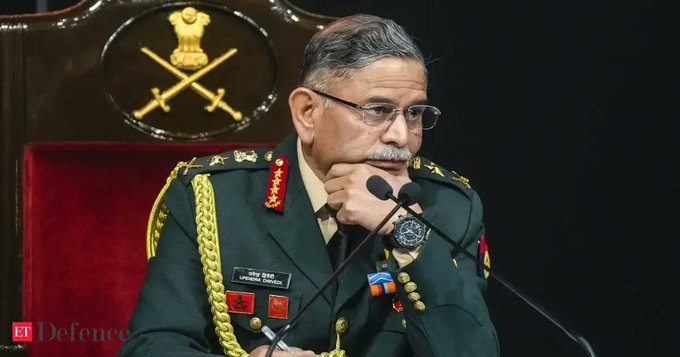
General Upendra Dwivedi is the 30th Chief of the Indian Army. He assumed office on June 30, 2024. Prior to this, he served as the Vice Chief of the Army Staff. General Upendra Dwivedi possesses extensive experience in counter-insurgency and border operations in Jammu & Kashmir and Rajasthan. Additionally, he holds experience in commanding a Mountain Division in the Northeast. General Upendra Dwivedi was born on July 1, 1964, in the village of Rewa, Madhya Pradesh. He received his early education at the Sainik School, Rewa. After completing his schooling at Sainik School, General Dwivedi attended the National Defence Academy (NDA) in Khadakwasla, followed by the Indian Military Academy (IMA) in Dehradun. He was awarded the ‘Blue’ in physical training for his outstanding performance at both the NDA and the IMA. General Dwivedi was commissioned into the 18th Battalion of the Jammu and Kashmir Rifles from the Indian Military Academy, Dehradun, on December 15, 1984. He commanded a sector of the Assam Rifles in Manipur during ‘Operation Rhino,’ and served in the Kashmir Valley during ‘Operation Rakshak’ and in the deserts of Rajasthan. Throughout his illustrious career spanning over 39 years, he held various staff appointments at Headquarters formations—including a Brigade, a Mountain Division, a Strike Corps, and the Integrated Headquarters of the Ministry of Defence. Among his previous appointments, he served as an Instructor at the Indian Military Academy and as a Director on the Directing Staff for the Higher Command Course at the Army War College, where he trained future generations of officers from all three services as well as from friendly foreign nations. Tenure and Command: Recent Statements (2025–2026):
Krishna Swaminathan: The New Indian Naval Staff Chief
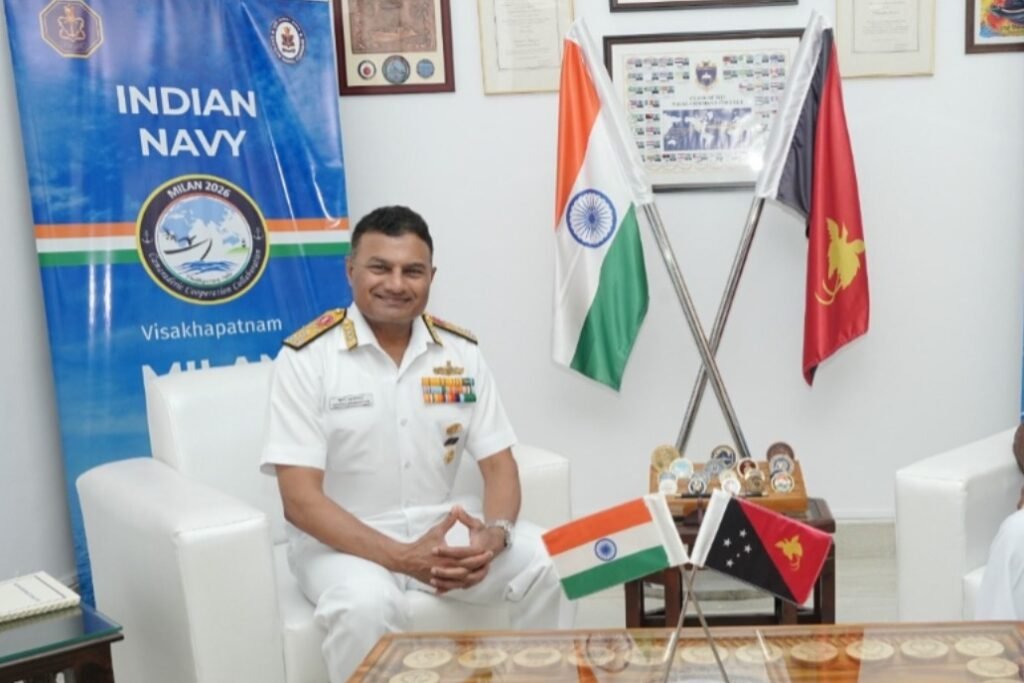
The Government of India has appointed Vice Admiral Krishna Swaminathan as the next Chief of the Indian Navy. He will formally assume the office of the Chief of Naval Staff on May 31, 2026. Following this, his tenure will extend until December 31, 2028. Currently, he is serving as the Flag Officer Commanding-in-Chief of the Western Naval Command, based in Mumbai. Vice Admiral Krishna Swaminathan joined the Indian Navy on July 1, 1987. He assumed charge as the 34th Flag Officer Commanding-in-Chief of the Western Naval Command on July 31, 2025. Krishna Swaminathan was born in Bangalore to D. Swaminathan and Shanta Swaminathan; both his parents were teachers. The Swaminathan family resided in NR Colony, Basavanagudi. He studied at Bishop Cotton Boys’ School until the age of 11, after which he pursued his further education at the Sainik School, Bijapur. Subsequently, he enrolled at the National Defence Academy (NDA), Pune, and earned his graduation degree from there. After the NDA, Swaminathan pursued further studies at the Joint Services Command and Staff College, Shrivenham (United Kingdom); the College of Naval Warfare, Karanja; and the United States Naval War College, Newport (Rhode Island, USA). In terms of academic qualifications, he holds a BSc degree from Jawaharlal Nehru University, New Delhi; an MSc in Telecommunications from the Cochin University of Science and Technology, Kochi; an MA in Defence Studies from King’s College London; an M.Phil in Strategic Studies from the University of Mumbai; and a Ph.D. in International Studies, also from the University of Mumbai. Vice Admiral Krishna Swaminathan is a specialist in communications and electronic warfare. Within the Navy, he is regarded as a visionary officer. He places special emphasis on future warfare and new military strategies. His focus remains firmly on modern technology and future readiness. Throughout his naval career, he has served in several key positions. Furthermore, Vice Admiral Krishna Swaminathan has been conferred with the Param Vishisht Seva Medal, the Ati Vishisht Seva Medal, and the Vishisht Seva Medal.