PM Modi tells students: Reform, perform, transform works the same in government and in business
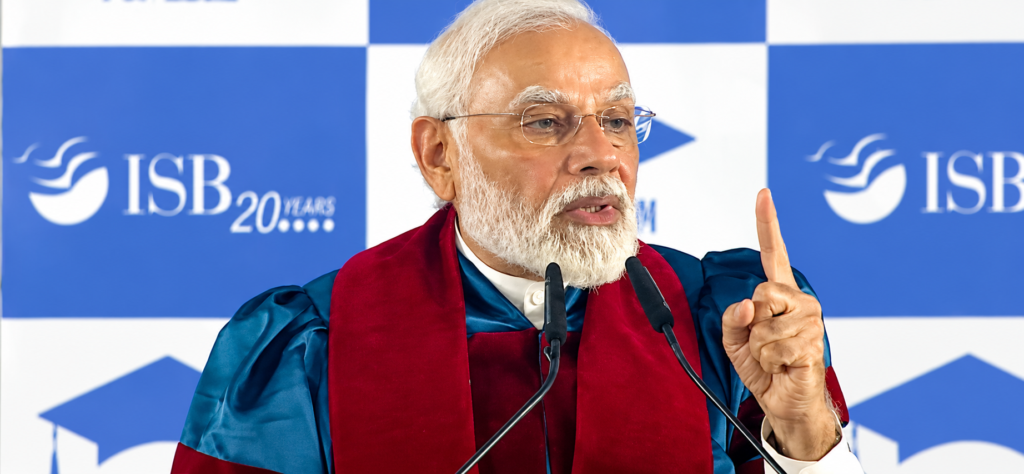
Yesterday in Hyderabad, Prime Minister Modi was at the Indian School of Business for their big 20th year convocation. Around 900 students were graduating from both the Hyderabad and Mohali campuses. He used the chance to talk about something simple that he’s been saying for a while now. He told them straight: the same formula that works in good governance also works in business. Government brings the reforms, the bureaucracy actually performs, and when people join in, real transformation happens. That’s it. He said institutions like ISB should study this properly and show it to the world as a case study. He reminded everyone that for almost thirty years before 2014, India needed reforms but kept missing them because there was no political will and too much instability. Big decisions just didn’t get taken. After 2014 things changed. Political will came back, reforms started happening regularly, the system began delivering on the ground, and people started participating more. That’s when results started showing up faster. He made it clear this isn’t only for government. He looked at those management students and said this same mantra is for you too. Once you start working, you’ll take a lot of decisions. But decisions alone are not enough. You have to make sure they get implemented properly and actually change things on the ground. He gave the example of sports. After 2014, Indian athletes started doing much better. Why? Because talent started getting spotted early, there was proper support, selection became more transparent, and training facilities improved. Schemes like Khelo India and the Olympic Podium Scheme helped create that environment. Reform led to better performance, and that performance turned into real transformation in sports. He also pointed out how the world is looking at India differently now. Fastest-growing major economy in the G20, second in internet users, strong start-up scene, record FDI, digital payments that the world notices, and we even made our own Covid vaccine and sent it to over a hundred countries. “Today the world is realising that India means business,” he said. The message for the students was simple. Whether you’re running a government department or a company, the cycle is the same: fix what’s broken, make sure people actually deliver, and bring everyone along so the change sticks. That’s when transformation really happens. He asked the ISB people to look closely at how this has worked in India these past years and share those lessons. For the graduates, it was a practical note to take with them. Policy ideas are fine, but execution is what counts. Reform, perform, transform — same in governance, same in business. That’s the whole thing, really. No big theory, just a clear three-step way of working that he’s been pushing. Sources:Economic Times Government coverage of the ISB Hyderabad event (May 2022)Business Standard report on the same speechNews18 and other contemporary reports from the convocation Publisher By – Rohit Manral Written By – Anjali Pandey
Om Birla : Lok Sabha Speaker
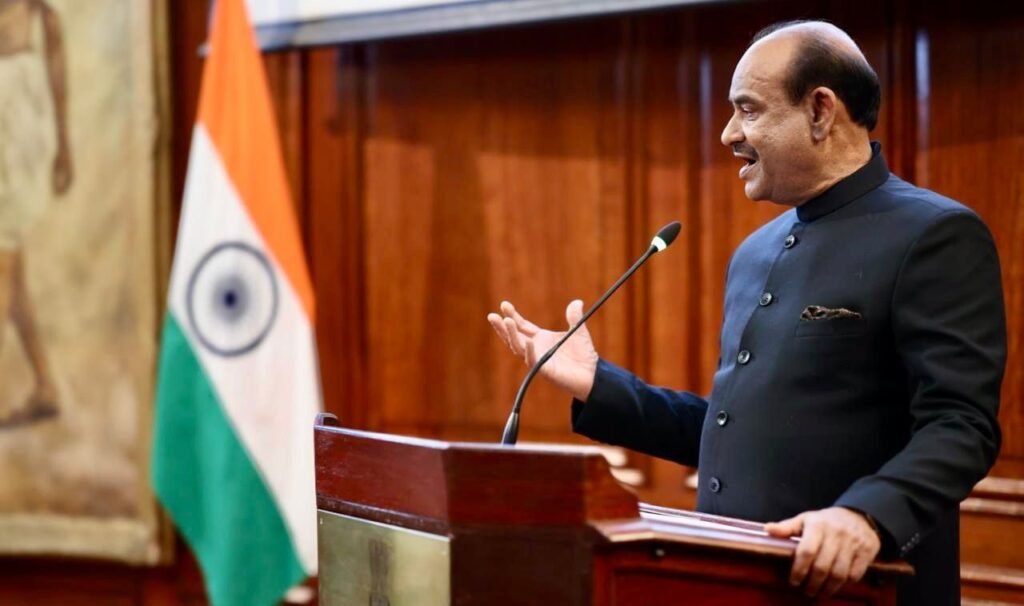
Om Birla, who is currently the 18th Speaker of the Lok Sabha of India and a senior leader of the Bharatiya Janata Party, was elected to the Lok Sabha from the Kota Bundi parliamentary constituency in Rajasthan in 2008. He was born on December 4, 1962, in Kota, Rajasthan. He received his early education at the Government Commerce College in Kota and graduated with a degree in Commerce from Maharishi Dayanand Saraswati University in Ajmer. He married Amita Birla, an Indian Civil Service officer, in 1991. As an MLA and MP, he also spearheaded numerous social welfare programs, including distributing clothes and books to vulnerable sections of society, organizing blood camps, free food programs for the poor, and a drug bank that provides free medicines. Om Birla began his political career with the Bharatiya Janata Yuva Morcha and was elected to the Rajasthan Legislative Assembly from Kota South in 2003, 2008, and 2013. He also became the Lok Sabha MP from Kota Bundi for the first time in 2014. He subsequently won the same seat in 2019 and 2024 by winning with a landslide victory. Birla has been a three-time MP from the Kota Lok Sabha constituency. He was elected to the Lok Sabha in the 16th, 17th, and 18th Lok Sabhas as a BJP candidate from the Kota constituency. In the 16th Lok Sabha, he was a member of the Standing Committee on Energy and the Advisory Committee of the Ministry of Social Justice and Empowerment. On June 19, 2019, Birla was elected Speaker of the 17th Lok Sabha following a motion by Prime Minister Modi of the Bharatiya Janata Party. He won the 2024 Lok Sabha Speaker election as the NDA candidate, subsequently becoming the Speaker of the Lok Sabha for the second consecutive term in the 18th Lok Sabha.
Ashok Kumar Lahiri Takes Charge as NITI Aayog Vice Chairman, Set to Drive India’s Viksit Bharat Vision
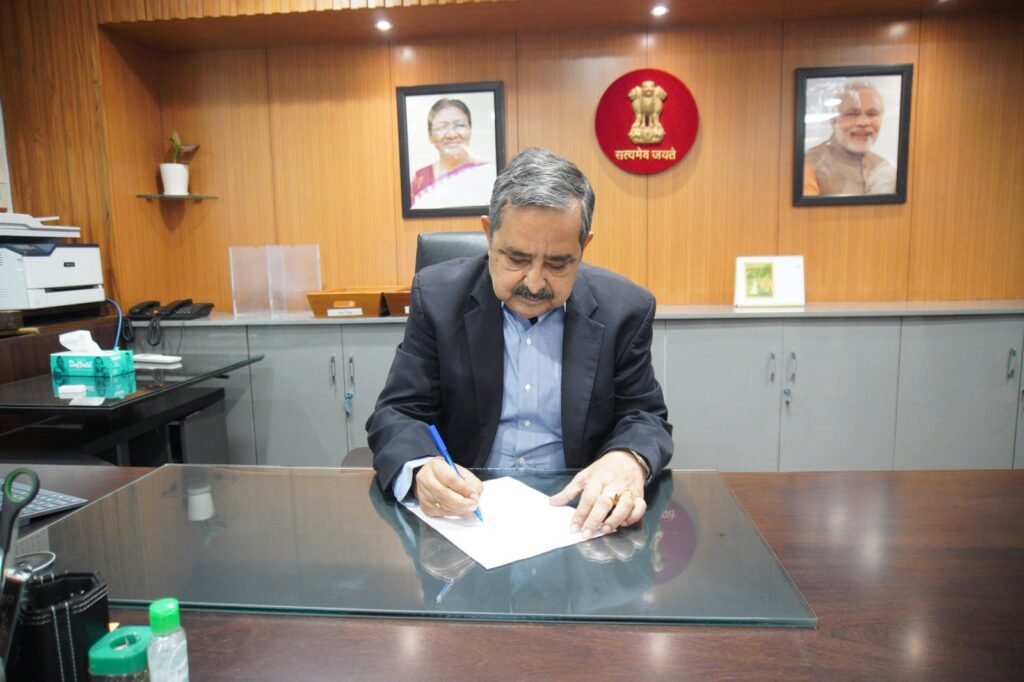
Economist Ashok Kumar Lahiri formally assumed the office of Vice Chairman of NITI Aayog on Friday. This appointment comes at a time when India is advancing rapidly with economic reforms, structural changes, and the long-term goal of a ‘Viksit Bharat’ (Developed India). Consequently, the role of an institution like NITI Aayog is considered more crucial than ever. Lahiri has succeeded Suman Bery in this role. He is counted among India’s most experienced and respected economists. His expertise spans several decades across the fields of economic policy, public finance, and institutional reforms, making him a key figure in the country’s policy-making landscape. Throughout his long career, Lahiri served as the Chief Economic Adviser to the Government of India and held significant responsibilities as a member of the 15th Finance Commission. Additionally, he has gained extensive experience by holding various leadership roles in academic institutions, government bodies, and international organizations. In a statement welcoming him, NITI Aayog noted that Lahiri’s expertise would further strengthen the institution’s capacity for evidence-based policy formulation. The Commission believes that his economic acumen and strategic vision will help steer the country’s development agenda in a new direction. This appointment takes place amidst an ongoing, comprehensive restructuring of NITI Aayog. In recent years, the central government has been working to make the institution more effective. The appointment of new full-time members and organizational changes aim to sharpen the focus on areas such as innovation, cooperative federalism, improved governance, and sustainable development. Prime Minister Narendra Modi has previously described NITI Aayog as a key pillar of India’s policy-making framework. He believes that Lahiri’s experience in economics and public policy will infuse new momentum and energy into the country’s reform journey. Experts view Ashok Lahiri’s appointment not merely as an administrative change, but as part of an effort to make India’s economic trajectory more data-driven, visionary, and result-oriented. At a time when the global economy is grappling with numerous challenges and uncertainties, their role could prove pivotal in keeping India on the path of rapid and balanced growth. In the coming years, NITI Aayog is expected to foster better coordination between the Centre and the states, accelerate policies that boost investment and job creation, and strengthen long-term strategies to achieve the goal of a developed India. New approaches and initiatives in this direction are anticipated under the leadership of Ashok Lahiri.
Additional Secretary of the Chief Minister reached the office on a bicycle, the effect of PM Modi’s appeal
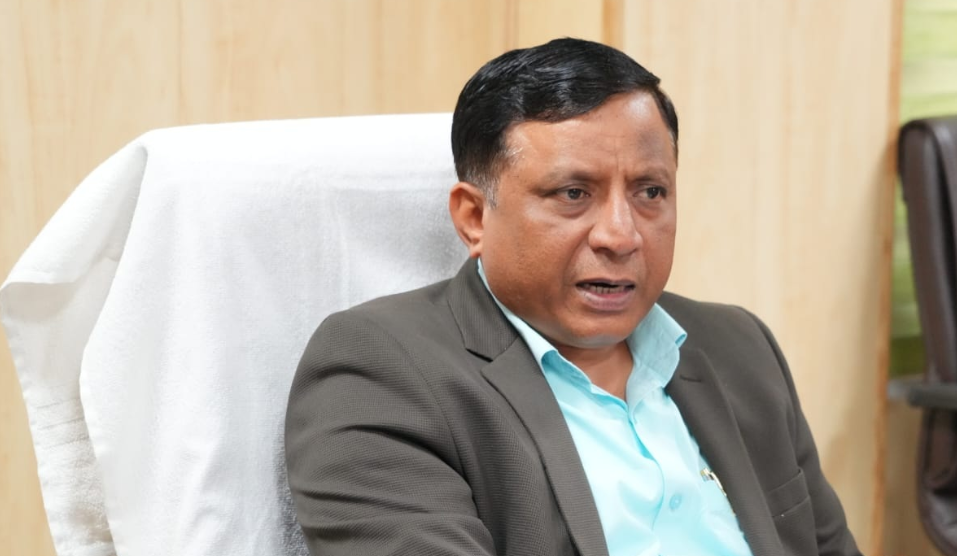
Responding to Prime Minister Narendra Modi’s appeal to conserve fuel, Uttarakhand Chief Minister Pushkar Singh Dhami took decisive action; through the State Cabinet, he officially approved a series of measures and energy-saving reforms aimed at reducing dependence on fuel and strengthening the national economy. Additional Secretary of the Chief Minister reached the office on a bicycle Chief Minister Pushkar Singh Dhami has mandated a 50% reduction in the official vehicle fleet allocated to himself and all his Cabinet ministers. Furthermore, to encourage State Cabinet ministers, public representatives, and government officials to utilize public transportation, he has approved the observance of a “No Vehicle Day” (or Vahan Nishedh Divas) once a week. The Dhami administration has also taken a significant step to reduce daily commuting and the associated fuel consumption by approving a “Work from Home” option for state government employees. Additionally, the state government is implementing a comprehensive Electric Vehicle (EV) policy, under which more than 50% of all newly procured government vehicles will be electric; concurrently, the local EV charging infrastructure is being expanded. Acting upon CM Dhami’s appeal for fuel conservation, many state officials were observed utilizing public transport, while several others were seen foregoing their vehicles to commute to their offices on bicycles. Issuing orders on any subject is easy, but personally walking the talk—by adhering to those very principles—is the hallmark of true and visionary leadership. Shri Banshidhar Tiwari—Additional Secretary to the Chief Minister, Director General of Information, and Vice Chairman of the MDDA—exemplified this very message today. By cycling from his residence on Sahastradhara Road to the Directorate of Information located on the Ring Road, he presented a powerful and tangible example of energy conservation, environmental protection, and responsible governance.
Historic Shift in Bengal, BJP Storms to Power with Landslide Victory
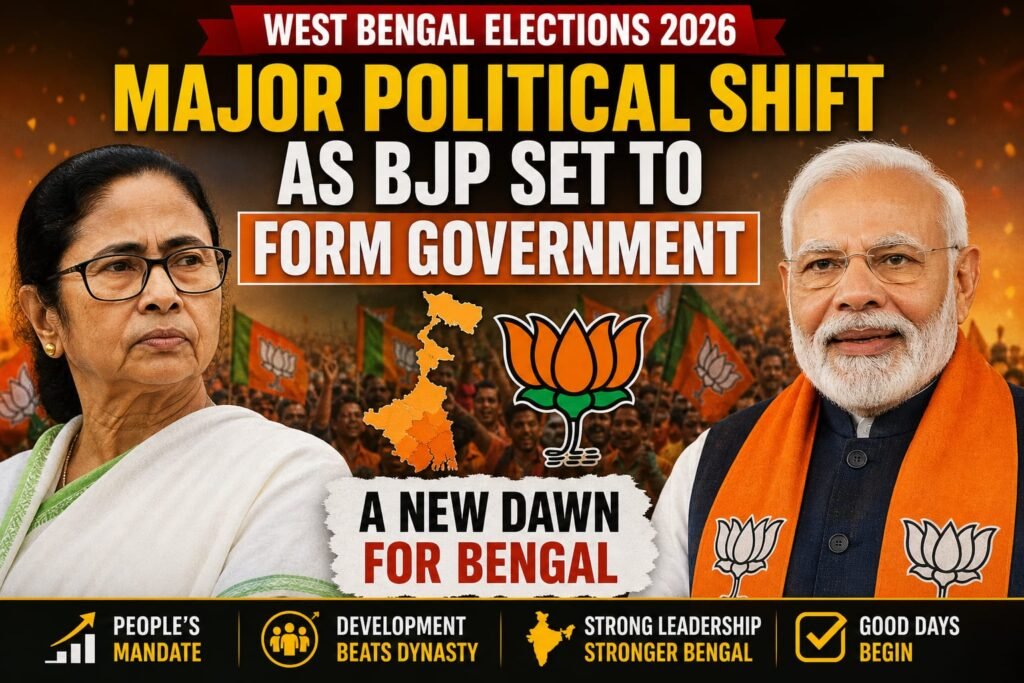
The results of the 2026 West Bengal Assembly elections have brought a significant shift in the state’s political landscape. The Bharatiya Janata Party (BJP) delivered a strong performance, winning 207 out of 294 seats and is now set to form the government in the state for the first time. On the other hand, the All India Trinamool Congress (TMC) managed to secure only 80 seats. Mamta Banjerjee defeated in Bhabanipur One of the biggest highlights of this election was the defeat of Mamata Banerjee. She lost from her stronghold, Bhabanipur, to her former aide-turned-BJP leader Suvendu Adhikari. This result is being seen as a major turning point in West Bengal politics. After the results, Mamata Banerjee raised concerns over the election process and alleged irregularities in seat outcomes. Meanwhile, Prime Minister Narendra Modi described the verdict as the people’s decision and said that West Bengal will now move forward on the path of development. Election with Controversy The election also saw controversy around the voter list. Under the Special Intensive Revision (SIR), a large number of names were removed, which added to the heated political environment. After this decisive victory, preparations are underway for the BJP’s swearing-in ceremony on May 9. This marks the beginning of a new chapter in West Bengal’s political history. It will be interesting to see how the new government shapes the state’s development and political balance in the coming years.
Bengal Election Star politics Campaign
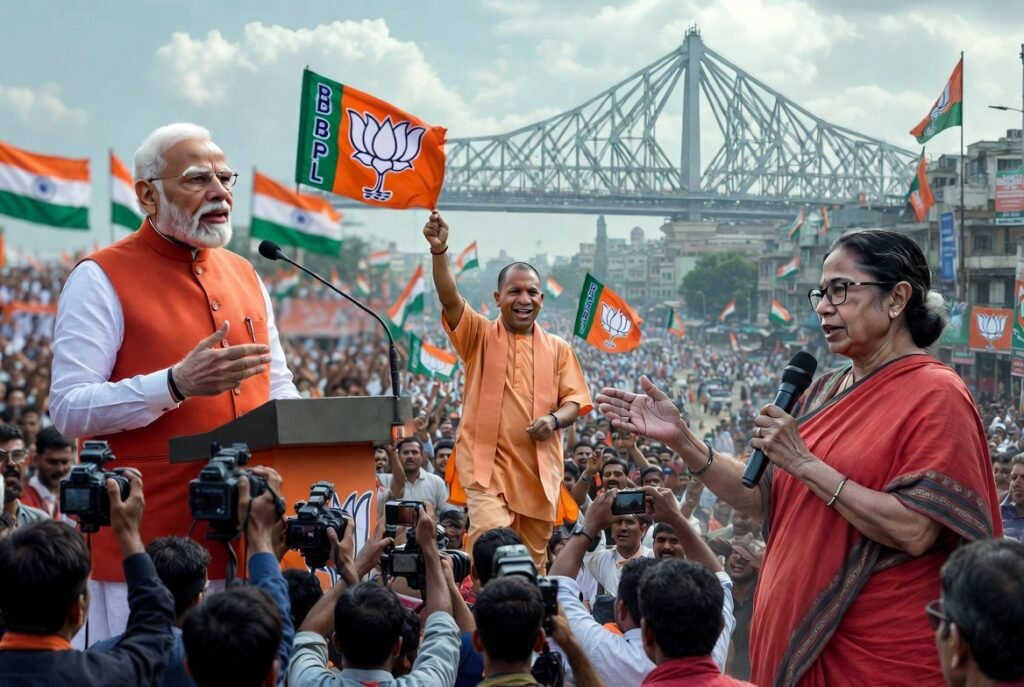
Campaigning for the second and final phase of the ongoing Assembly elections in West Bengal concludes today. In this phase, voting will take place across 142 constituencies on April 29. It is worth noting that voting for the first phase of the Bengal Assembly elections was held on April 23, witnessing a record voter turnout of 93.19%. The constituencies going to the polls in the second phase span eight electoral districts, including Kolkata North, Kolkata South, Howrah, Nadia, North 24 Parganas, South 24 Parganas, Hooghly, and Purba Bardhaman. Rallies by Star Campaigners in Bengal With the Assembly elections underway in Bengal, leaders from all major political parties are holding rallies across the state, and prominent BJP leaders have also joined the fray. Ahead of the first phase of the Assembly elections, star campaigners—such as Uttar Pradesh Chief Minister Yogi Adityanath and Defence Minister Rajnath Singh—had already addressed the people of Bengal. Today, senior BJP leader and Prime Minister Narendra Modi will address a public meeting at the Jalebi Maidan in Jagatdal, while Union Home Minister Amit Shah is scheduled to conduct two roadshows. Union Minister Amit Shah will first lead a roadshow from Behala Police Station to Manton, followed by a second roadshow organized at Chandannagar Bagbazar in Hooghly. Mamata Didi to Also Address the Public Trinamool Congress leader Mamata Banerjee also has several engagements scheduled for today; during these events, she will lead a public outreach march starting from Sukanta Setu in Jadavpur to garner support for party candidates in the Jadavpur and Tollygunge constituencies. Following the public outreach march, Mamata Banerjee will conduct a public interaction program in her own constituency, Bhabanipur. Meanwhile, Trinamool Congress All India General Secretary Abhishek Banerjee will campaign in support of party candidates in Ranaghat, Hooghly, Arambagh, and Maheshtala. Following the conclusion of the Assembly elections, the counting of votes for four states—Kerala, Assam, West Bengal, and Tamil Nadu—as well as the Union Territory of Puducherry, will take place on May 4.