How S. Jaishankar Became India’s Most Recognizable Diplomat
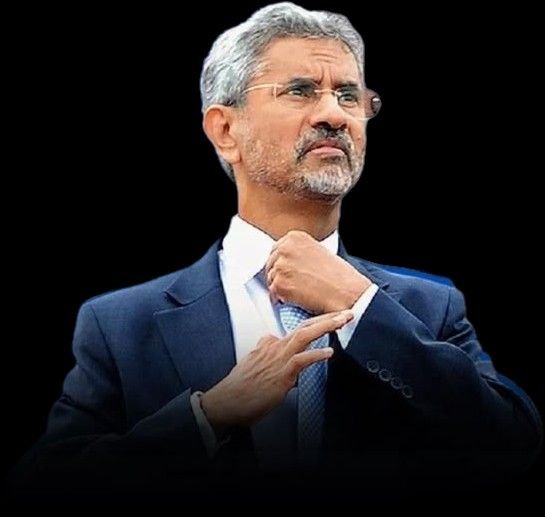
There’s a specific kind of person who spends thirty years doing quiet work behind the scenes, only to suddenly become a household name overnight. S. Jaishankar is one of those people. If you only started paying attention to Indian politics recently, you’d probably think he appeared out of thin airsharp, quick with a comeback, completely unfazed by tough questions, and just as comfortable taking on a hostile journalist as he is a foreign minister. But that sharp public personality wasn’t built overnight. It was forged slowly over four decades of hard work that almost no one was paying attention to. Born in Delhi in 1955, Jaishankar didn’t grow up with ordinary dinner table chatter. His father, K. Subrahmanyam, was one of India’s top strategic thinkers—a man who helped shape the nation’s defense and nuclear plans for years. While most kids were listening to local gossip, Jaishankar was overhearing debates about international power dynamics and military strategy. That environment clearly shaped his path. He went to St. Stephen’s College and then to Jawaharlal Nehru University, staying long enough to earn a master’s, an M.Phil., and a Ph.D. focused on nuclear diplomacy. It’s a rare detail worth noting: he didn’t just study international relations in books; decades later, he would actually be sitting in the room negotiating those exact deals. Three Decades of Unseen Work In 1977, Jaishankar joined the Indian Foreign Service. What followed wasn’t a quick rise to fame, but a long, steady journey through the gears of global diplomacy. His first big assignment was in Moscow during the final, tense years of the Cold War. After that came postings in Colombo, Budapest, Tokyo, and Washington—each city bringing a new set of rules and a new challenge. Two specific roles defined his career: By January 2015, just as he was preparing to retire, the government appointed him Foreign Secretary-India’s top diplomatic officer. It was a clear vote of confidence. Over the next three years, he handled the Doklam crisis, strengthened relationships with neighboring countries, and pushed for stronger regional partnerships like BIMSTEC. He was so effective that the government gave him a rare one-year extension in 2017. The Twist No One Saw Coming Most long diplomatic careers end with a quiet retirement and a memoir read only by policy nerds. Jaishankar retired in early 2018, and for a short time, it seemed like he was heading down that exact path. He took a job as President of Global Corporate Affairs at Tata Sons. It seemed like an unusual shift, moving from government halls to corporate boardrooms. Though he only stayed for about a year, it gave him a practical look at how businesses view global markets, regulations, and political risks. Then came the move that shocked everyone. In May 2019, Jaishankar was appointed India’s External Affairs Minister- without ever having run for political office. He became the first person in Indian history to serve as both Foreign Secretary and External Affairs Minister, making a rare jump straight from bureaucrat to cabinet minister. He took a seat in the Rajya Sabha and, after the 2024 elections, kept his post, solidifying his role as one of India’s longest-serving foreign ministers. Finding His Voice What makes Jaishankar stand out isn’t just his unique resume; it’s how he speaks. Most career diplomats are trained to speak cautiously, avoid taking sides, and use vague language. Jaishankar threw that playbook out the window. He adopted a direct, plain-spoken style. He doesn’t shy away from confrontation, whether he’s answering a tricky question from a student, a reporter, or a world leader. He explains complex foreign policy in plain English, which is why everyday people—far outside the usual political circlesactually tune in to watch him. He’s also put his thoughts on paper, writing The India Way (2020) and Why Bharat Matters (2024) to explain how he views India’s place in the modern world. In 2019, he was awarded the Padma Shri, one of India’s highest civilian honors, for his service. The Real Takeaway It’s easy to look at his story and see a sudden rise to fame. But the real story is much simpler and far more grounded. He spent almost forty years doing demanding work out of the spotlight. He sat through tough postings, did the tedious reading, and mastered complicated subjects long before anyone cared to ask him about them. So when the spotlight finally turned on him, he didn’t need to fake confidence- he already knew what he believed because he’d been doing the work for decades. It’s a simple truth: the effort you put in when no one is watching is what prepares you for the moment everyone is. @Rohit Manral