
Himachal CM Sukhu Wants to Cut Down Senior Officer Posts, Says Too Many Are Sitting Idle
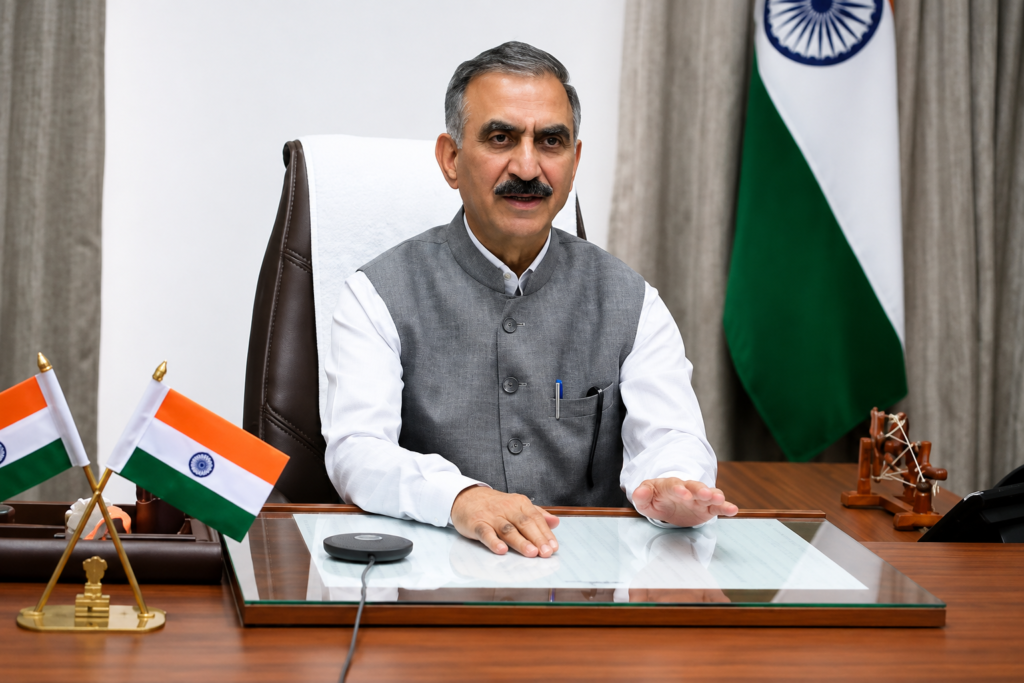
Shimla: Chief Minister Sukhvinder Singh Sukhu has decided to take a hard look at the size of Himachal’s top bureaucracy. He wants the number of sanctioned IAS posts brought down from 153 to 130 and IFS posts from 118 to 83. The IPS strength, currently at 96, will also be reduced, though the final figure has not been fixed yet. The state government will soon send a formal proposal to the Centre asking for these cuts. Sukhu put it simply when he spoke to the media. Many officers, he said, simply do not have enough work. Their talent is going waste. Himachal does not need a large army of senior officers. What it needs are people who can actually get schemes implemented and deliver services to ordinary citizens. He admitted that he personally preferred bringing the IAS strength even lower, closer to 100 or 110. But after some pushback from the officers themselves, the government Well-established on 130. This is not the first time Sukhu has spoke about making the bureaucracy leaner. He has been saying it for a while under the banner of vyavastha parivartan. This time, though, he has given clear numbers. The government is also clearing deputation requests to Delhi much faster than earlier regimes. Nearly two dozen IAS officers and more than a dozen each from the IPS and IFS are already serving outside the state. Money is the other big reason. Himachal is under real financial pressure. After the Centre stopped the Revenue Deficit Grant, the state is looking at a shortfall of roughly Rs 8,000 to 10,000 crore every year. The 2026-27 budget shows a revenue gap of about Rs 6,577 crore. Debt has crossed Rs 1 lakh crore. A big chunk of what the state earns goes towards salaries, pensions and interest payments. Sukhu has said that keeping the present cadre of All India Services officers costs the state around Rs 200 crore a year once you add up salaries, staff, vehicles, houses and other perks. Any money saved, he has promised, will go towards welfare work and development. Interestingly, the actual number of officers present is already lower than the sanctioned strength. As of January 2025, only 117 IAS officers were in position against 153 posts. IPS had 84 against 96. Some people point out that cutting vacant posts will not bring the same immediate savings as removing people who are already drawing full salaries and perks. A few serving officers have also spoken against the idea. They say cadre strength is fixed according to the work that needs to be done and the structure of the services. No state has asked for such a reduction before. One officer called the move unfortunate. Others note that work is not evenly shared. Officers close to the present government often hold several important departments while others have lighter responsibilities. The proposal has drawn attention because it touches something most politicians avoid. The All India Services have long been treated as almost untouchable. Very few chief ministers have openly questioned their numbers. Those who assist Sukhu’s plan say a small hill state with a restricted population does not need so many senior posts. Those who are disquiet agonize that fewer proficient officers could create problems when the state faces disasters like cloudbursts, landslides or floods, which happen often in Himachal. The government has already tried other ways to control spending. There were temporary cuts in salaries for ministers and senior officials (later withdrawn after protests) and restrictions on buying new vehicles. Sukhu himself still draws only half his salary. Whether the Centre will agree to reduce the cadre strength remains to be seen. These numbers are decided jointly, and any permanent cut would be unusual. For the moment, the announcement has forced a conversation about a quiet but real problem. In smaller states that are short of money, the gap between the number of senior officers on paper and the real work accessible can grow quite large. Sukhu has framed it in plain language: too many officers with too little to do, talent not being used, and public money that could be spent better on people. The next few months will show whether the Centre accepts the request and whether the proposed changes actually make the administration tighter and more useful. Sources: Times of India, Moneycontrol, India Today, The Tribune, Hindustan Times, Outlook India, Economic Times, ANI reports and public statements by Chief Minister Sukhvinder Singh Sukhu. @Rohit Manral