From IIT Kanpur to RBI: Sanjay Malhotra Appointed 26th Governor of the Reserve Bank of India
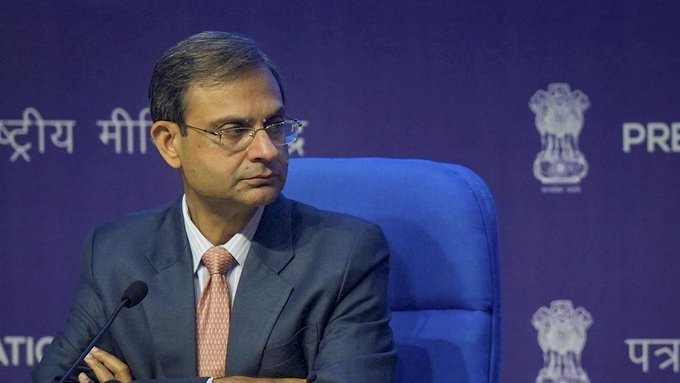
Sanjay Malhotra is the 26th Governor of the Reserve Bank of India (RBI). On December 11, 2024, Sanjay Malhotra assumed charge as the Governor of the RBI. Regarding his professional background, Governor Sanjay Malhotra is a 1990-batch officer of the Indian Administrative Service (IAS) from the Rajasthan cadre. He has previously worked across various sectors, including power, finance, taxation, information technology, and mining. Governor Sanjay Malhotra possesses over 33 years of professional experience. Prior to serving as the Secretary in the Ministry of Finance, he held the position of Secretary in the Department of Financial Services under the Ministry of Finance, Government of India. He holds expertise in the fields of finance and taxation at both the state and central government levels. Sanjay Malhotra was born in the city of Bikaner, Rajasthan. He completed his primary education at the Kendriya Vidyalaya in Bikaner, after which he earned a B.Tech degree in Computer Science from the Indian Institute of Technology (IIT), Kanpur. Subsequently, he pursued a graduate degree in Public Policy from Princeton University in the United States. It is worth noting that his father was an officer in the Border Security Force (BSF). Sanjay Malhotra began his career in the year 2000 as the Private Secretary to a Union Minister. Prior to serving as a Union Minister’s Private Secretary, he worked across various departments within the state of Rajasthan. From 2003 to 2020, he served in various departments of the Government of Rajasthan, including Mines and Minerals, Information and Broadcasting, Energy, and Commercial Taxation. From 2000 to 2003, he served as the Private Secretary to the Minister of State for Space and the Minister of State for Micro, Small, and Medium Enterprises (MSMEs). Subsequently, in 2020, he was appointed as the Additional Secretary in the Ministry of Power and also served as the Chairman and Managing Director of the Rural Electrification Corporation (REC). Subsequently, in February 2022, he was appointed as the Secretary of Financial Services within the Ministry of Finance. While serving in this capacity, he oversaw the launch of the Initial Public Offering (IPO) of the Life Insurance Corporation (LIC) and became a member of the Board of the Reserve Bank of India. Malhotra was appointed Revenue Secretary in December 2022. During his tenure in this position, he implemented a new income tax regime. Subsequently, on December 11, 2024, Sanjay Malhotra was appointed Governor of the RBI.
Ajit Kumar Doval: India’s ‘James Bond’ and Mastermind Behind Surgical Strikes & Balakot Operations
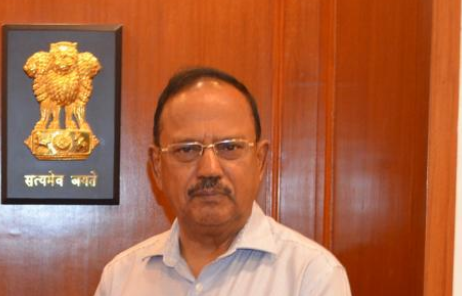
Ajit Kumar Doval currently serves as India’s National Security Advisor. He is widely regarded as India’s “James Bond” and the “Chanakya” of the modern era. Ajit Doval has held the position of National Security Advisor since May 30, 2014, making him the fifth individual to hold this office. Regarding his early life and education, Ajit Kumar Doval was born on January 20, 1945, in the village of Ghiri Banelsyun in the Pauri Garhwal district of Uttarakhand. His father, Major G.N. Doval, was also an officer in the Indian Army. He received his early education at the Ajmer Military School in Rajasthan and graduated with a degree in Economics from Agra University in 1967. In 1968, Doval cleared the Civil Services Examination and joined the Indian Police Service (IPS) under the Kerala cadre. Shortly after beginning his career, he was credited with single-handedly restoring peace—without the use of force—during the 1971 communal riots in Thalassery, Kerala, by engaging with local leaders. Subsequently, in 1972, Doval moved to the Intelligence Bureau, shifting his focus from traditional policing to covert operations and counter-terrorism. He played a pivotal role in quelling the insurgency led by the Mizo National Front and successfully reintegrated numerous insurgents into the mainstream. Furthermore, Doval spent several years working undercover, a period that included living clandestinely in Pakistan. During Operation Black Thunder in 1988, he infiltrated the Golden Temple in Amritsar disguised as a rickshaw puller; this operation helped gather critical intelligence that played an instrumental role in flushing out the terrorists. Additionally, in 1988, Doval became the first police officer to be awarded the Kirti Chakra, an honor recognizing his distinguished record of covert service. In 1999, Doval was one of the three negotiators involved in the talks for the release of passengers from the hijacked IC-814 aircraft in Kandahar. He was involved in resolving 15 aircraft hijackings involving Indian Airlines that occurred between 1971 and 1999. In January 2005, Ajit Doval retired from the post of Director of the Intelligence Bureau. Following his retirement, Doval was appointed as India’s fifth National Security Advisor on May 30, 2014. In July 2014, he ensured the safe return of 46 Indian nurses who were held captive in a hospital in Tikrit, Iraq. He is the longest-serving incumbent in this position and a powerful bureaucrat holding the rank of a Cabinet Minister. Strategic Achievements: He played a pivotal role in several major strategic and diplomatic initiatives, such as the 2016 ‘Surgical Strikes,’ the 2019 ‘Balakot Airstrikes,’ and the abrogation of the special status accorded to Jammu and Kashmir.
Fighter Pilot to Air Chief: Amar Preet Singh Brings 5,000+ Flying Hours and Vast Leadership Experience to Top IAF Role
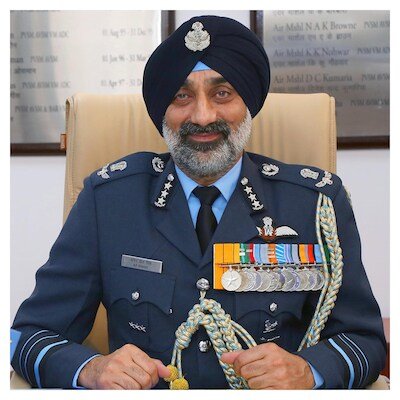
Air Chief Marshal Amarpreet Singh, who has served in the Indian Air Service for 40 years, was appointed as Air Chief Marshal on September 30, 2024. He became the 28th Chief of the Indian Air Service. Prior to becoming the Chief of the Air Service, he served as the 47th Vice Chief of the Indian Air Service from February 1, 2023. Regarding his early life and education, he was born on October 27, 1964. Air Marshal Amarpreet Singh is an alumnus of the National Defence Academy, the Defence Services Staff College, and the National Defence College. He also received advanced training at the Defence Services Staff College, Wellington, and the National Defence College, New Delhi. He is also a qualified flying instructor and a brilliant pilot. He has over 5,000 hours of flying experience on close-field and rotary aircraft. As a pilot, he led the MiG-29 upgrade project management team in Moscow, Russia. He was also the Project Director at the National Flight Test Centre. During his long and distinguished service of nearly 40 years, Amarpreet Singh has held various Command, Staff, and Instructional positions and has held important responsibilities for the Air Service abroad. He was commissioned into the fighter pilot stream of the Indian Air Service in December 1984. Air Chief Marshal Amarpreet Singh has commanded the operational fighter squadron Drum and a frontline air base. He was also entrusted with the flight testing of the Light Combat Aircraft Tejas. He has held the important appointments of Air Defence Commander at South Western Air Command and Senior Air Staff Officer at Eastern Air Command
Additional Secretary of the Chief Minister reached the office on a bicycle, the effect of PM Modi’s appeal
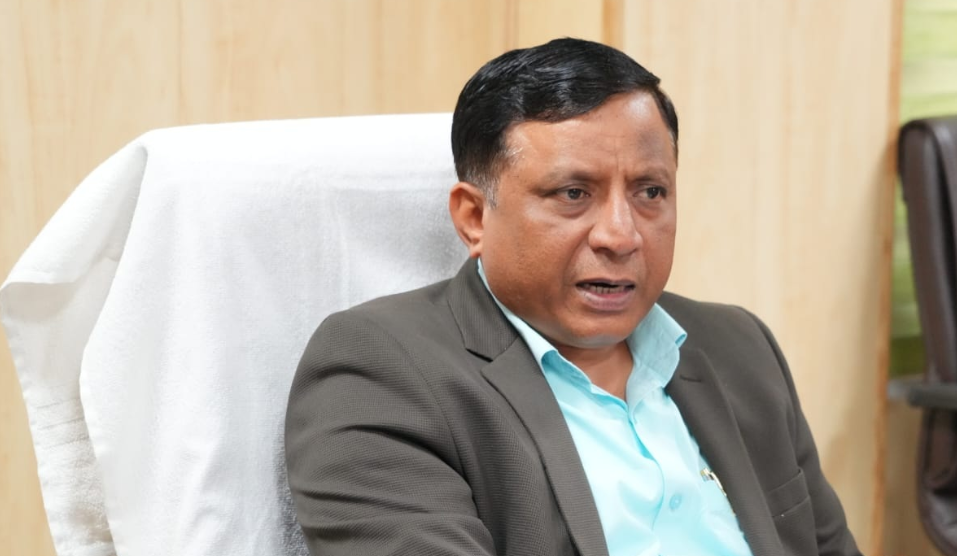
Responding to Prime Minister Narendra Modi’s appeal to conserve fuel, Uttarakhand Chief Minister Pushkar Singh Dhami took decisive action; through the State Cabinet, he officially approved a series of measures and energy-saving reforms aimed at reducing dependence on fuel and strengthening the national economy. Additional Secretary of the Chief Minister reached the office on a bicycle Chief Minister Pushkar Singh Dhami has mandated a 50% reduction in the official vehicle fleet allocated to himself and all his Cabinet ministers. Furthermore, to encourage State Cabinet ministers, public representatives, and government officials to utilize public transportation, he has approved the observance of a “No Vehicle Day” (or Vahan Nishedh Divas) once a week. The Dhami administration has also taken a significant step to reduce daily commuting and the associated fuel consumption by approving a “Work from Home” option for state government employees. Additionally, the state government is implementing a comprehensive Electric Vehicle (EV) policy, under which more than 50% of all newly procured government vehicles will be electric; concurrently, the local EV charging infrastructure is being expanded. Acting upon CM Dhami’s appeal for fuel conservation, many state officials were observed utilizing public transport, while several others were seen foregoing their vehicles to commute to their offices on bicycles. Issuing orders on any subject is easy, but personally walking the talk—by adhering to those very principles—is the hallmark of true and visionary leadership. Shri Banshidhar Tiwari—Additional Secretary to the Chief Minister, Director General of Information, and Vice Chairman of the MDDA—exemplified this very message today. By cycling from his residence on Sahastradhara Road to the Directorate of Information located on the Ring Road, he presented a powerful and tangible example of energy conservation, environmental protection, and responsible governance.
S. Raja Subramani Appointed India’s Third CDS, Returns to Active Service After Distinguished Military Career
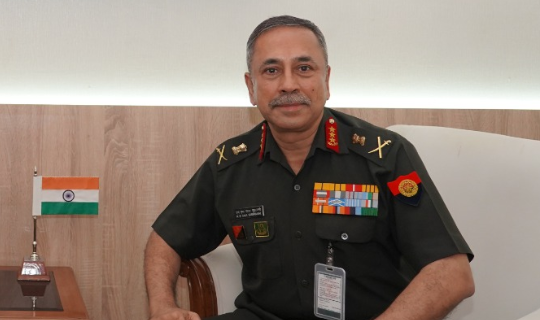
Following General Anil Chauhan, the Government of India has appointed Lieutenant General N. S. Raja Subramani as the third Chief of Defence Staff. General N. S. Raja Subramaniam has been serving in the Indian Armed Forces since 1985. He was commissioned into the 18th Battalion of the Garhwal Rifles on December 14, 1985. Over a career spanning more than four decades, he has served in various command, staff, and instructional appointments. General Officer N. S. Raja Subramani is an alumnus of the 67th Course of the National Defence Academy and the 77th Course of the Indian Military Academy. He attended the Joint Services Command and Staff College in the UK and the National Defence College in New Delhi. Subsequently, he pursued studies at King’s College London, earning a Master of Arts degree from the University of London and an M.Phil. in Defence Studies from the University of Madras. After completing his studies at the Joint Services Command and Staff College in the United Kingdom, he returned to India and assumed command of the 16th Battalion of the Garhwal Rifles in Assam. This battalion was deployed in a counter-insurgency role under ‘Operation Rhino.’ Subsequently, he was appointed as the Defence Attaché at the Indian Embassy in Astana, Kazakhstan. It is noteworthy that, while holding the rank of Colonel, he also served as the Assistant Military Secretary in the ‘S’ Branch at Army Headquarters. He further served as the Colonel General Staff (Operations) at the Eastern Command Headquarters and, in Jammu and Kashmir, served as the Deputy Commander of a Sector of the Rashtriya Rifles. Military Career Subsequently, upon being promoted to the rank of Brigadier, he assumed command of the 168th Infantry Brigade in Samba. He was then selected to attend the National Defence College in New Delhi, as part of the 55th course. Following the course, he was appointed as the Deputy Director General of Military Intelligence (DDGMI) at Army Headquarters. Subsequently, he also served as the Brigadier General Staff in the Eastern Command. After being promoted to the rank of Major General, he was appointed as the General Officer Commanding of the 17th Mountain Division in Sikkim. On February 3, 2020, he was promoted to the rank of Lieutenant General and appointed as the General Officer Commanding, North India Area. On February 12, 2021, Lieutenant General N. S. Raja Subramani assumed the charge of General Officer Commanding, succeeding Lieutenant General Surinder Singh Mahal. In 2022, he also served as the Chief of Staff at the Northern Command, based in Udhampur. On March 1, 2023, Lieutenant General N. S. Raja Subramani assumed the charge of General Officer Commanding-in-Chief of the Central Command. On July 1, 2024, Lieutenant General N. S. Raja Subramani assumed the office of Vice Chief of Army Staff, marking his 47th year of service. After retiring from active military service, he was appointed as a Military Advisor to the National Security Council Secretariat. Most recently, on May 9, 2026, the Government of India appointed Lieutenant General N. S. Raja Subramani as the third Chief of Defence Staff, thereby marking his return to active military service. During his career, the general officer has been awarded the Param Vishisht Seva Medal in 2024, the Ati Vishisht Seva Medal in 2020, the Sena Medal and the Vishisht Seva Medal
General Upendra Dwivedi Assumes Charge as 30th Army Chief, Bringing Vast Counter-Insurgency Experience
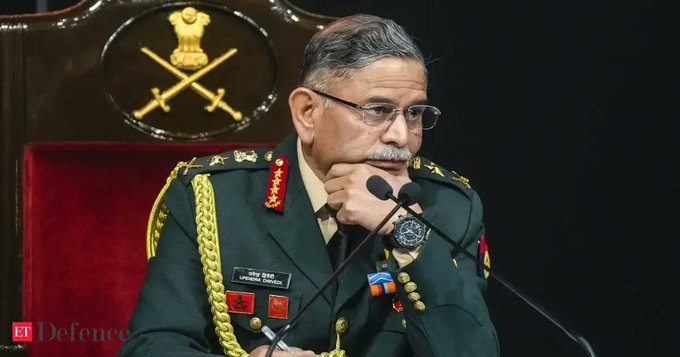
General Upendra Dwivedi is the 30th Chief of the Indian Army. He assumed office on June 30, 2024. Prior to this, he served as the Vice Chief of the Army Staff. General Upendra Dwivedi possesses extensive experience in counter-insurgency and border operations in Jammu & Kashmir and Rajasthan. Additionally, he holds experience in commanding a Mountain Division in the Northeast. General Upendra Dwivedi was born on July 1, 1964, in the village of Rewa, Madhya Pradesh. He received his early education at the Sainik School, Rewa. After completing his schooling at Sainik School, General Dwivedi attended the National Defence Academy (NDA) in Khadakwasla, followed by the Indian Military Academy (IMA) in Dehradun. He was awarded the ‘Blue’ in physical training for his outstanding performance at both the NDA and the IMA. General Dwivedi was commissioned into the 18th Battalion of the Jammu and Kashmir Rifles from the Indian Military Academy, Dehradun, on December 15, 1984. He commanded a sector of the Assam Rifles in Manipur during ‘Operation Rhino,’ and served in the Kashmir Valley during ‘Operation Rakshak’ and in the deserts of Rajasthan. Throughout his illustrious career spanning over 39 years, he held various staff appointments at Headquarters formations—including a Brigade, a Mountain Division, a Strike Corps, and the Integrated Headquarters of the Ministry of Defence. Among his previous appointments, he served as an Instructor at the Indian Military Academy and as a Director on the Directing Staff for the Higher Command Course at the Army War College, where he trained future generations of officers from all three services as well as from friendly foreign nations. Tenure and Command: Recent Statements (2025–2026):
Krishna Swaminathan: The New Indian Naval Staff Chief
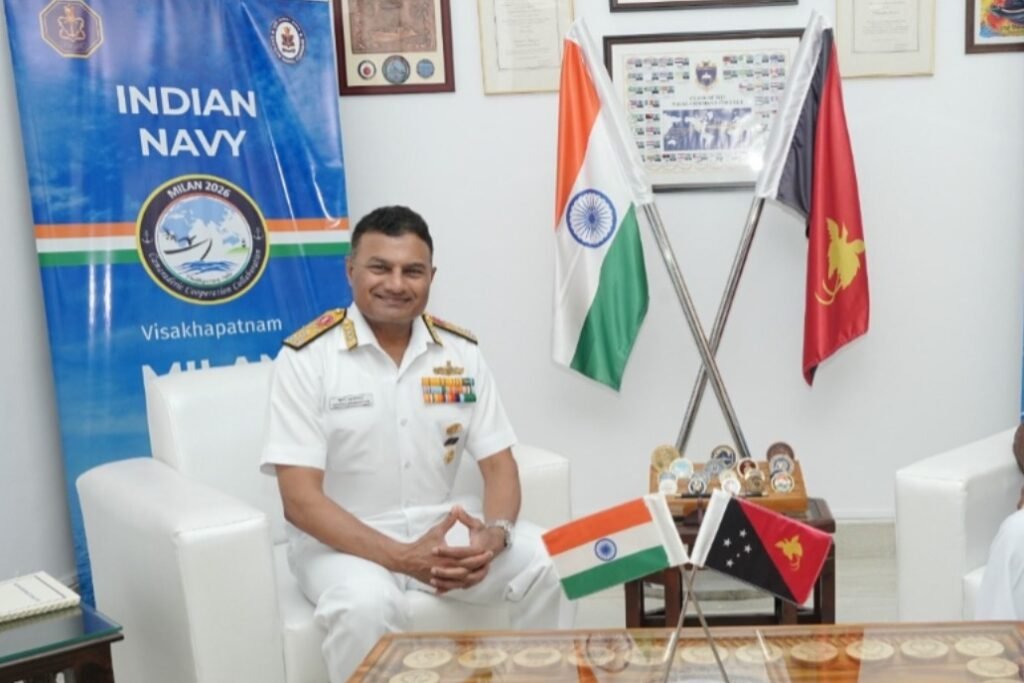
The Government of India has appointed Vice Admiral Krishna Swaminathan as the next Chief of the Indian Navy. He will formally assume the office of the Chief of Naval Staff on May 31, 2026. Following this, his tenure will extend until December 31, 2028. Currently, he is serving as the Flag Officer Commanding-in-Chief of the Western Naval Command, based in Mumbai. Vice Admiral Krishna Swaminathan joined the Indian Navy on July 1, 1987. He assumed charge as the 34th Flag Officer Commanding-in-Chief of the Western Naval Command on July 31, 2025. Krishna Swaminathan was born in Bangalore to D. Swaminathan and Shanta Swaminathan; both his parents were teachers. The Swaminathan family resided in NR Colony, Basavanagudi. He studied at Bishop Cotton Boys’ School until the age of 11, after which he pursued his further education at the Sainik School, Bijapur. Subsequently, he enrolled at the National Defence Academy (NDA), Pune, and earned his graduation degree from there. After the NDA, Swaminathan pursued further studies at the Joint Services Command and Staff College, Shrivenham (United Kingdom); the College of Naval Warfare, Karanja; and the United States Naval War College, Newport (Rhode Island, USA). In terms of academic qualifications, he holds a BSc degree from Jawaharlal Nehru University, New Delhi; an MSc in Telecommunications from the Cochin University of Science and Technology, Kochi; an MA in Defence Studies from King’s College London; an M.Phil in Strategic Studies from the University of Mumbai; and a Ph.D. in International Studies, also from the University of Mumbai. Vice Admiral Krishna Swaminathan is a specialist in communications and electronic warfare. Within the Navy, he is regarded as a visionary officer. He places special emphasis on future warfare and new military strategies. His focus remains firmly on modern technology and future readiness. Throughout his naval career, he has served in several key positions. Furthermore, Vice Admiral Krishna Swaminathan has been conferred with the Param Vishisht Seva Medal, the Ati Vishisht Seva Medal, and the Vishisht Seva Medal.
From “Educate, Agitate, Organize” to Mahaparinirvan Diwas: The Inspiring Legacy of B. R. Ambedkar
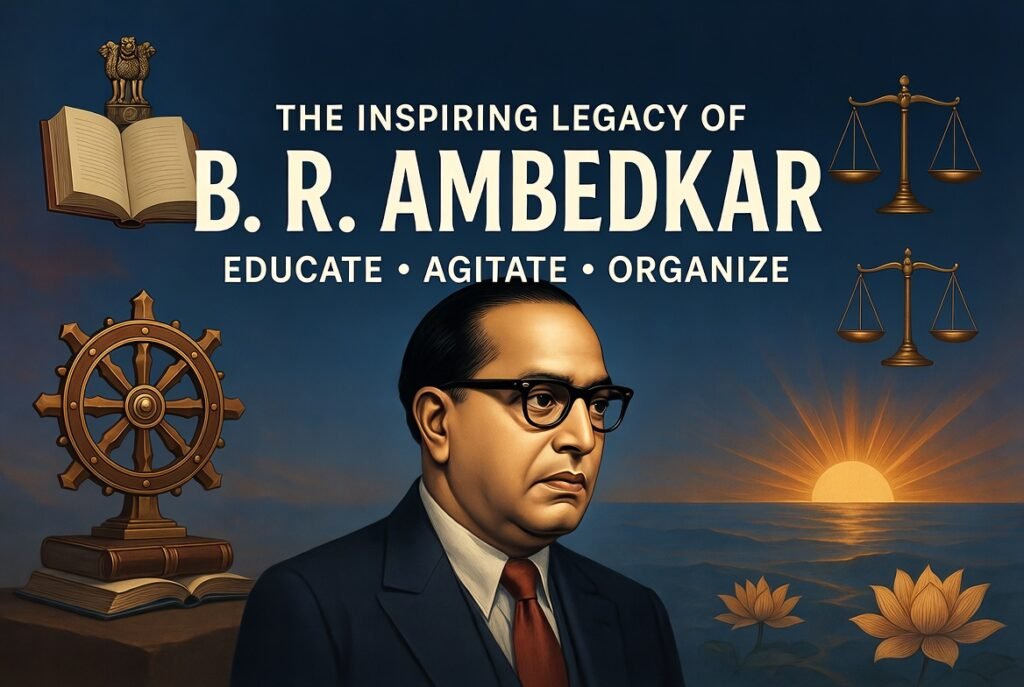
Dr. B.R. Ambedkar was the chief architect of the Indian Constitution, a prominent social reformer, economist, and India’s first Law Minister. He was born on April 14, 1892. He is known as Baba Saheb and played a key role in the struggle for the rights of Dalit women and workers and in the eradication of social evils like untouchability. Bhimrao Ambedkar received his early education in Mumbai, after which he went to London for further education, where he received an MA and PhD from Columbia University or the London School of Economics. He was the first Indian to earn a doctorate in economics abroad. Dr. Bhimrao Ambedkar is also known as the father of the Indian Constitution. Dr. Ambedkar, while serving as chairman of the Constituent Assembly, drafted the Constitution in 2 years, 11 months, and 17 days. He founded the “Bahishkrit Hitakarini Sabha” for Dalits and secured water rights through the “Mahad Satyagraha” in 1927. He also coined the slogan “Educate, Agitate, Organize.” Dr. Ambedkar also launched the newspaper “Bahishkrit Bharat” on April 3, 1927, to address the issues of Dalits. Following this, on August 15, 1936, he formed the “Independent Labour Party,” composed mostly of working-class members, to protect the interests of Dalits. After independence in 1947, he was appointed Minister of Law and Justice in the first cabinet of India’s first Prime Minister, Jawaharlal Nehru. In 1955, he published his book, “The Idea of Linguistic States.” In 1954, he was conferred the title of Bodhisattva by Buddhist monks at the “World Buddhist Council” in Kathmandu, Nepal. On October 14, 1956, he embraced Buddhism in a historic ceremony in Nagpur and died on December 6, 1956. Dr. Bhimrao Ambedkar’s death anniversary is celebrated nationwide as “Mahaparinirvan Diwas.” 3 Key Ideas Bhimrao Ambedkar Honors and Awards
From UPSC Topper to Transformational Administrator: The Remarkable Journey of Smita Sabharwal
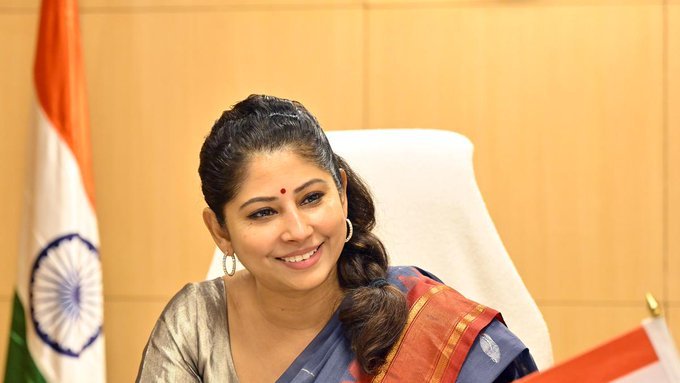
Smita Sabharwal is a renowned IAS officer of the 2001 batch, Telangana cadre, born on June 19, 1977, into a Bengali family in Darjeeling, West Bengal. She completed her schooling in Hyderabad and earned a bachelor’s degree in Commerce from St. Francis College for Women. Due to her work, she is also known as the “People’s Officer.” At the age of 23, she became the youngest person to secure the fourth rank in the 2000 UPSC examination. Currently, she serves as the Secretary of the Department of Tourism and Culture in the Government of Telangana. Her husband, Akun Sabharwal, is also an IPS officer. She is the first female IAS officer to be appointed to the Chief Minister’s Office (CMO). During her tenure as the Collector of Karimnagar, she initiated schemes such as “Fund Your City,” under which urban infrastructure—including roads and parks—was improved through public participation. Additionally, through a program named “Ammalallana,” she made significant contributions toward addressing the health issues and educational needs of rural women. Given her illustrious career and unwavering integrity, she serves as an inspiration to UPSC aspirants. Major Awards and Honors
Role as India’s External Affairs Minister and Foreign Policy Leader : Subrahmanyam Jaishankar
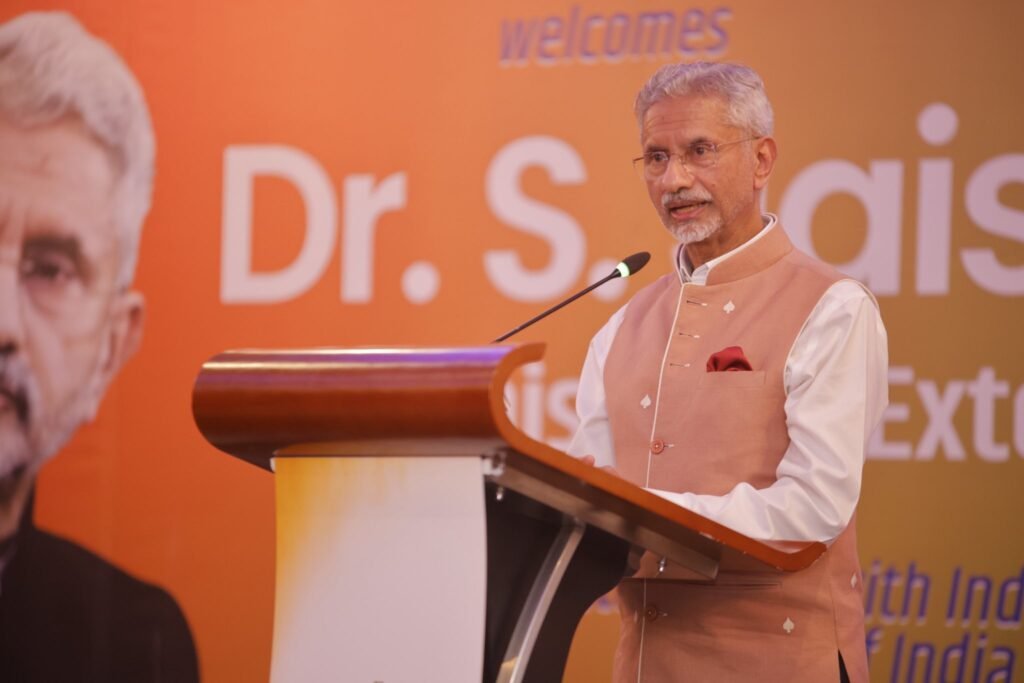
Subrahmanyam Jaishankar is an Indian diplomat and politician who is currently serving as the External Affairs Minister of India. Born on 9 January 1955 in Delhi, he joined the Indian Foreign Service in 1977 and held important diplomatic positions in countries like the United States, China, and Czech Republic. He became India’s Foreign Minister in 2019 and is known for his strong role in shaping India’s foreign policy and international relations. Diplomatic Career (1977-2018) Subrahmanyam Jaishankar joined Indian Foreign Service (IFS) in 1977 and served as a career diplomat for over four decades. He served in several important diplomatic positions in countries such as Russia, United States, Sri Lanka, Hungary, and Japan. He also worked in India’s Ministry of External Affairs and served as press secretary to former President Shankar Dayal Sharma. In 2000, he became India’s ambassador to the Czech Republic. Later, he played an important role in the 2005 Indo-U.S. civil nuclear deal and served as India’s High Commissioner to Singapore from 2007 to 2009. Ambassador of Czech Republic (2001-2004) Subrahmanyam Jaishankar served as India’s Ambassador to the Czech Republic from 2001 to 2004. During his tenure, he worked to strengthen diplomatic, economic, and cultural relations between India and the Czech Republic. He focused on improving trade cooperation, promoting Indian interests in Central Europe, and expanding bilateral ties between the two countries. Joint secretary at Ministry (2004-2007) S. Jaishankar served as Joint Secretary in India’s Ministry of External Affairs from 2004 to 2007. During this period, he handled important matters related to India’s relationship with the United States.He played a major role in negotiating the historic India–US Civil Nuclear Agreement, which helped improve cooperation between the two countries in nuclear energy and strategic affairs. His work during this time strengthened diplomatic ties between India and the United States and increased India’s global influence. Higher Commissioner to Singapore(2007-2009) From 2007 to 2009, S. Jaishankar served as India’s High Commissioner to Singapore. During his tenure, he worked to strengthen economic, strategic and cultural ties between the two countries.He helped implement the Comprehensive Economic Cooperation Agreement (CECA), which increased trade, investment and business cooperation between India and Singapore. He also oversaw a defence arrangement that allowed Singapore to keep some of its military equipment and training facilities in India.Jaishankar promoted closer people-to-people relations and encouraged the participation of the Indian community in Singapore through events like Pravasi Bharatiya Divas. His work further improved Singapore’s role as an important economic and strategic partner for India. Ambassador of China (2009-2013) S. Jaishankar served as India’s ambassador to China from 2009 to 2013, becoming India’s longest-serving envoy there. During his tenure, he worked to strengthen trade, economic and cultural ties while also handling sensitive border disputes between the two countries.He played a key role in resolving several diplomatic issues, including China’s stapled visa policy for people from Jammu and Kashmir and tensions over Chinese maps showing Arunachal Pradesh and Aksai Chin as Chinese territory. In 2013, he helped defuse the Depsang Plains standoff in Ladakh before Chinese Premier Li Keqiang visited India.Jaishankar also promoted stronger cooperation with China while insisting that India’s core interests and balanced trade relations be respected. Ambassador to the USA(2013-2014) S. Jaishankar became India’s Ambassador to the United States in September 2013 and officially took charge in December that year, succeeding Nirupama Rao.He arrived during the sensitive Devyani Khobragade incident and helped negotiate the Indian diplomat’s exit from the United States, which eased tensions between the two countries.In 2014, Jaishankar spoke at the Carnegie Endowment for International Peace, where he said India–US relations were strong but needed better public understanding. He also formally presented his diplomatic credentials to then US President Barack Obama at the White House.Jaishankar played an important role in organising Prime Minister Narendra Modi’s first visit to the United States in September 2014 and helped strengthen ties with the Indian-American community. Foreign Secretary (2015-2018) S. Jaishankar was appointed India’s Foreign Secretary on 29 January 2015 during the government of Narendra Modi. His appointment was announced after a meeting of the Cabinet Appointments Committee.His selection was unusual because it came just three days before his retirement date and also ended the tenure of then Foreign Secretary Sujatha Singh before her term was completed.During his time as Foreign Secretary, the working style of the Ministry of External Affairs changed significantly and became more active in diplomacy. However, some analysts in Nepal criticised him over the 2015 Nepal blockade issue and called him one of its main planners. His tenure ended in January 2018. President of global corporate affairs with tata groups (2018-2019) After completing his term as Foreign Secretary in 2018, S. Jaishankar joined Tata Sons. as the President of Global Corporate Affairs. In this role, he handled the company’s international relations and global business strategies. He worked on strengthening Tata Group’s connections with foreign governments, international organizations and global business partners. His diplomatic experience helped the company manage international affairs and expand its global presence. However, he held this position for only a short time because in 2019 he entered politics and became India’s External Affairs Minister in the government led by Narendra Modi. Ministry of external affairs Since (2019 -present) Member of BJP S. Jaishankar became a member of the Rajya Sabha in July 2019 during the second government of Narendra Modi. He was elected from the state of Gujarat as a representative of the Bharatiya Janata Party (BJP). After joining Parliament, he continued serving as India’s External Affairs Minister in the government led by Narendra Modi . In the Rajya Sabha, he has spoken on important foreign policy matters, including India’s relations with neighboring countries, global diplomacy, trade, and national security. He was the first former Foreign Secretary to later lead the Ministry of External Affairs as a Cabinet Minister.As minister, Jaishankar played an important role in strengthening India’s foreign relations and security partnerships. In 2020 he signed the BECA defence agreement with the United States along with Defence Minister Rajnath Singh. The agreement improved