
IAS Tukaram Mundhe Transfer Rumours: What’s Real and What’s Not
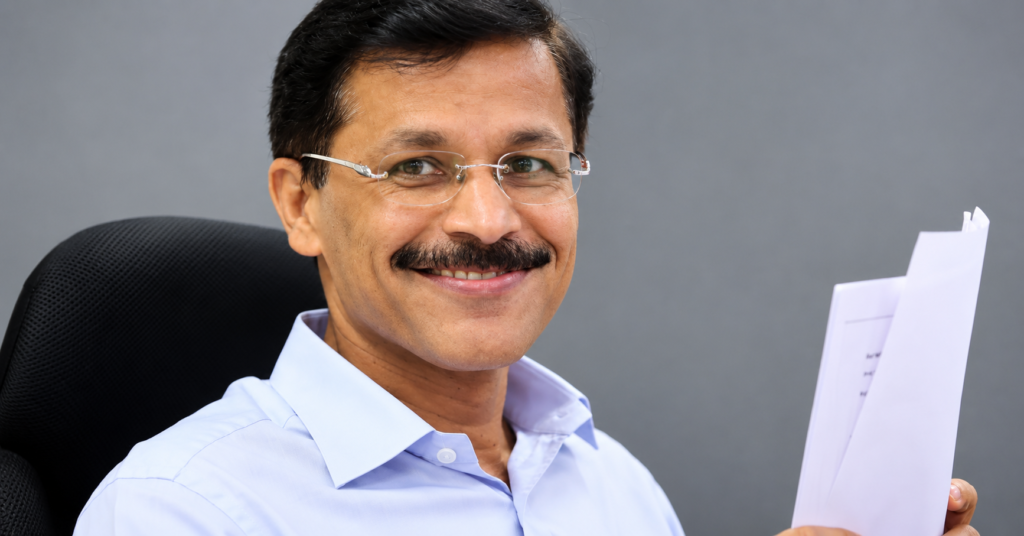
Maharashtra’s Food and Drug Administration Commissioner Tukaram Mundhe has once again found himself at the centre of transfer talk. In bureaucratic circles and on social media, whispers about yet another shift have been circulating for weeks. Some posts even claimed he had already been moved to Rajasthan. The question many are asking is simple: is there any truth to the latest rumpus, or is it just the usual noise that follows an officer who refuses to look the other way? Mundhe, a 2005-batch IAS officer of the Maharashtra cadre, took charge as FDA Commissioner in May 2026. That posting was his 25th in a career spanning roughly 21 years. The number itself has become part of his public identity. Comparisons with Haryana’s Ashok Khemka are frequent, and not without reason. Most officers expect a three-year tenure in a post. Mundhe has rarely been allowed that luxury. His transfers have often come in quick succession, sometimes before he could even settle into the new role. The pattern is well documented. In March 2026 he was shifted from the Disability Welfare Department to Disaster Management, Relief and Rehabilitation, with additional charge of Revenue and Forest. That order was later put on hold. In May he was moved again, this time to the FDA. Within weeks of taking charge he launched a series of inspections across the state. Raids on food establishments, action against adulterated milk and paneer, suspension of licences, and seizure of unsafe stocks followed. By August the numbers were already large: more than a thousand inspections, dozens of licences suspended, and crores of rupees worth of material seized. The drive continued into September, with further operations reported in districts such as Nashik and surrounding areas. It is this aggressive enforcement that appears to have fuelled the latest round of speculation. When an officer begins troubling powerful interests—whether in the food trade, manufacturing, or the informal networks that supply adulterated goods—transfer talk usually follows. In August 2026 social media posts claimed Mundhe had been transferred for the 26th time, this time to Sikar in Rajasthan. The claim spread quickly. Fact-checking organisations and the state information department pushed back. No government order existed. Mundhe himself dismissed the rumour in clear terms. He is a Maharashtra cadre officer, he pointed out, and there was no basis for an inter-state transfer of that kind. Official sources confirmed he remained at the FDA. As of mid-September 2026 the position has not changed. Mundhe is still the FDA Commissioner. In recent interviews he has addressed the speculation directly. Asked where he would prefer to go if shifted again, he replied that the decision is not in his hands. “Where my next transfer will be is not in my hands. I will work in whatever department the government gives me,” he said. He added that he does not spend much time thinking about the future and prefers to focus on the work in front of him. On the question of negligent officers under him, his tone was firm: there is no room for compromise or undue sympathy. The larger context is familiar to anyone who follows Maharashtra’s administrative politics. Frequent transfers of upright officers are not new. Governments of different parties have moved Mundhe over the years. Supporters argue that his strict adherence to rules and willingness to act against irregularities make him inconvenient. Critics sometimes say his style creates unnecessary friction. Both views have been aired in the past. What is harder to dispute is the public record of his recent work at the FDA. Consumers who worry about what goes into their food have largely welcomed the crackdown. Industry voices that face sudden inspections and licence suspensions have been less enthusiastic. No fresh government order transferring Mundhe has been issued in the period under discussion. The Rajasthan rumour was false. The broader chatter about a possible move remains just that—chatter. In the Indian administrative system, postings are the government’s prerogative. Speculation is constant, especially around officers who generate headlines. Mundhe has lived with that reality for two decades. His own statements suggest he has learned to treat it as part of the job rather than a personal crisis. For now, the facts on the ground are straightforward. Tukaram Mundhe continues as Maharashtra FDA Commissioner. The high-visibility enforcement drive against food adulteration is ongoing. Claims of an imminent or already executed transfer lack official backing. Whether the government chooses to move him in the coming months is a decision that rests with the political executive. Until an order is issued and notified, the latest transfer rumpus remains unproven. That, in essence, is where matters stand. In a system where transfers can be used as both reward and signal, officers like Mundhe become lightning rods. The public interest, however, is better served by looking at the work being done and the orders that actually exist, rather than the rumours that travel faster than files. Sources: Publisher By – Rohit Manral Written By – Anjali Pandey
Twenty Years, Twenty-Four Transfers: The Story of IAS Officer Tukaram Mundhe
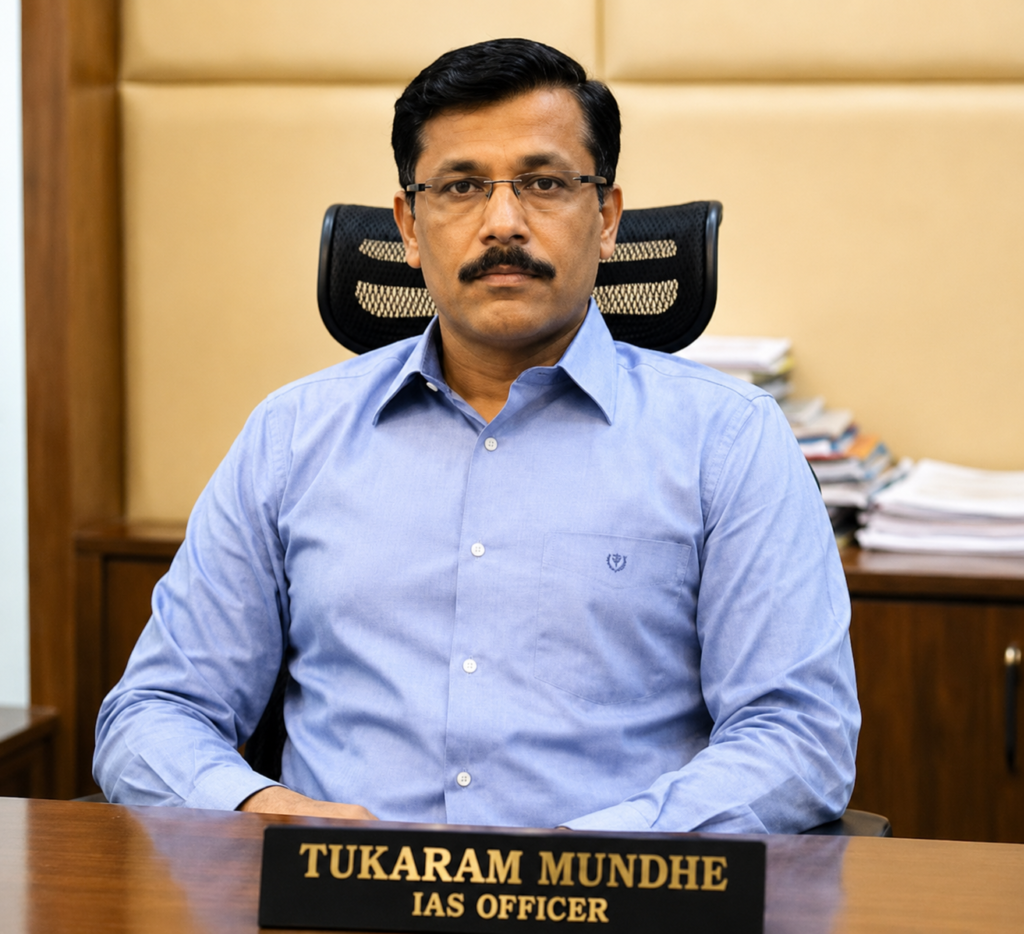
The officer who keeps getting moved: inside Tukaram Mundhe’s 20-year run against the system. Ask anyone in Maharashtra’s bureaucracy about Tukaram Mundhe, and you’ll get an opinion fast. The 2005-batch IAS officer has picked up a nickname — “Singham,” after the no-nonsense movie cop — and it’s stuck for a reason. What sets him apart isn’t just that he cracks down on illegal construction or sand mining wherever he lands. It’s how often he lands somewhere new. Depending on who’s counting, he’s been transferred somewhere north of 20 times, maybe close to 25, in a career spanning roughly two decades. To a lot of ordinary people, that record reads as proof of an officer who won’t be pushed around. To plenty of politicians, it reads as a man who doesn’t know how to bend, even a little. He didn’t start out anywhere near power. Mundhe was born on June 3, 1975, in Tadsonna, a small village in Beed district, part of Marathwada — a region that’s no stranger to drought and agrarian hardship. His family farmed, and like a lot of farming families in that belt, debt was a constant companion. As a kid, he split his time between schoolwork at the local Zilla Parishad school and helping out in the fields. Later he made his way to Aurangabad for college, earning a bachelor’s degree that combined history, political science, and sociology, then a master’s in political science from Dr. Babasaheb Ambedkar Marathwada University. An older brother already in government service seems to have nudged him toward the idea of civil service himself. He got through the Maharashtra Public Service Commission exam first, worked for a while as a Class II officer, and kept at it — eventually landing All India Rank 20 in the UPSC Civil Services Examination. That’s what got him into the IAS, Maharashtra cadre, in 2005. His very first posting, as supernumerary assistant collector in Solapur, already hinted at what was coming: he went after illegal establishments almost immediately. That instinct followed him everywhere. He ran the zilla parishads in Nagpur and Washim as CEO, served as additional tribal commissioner in Nashik, and became collector of Jalna. From 2012 to 2014 he was joint commissioner of sales tax in Mumbai, a stretch where tax recovery numbers jumped noticeably. Then, in November 2014, he went back to Solapur — this time as district collector — and threw himself into water conservation work under the Jalyukt Shivar scheme, took on the sand mafia, and helped wean several villages off water tankers. The state gave him a best-collector award for 2015–16 for that work. From there it was Navi Mumbai as municipal commissioner, then chairman and managing director of Pune’s transport corporation (PMPML), then municipal commissioner of Nashik. Same themes everywhere: tighten the finances, enforce the building codes, run a cleaner shop. “He rarely stayed anywhere longer than a year, sometimes eighteen months at most.” But it’s the transfers themselves that really define the story. He rarely stayed anywhere longer than a year, sometimes eighteen months at most. Early on it was Solapur, then Degloor subdivision in Nanded, then Nagpur’s zilla parishad, a short stint in the tribal department, Washim, Jalna. After the sales tax posting and his second run in Solapur, things moved even faster — Navi Mumbai, Pune transport, Nashik, then a string of state-level jobs in planning and AIDS control. By January 2020 he was municipal commissioner of Nagpur, and that turned out to be one of his rockiest postings yet. Corporators from across the political spectrum pushed back hard on how he handled the civic budget, development spending, and his COVID-19 response, which some called too centralized for their taste. He himself caught COVID that year, and while still recovering, got transferred out — this time to the Maharashtra Jeevan Pradhikaran, in August 2020. After that came a scattering of roles: the state human rights commission, commissioner of health services, director of the National Health Mission, and a run of secretary-level postings covering animal husbandry, language policy, unorganised labour, and disability welfare. By mid-2026, he’d taken charge of Maharashtra’s Food and Drug Administration, where his enforcement drives against unhygienic food outlets and adulteration were, once again, making headlines. How people react to all this depends a lot on where they’re standing. When he left Nashik, residents actually turned out to protest the transfer — they didn’t want him gone. In Solapur and elsewhere, locals point to real, visible improvements in water access and a drop in illegal extraction as reasons to credit him. Politicians tend to see it differently, often describing him as someone who won’t meet elected officials halfway. There have been accusations of heavy-handedness and overreach along the way too, even if the government has sometimes stood behind his record. And the transfers themselves have become part of how people talk about him — supporters treat each one as evidence he can’t be intimidated, while critics say a style that rigid was always going to create friction sooner or later. “Supporters treat each transfer as evidence he can’t be intimidated — critics say a style that rigid was always going to create friction.” What does his actual governing look like? Strict enforcement, an emphasis on transparency, and a habit of engaging directly with the public — things like randomised distribution systems designed to cut out middlemen, anti-encroachment drives, and initiatives like “Walk with the Commissioner,” meant to make him more reachable. In Nagpur, during COVID, he oversaw containment work and pointed to health outcomes that he said were better than average for the period — though that same stretch also sharpened his political conflicts. His supporters treat all of it as evidence of integrity. Critics counter that being this uncompromising about rules can slow things down and make it harder to keep colleagues and politicians on side — cooperation you often need if reforms are going to stick. It’s not surprising that young civil service aspirants bring him up as an example