
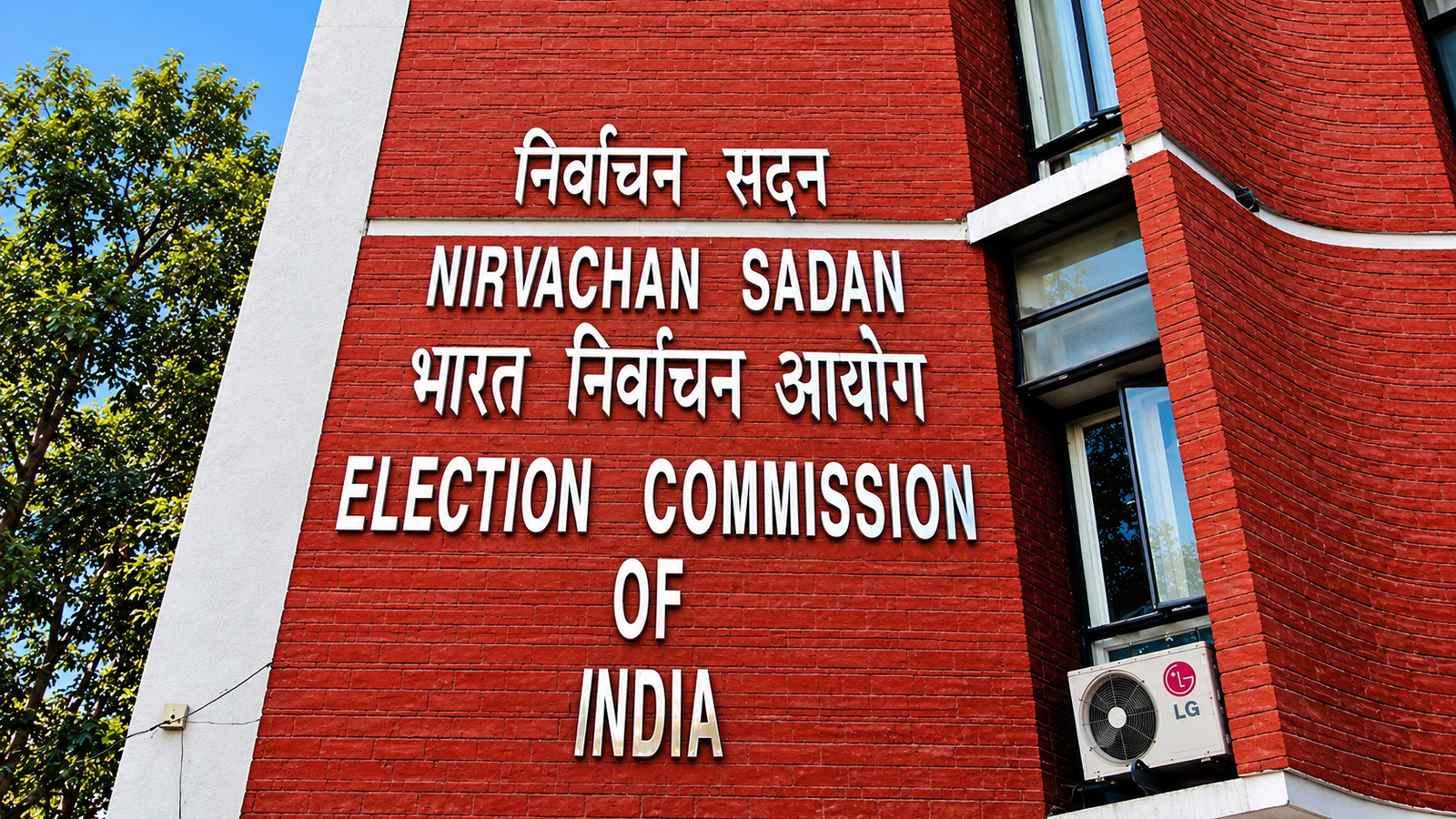
Officials in the Home Ministry and the Election Commission are keeping their mouths shut on almost everything that matters administratively. Sources who once spoke freely now say the same thing: no more internal stories. Not about the Special Intensive Revision of electoral rolls, not about how decisions were taken, and not about any further inquiries that may still be sitting in files.
It is not an official order pinned on the notice board. It is more of a mood, a collective decision to stay careful. After months of reports about disagreements inside Nirvachan Sadan, the atmosphere has changed. Earlier this year, detailed accounts emerged of two Election Commissioners, Sukhbir Singh Sandhu and Vivek Joshi, putting their concerns on record more than a dozen times over ten months. They raised questions about changes to Form 6 for new voter registration, about how the central software systems for electoral rolls were being managed, and about orders that appeared to go out in the Commission’s name without full discussion. Those reports, based on internal notes, set off a sharp political debate. The Commission itself maintained that differing views are normal in any multi-member body and that the final decisions, including the big ones on the SIR exercise, were taken unanimously.
Now the shutters seem to have come down. Officials in both the Home Ministry and the Election Commission are said to be under instructions, or at least under strong advice, not to discuss administrative matters with outsiders. The result, according to people familiar with the corridors, is that any further internal examination of the SIR process or other sensitive functions is unlikely to surface in the public domain anytime soon. Whatever papers exist will stay inside. Whatever reviews are underway will remain confidential. Observers who watch these institutions closely say this is part of a wider tendency these days—keep operational information tightly controlled, especially when it touches elections and voter lists.
The SIR itself has been one of the most talked-about exercises in recent memory. Starting in Bihar and then spreading across states and Union territories, it involved a thorough re-check of electoral rolls. Draft lists showed large numbers of names removed—figures quoted in public discussion have gone into crores. There were cases of people whose names vanished even though they were alive and living at the same address. There were appeals, hearings, and court interventions. Political parties raised alarms. The Commission defended the process as necessary to clean the rolls of deceased voters, duplicates, and those who had shifted permanently. It pointed to opportunities for claims and objections, and to the fact that the Supreme Court had examined aspects of the exercise.
Yet the internal notes that became public created a different kind of discomfort. When two of the three members of a constitutional body record repeated objections about procedure, software access, and the way certain orders were issued, it naturally raises questions about how collective decision-making is working. The Commission’s response was that such notes are part of healthy deliberation and that the larger body of decisions remained unanimous. After a meeting of all three commissioners later in September, the Commission reiterated that position and announced some practical steps—extended deadlines in certain places, easier ways for affected voters to submit documents, and a review of the digital systems with outside technical input.
That public exchange now appears to have been followed by a quieter phase. Sources say the bureaucracy has simply decided enough is enough. No more background briefings, no more selective leaks, no more detailed accounts of who wrote what to whom. In the Home Ministry as well, the same reserved approach is visible on related administrative matters. The message is clear: sensitive operational information stays inside the system.
This kind of restraint is not entirely new in government. There have always been periods when officials become more guarded, especially after a burst of publicity. What stands out this time is how complete the silence seems. People who earlier confirmed or denied small details now decline even those. Journalists covering the beat find doors less open. The expectation among those who follow these institutions is that the internal workings of the SIR process, and any investigations that may still be going on, will remain strictly confidential. No additional disclosures are anticipated from either side in the near future.
For an institution like the Election Commission, which depends heavily on public trust, the balance is always delicate. Transparency helps credibility. At the same time, constant leakage of internal notes can make day-to-day functioning harder. Officials argue that once the final decisions are taken and put out, the internal debate should not keep playing out in the open. Critics worry that too much opacity creates space for suspicion. Both sides have a point, and both have been making it for weeks.
What has changed in the last few days is the practical outcome. The flow of internal stories has slowed to a trickle and, according to those in a position to know, is expected to stop. Whether that brings calm to the institution or simply moves the conversation into private channels is something only time will tell. For now, the bureaucratic restraint is firm. The files stay closed, the conversations stay inside, and the public is left with whatever has already been said.
Sources: Whispers in the Corridors (12 October 2026); The Indian Express investigation reports (September 2026); Election Commission of India press notes (23 and 26 September 2026); The Hindu and other contemporary reporting on the SIR exercise and internal Commission deliberations.
Publisher By – Rohit Manral
Written By – Anjali Pandey