Someone walks in flashing an ID card, talks like they own the place, and suddenly everyone starts saying “yes sir, no sir.” That’s the magic those three letters still have in our country — IAS, IPS. And honestly, some people have figured out how to milk that magic for all it’s worth.
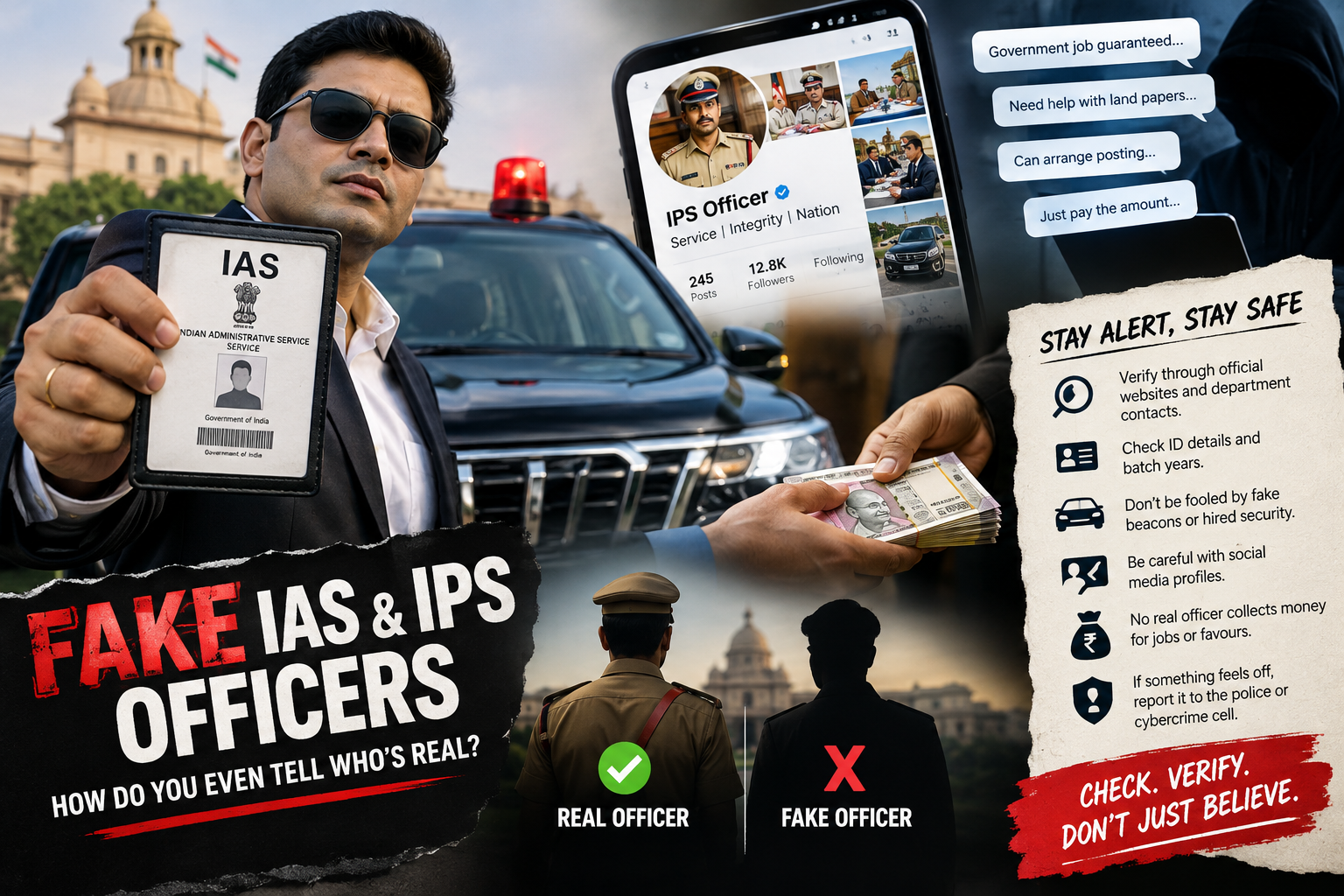
Lately it’s been happening everywhere. UP, Madhya Pradesh, Bihar, Telangana, Maharashtra, even Rajasthan. Guys and sometimes women showing up with fake IDs, fake appointment letters, big cars with those red lights stuck on top, and social media profiles that look surprisingly real. They promise government jobs, help with land papers, company registrations, sometimes just use the fear of the rank to get what they want. Money changes hands, people get hopeful, and then the person disappears.
It’s not rare anymore. In Madhya Pradesh a brother-sister pair was caught after collecting almost ten lakh by claiming one of them was some big tourism department IAS officer. In UP people have lived for years under fake identities — attending meetings, driving luxury cars, even threatening real officials. In Telangana and Rajasthan, even teenagers were running dozens of fake Facebook profiles of actual senior officers just to cheat their contacts. Some are using AI now to make documents look cleaner. Others just print visiting cards and hire a couple of tough-looking guys as “security.” The tricks keep changing, but the game stays the same.
Why does it work so well? Because most of us still grow up thinking if someone says they’re IAS or IPS, they must be. That respect is drilled into us. And when you’re desperate — for a job, for a quick fix to some problem — you don’t always stop to check. Social media makes it worse. A few formal photos, some staged office shots, a couple of posts with politicians, and suddenly the profile looks solid enough.
So how do you protect yourself without becoming completely paranoid?
First rule, and this is the big one: never take anyone’s word for it if money or favours are involved. Real officers have records you can actually check. There’s an official IPS civil list on the Ministry of Home Affairs site. State governments put out IAS lists too. If someone claims a posting, you can call the department or the district office and ask. A real officer won’t get offended by that. A fake one will usually get jittery or start talking about how “these things take time” or “you don’t understand how the system works.”
Look at the small things. Fake IDs often have spelling mistakes, weird seals, or batch years that don’t match. Real officers don’t usually carry five different high-level cards from different departments at the same time. And they don’t keep announcing their rank every two minutes. The ones who keep saying “I am IAS, you know” or “my PA will handle everything” are often the ones you should watch.
Vehicles and security are another giveaway. A private Innova with a magnetic beacon and two hired bodyguards is almost never the real thing. Living in a fancy hotel for months while claiming official duty without any paperwork is another red flag. Real officers on duty have proper official vehicles and, when needed, authorised security — not random guys in black shirts.
Social media needs extra care. Fake profiles of real officers are common now. If some “senior IPS” suddenly messages you asking for money or “help,” don’t reply on that chat. Check the official website or call the known office number instead. Better safe than sorry.
And job offers? That’s where most people get trapped. No real IAS or IPS officer sits in a café or hotel lobby collecting cash for “guaranteed” government jobs. Recruitment goes through UPSC, state commissions, or proper departmental processes. Anyone asking for money in exchange for a selection letter or posting is almost certainly a fraud. Full stop.
If something feels off, just walk away and report it. Police and cybercrime teams have been dealing with more of these cases lately. The more people speak up, the harder it gets for these impersonators to keep operating.
At the end of the day, this whole mess is a reminder. The symbols of power — the title, the car, the ID — still carry a lot of weight in our society. That weight can be used for good, or it can be borrowed by people who just want to cheat. Respecting real officers is fine. Blindly believing anyone who claims the title is not.
So next time someone starts throwing around “IAS” or “IPS” and the conversation slowly turns towards money or special help, just pause. Ask a couple of questions. Check one thing online if you can. That small habit can save a lot of heartache. Because once the money is gone and the person has vanished, it’s usually too late.
Publisher By – Rohit Manral
Written By – Anjali Pandey