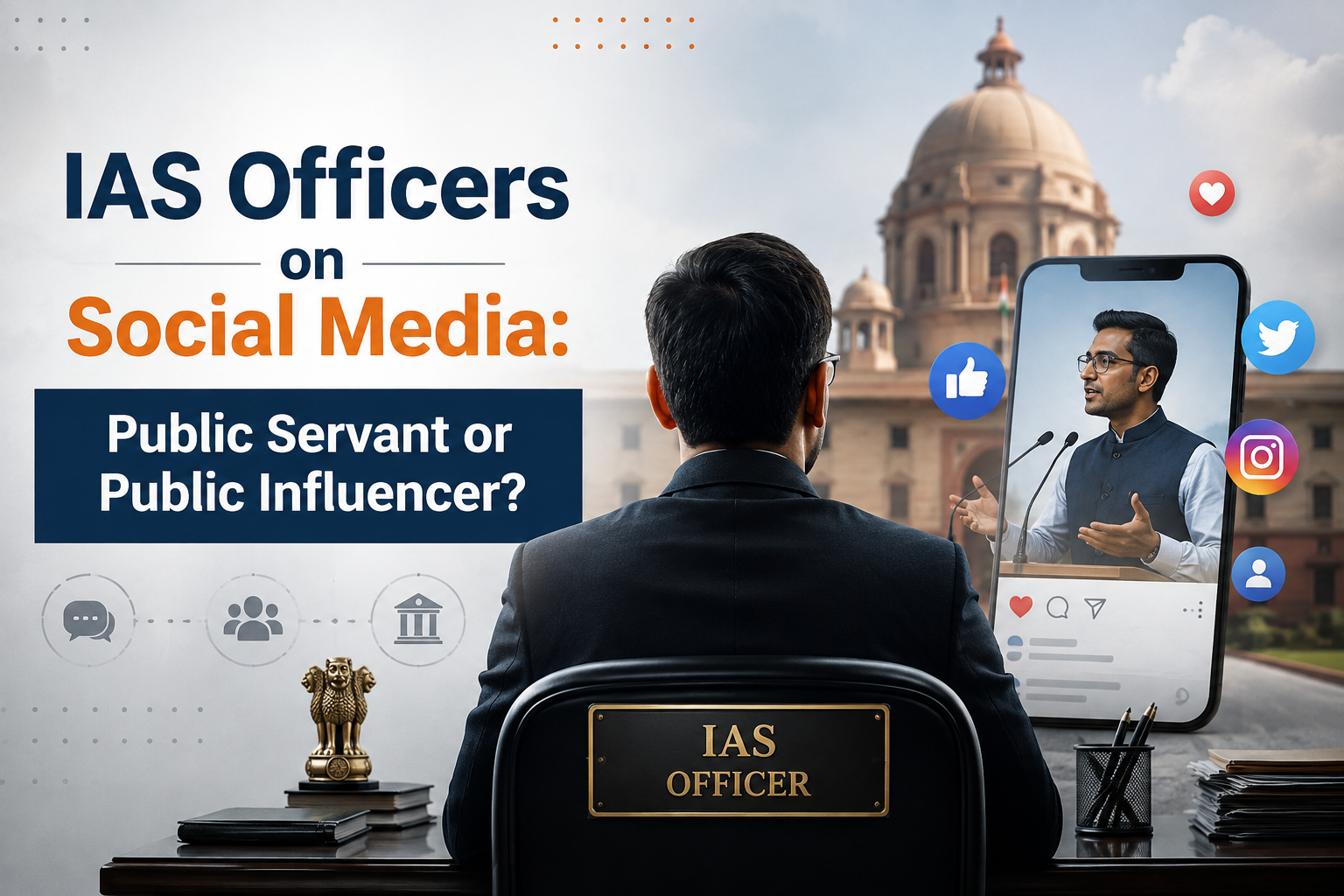
You know that feeling when you open Instagram and suddenly an IAS officer’s face is staring back at you? Not some polished government photo, but a reel of him walking into a messy market, sealing shops, background music swelling like a movie trailer. Comments flying: “Sir, real hero!” “More officers like you!” And you catch yourself thinking, wait, is this still public service or has it turned into content?
That’s the shift we’re living through. A whole lot of IAS officers have stepped out from behind the files and onto our feeds. Tina Dabi, the 2015 topper, has more than a million people following her mix of work notes and quiet encouragement. Deepak Rawat from Uttarakhand posts those tightly edited inspection videos that feel half administration, half short film, and people eat them up. Srushti Deshmukh Gowda mixes yoga, books and district work and sits on over two million followers. Remember Abhishek Singh? He was acting in Delhi Crime while still carrying the IAS tag. And N. Prasanth, the old “Collector Bro” from Kozhikode, once used Facebook so well that people felt closer to the administration—until a later social media spat got him suspended for what the Kerala government called grave indiscipline.
On the good days, this feels useful. For the first time ordinary people can actually see the person who decides things that affect their lives. During the pandemic some of these officers cut through the noise and shared clear information when rumours were flying. Young kids in small towns watch them and think, maybe this path is possible for me too. Governance stops feeling like a closed room. That part is hard to argue against.
But then the other side starts showing. Senior officers and even the top brass have been quietly (and sometimes not so quietly) worried. Last year there were high-level meetings about officers using staff, vehicles, office space, even government schemes as ready-made backdrops for their personal brand. Some have half a dozen fan pages running alongside their official ones. There are murmurs about view-based payouts. LBSNAA keeps telling the new batches, don’t chase the spotlight, don’t post impulsively, don’t turn the service into a personal stage. A few states—Uttar Pradesh, Maharashtra—have put out clearer rules: no showing off the official car or uniform for likes, no self-praise, keep politics out. The old Conduct Rules always asked for dignity and a certain quietness. Social media just makes it harder to pretend those rules still hold the same way.
The real trouble isn’t the phone. It’s what the phone starts rewarding. When part of your day is measured in views and shares, the slow, invisible work—the file that no one will ever clap for—starts to feel less important. A surprise check filmed for maximum drama is different from one done only for maximum effect. The person waiting for a ration card or a land mutation doesn’t care how many reels the collector posted that week. And once personal fame begins to matter more than the institution, something in the culture quietly changes.
Kiran Bedi said it simply: keep purpose above popularity. That still lands. Social media can be a tool. It can explain, connect, even humanise. But the moment it becomes the main show, or a side hustle running parallel to the real job, the idea of the public servant starts thinning out.
We shouldn’t pretend the old silent bureaucracy was perfect either. A lot of it was opaque and distant. The answer isn’t to ban officers from every platform. Clearer lines would help—official handles for official work, no government resources used for personal content, and a firm no to anything that smells like monetisation. Officers who genuinely want to share progress can still do it without turning themselves into the brand.
In the end it comes down to a simple question. An IAS officer’s real constituency is the people in the district or the department, not the followers. Their real report card is whether the school runs, the road gets fixed, the grievance gets heard—not how many blue ticks or viral clips they collect. When those two get mixed up, something essential slips. The service was never designed to manufacture celebrities. It was meant for people who keep working even when the camera is off. In this loud, algorithmic age, that quieter idea still feels like the one worth holding on to.
@Rohit Manral