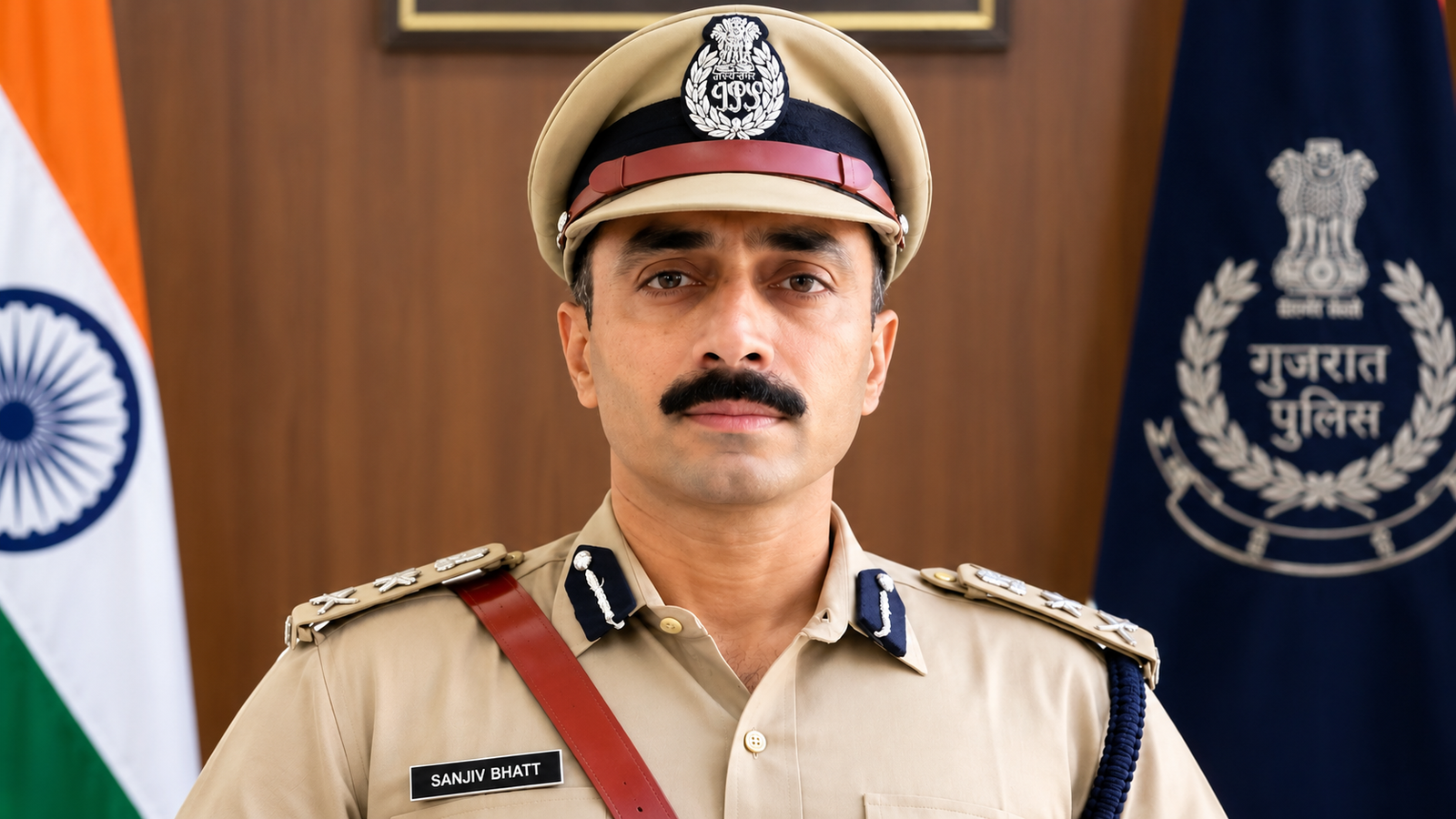
It has been eight full years now. Eight years since Sanjiv Bhatt, the former Gujarat IPS officer who became known as a whistleblower, went into jail and stayed there. On this day his two children, Akashi and Shantanu, put out a statement that feels raw and personal. They said their father chose to stand against power instead of making peace with his own conscience. And for that he lost his freedom, his career, and years of ordinary life with his family.
For Akashi and Shantanu the date is not just another anniversary. They counted it out carefully—2,923 days of separation. But they say the number itself is not the point. What matters is that the fight for justice has gone on this long and still has not ended. They believe the cases against their father were built to keep him quiet. They call them fabricated, and they say the years have not broken his spirit.
They remembered something he used to tell them when they were younger. There come times, he said, when a person has to choose. You can stay silent and stay safe, or you can listen to the voice inside and stand up. Their father knew the second choice would be lonely and hard. He knew it would cost him almost everything. Still he refused to step back.
The children went on to talk about democracy itself. Elections are not enough, they said. You need institutions that stay independent, you need the rule of law, and you need ordinary people who keep asking questions of those in power. When institutions start answering only to the powerful, those same institutions can be turned against anyone who speaks up. That, they believe, is what happened to their father.
Sanjiv Bhatt did not raise his voice for his own sake, the children wrote. He spoke for people who had faced hate and violence and had almost no one left to speak for them. He put his job, his name, his freedom and years of his life on the line because he thought that people with great power should face great accountability. Eight years later the one thing the system could not take from him, according to Akashi and Shantanu, is the refusal to bend his conscience.
Their statement ends with a kind of quiet defiance. “After eight years our father is still standing. His head is high, his conscience is clear, and his resolve has not broken. We will keep fighting for justice.” They asked people to remember him and to speak up for others who are still trying to defend basic rights, freedom and democratic values.
The longer story is familiar by now. In 2011 Bhatt filed an affidavit that put him in the national spotlight. He alleged that the then Gujarat Chief Minister Narendra Modi had a role in the events around the 2002 riots. That affidavit changed everything for him. He was suspended the same year and dismissed from service in 2015. Since September 2018 he has been in prison. In 2019 a court found him guilty in a 1990 custodial death case and gave him life. Last year, in 2024, another court sentenced him to twenty years of rigorous imprisonment in a 1996 case involving alleged drug planting. His family and supporters have always said both cases were politically driven.
People still argue about the man and the cases. Some see a officer who refused to look away when it was safer to stay quiet. Others see someone who went too far and must now live with the consequences. What no one can argue with is the simple length of time. Eight years is a long stretch to spend locked away. For his children it is also a reminder that the questions their father once raised have not gone away, and that they intend to keep them alive.
They write like people who have lived the cost every single day. The language is careful, almost understated, but the feeling underneath is clear. A father taught them that conscience has a price. They watched him pay it. Now they are telling the rest of us what that payment looks like after nearly three thousand days.
Sources:
Statement by Akashi Bhatt and Shantanu Bhatt dated 5 September 2026; earlier reporting on the 2011 affidavit, the 2015 dismissal from service, the 2019 life sentence and the 2024 conviction in the 1996 case; court records from the relevant Gujarat and higher court proceedings.
@Rohit Manral