
From Engineer to District Magistrate: The Career of IAS Officer Nitin Singh Bhadauria
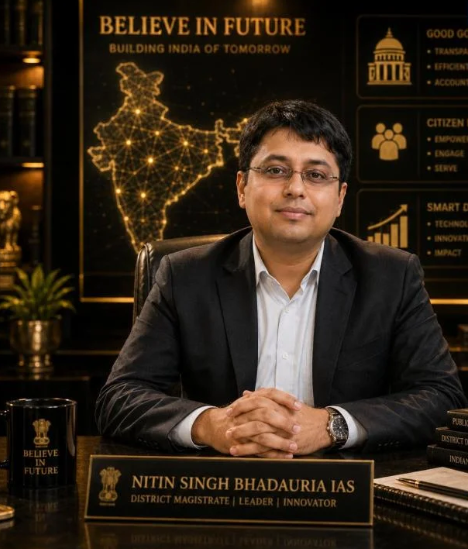
Nitin Singh Bhadauria is an Indian Administrative Service (IAS) officer belonging to the 2011 batch of the Uttarakhand cadre. He was selected as a direct recruit through the Union Public Service Commission’s (UPSC) Civil Services Examination. Although he hails from Uttar Pradesh, he was allocated the Uttarakhand cadre for his administrative service. Currently, Nitin Singh Bhadauria has been serving as the District Magistrate of Udham Singh Nagar since November 30, 2024. This position represents the highest executive authority in district administration, entailing critical responsibilities such as maintaining law and order, effectively implementing development schemes, disaster management, revenue administration, and coordinating between various government departments. His educational background reflects a balanced blend of technical and management studies; he holds both a Bachelor of Engineering (B.E.) degree and an M.B.A. His engineering education has equipped him with analytical thinking and problem-solving capabilities, while his management studies have further strengthened his administrative decision-making, resource management, and leadership skills. Over the course of his administrative career spanning approximately 15 years, he has served in various capacities across different regions of the state. To date, he has held 15 distinct postings and served in seven different locations. This extensive experience has provided him with a comprehensive understanding of the state’s diverse administrative, social, and developmental issues. Currently, Nitin Singh Bhadauria serves at Pay Level-13 of the IAS pay matrix, a position that signifies senior administrative responsibility. Throughout his tenure, he has discharged significant duties related to administrative leadership, policy implementation, and public service across various departments and districts. His work style is characterized by an emphasis on administrative efficiency, coordination, and a result-oriented approach.
IAS Swati S. Bhadauria Balances Strict Action with Social Compassion The Multi-Faceted Governance
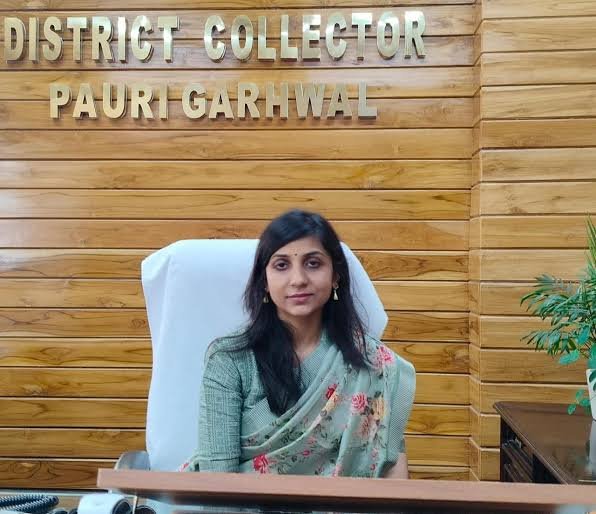
Swati Shrivastava Bhadauria, a 2012 batch Indian Administrative Service officer of the Uttarakhand District, was born on August 23, 1987, in Uttar Pradesh. She successfully passed the Union Public Service Commission’s Civil Services Examination, securing the 74th rank. She currently serves as the District Magistrate of Pauri Garhwal. Since January 2022, she has served as Additional Secretary in the Office of the Governor of Uttarakhand. Previously, she has held positions such as Managing Director, Chief Executive Officer, District Collector, Magistrate, and Joint Secretary. She holds a B.Tech in Electronics from the Uttar Pradesh Technical University and a certificate course in French language from the French University in Dehradun. Before joining the administrative service, she also worked for the Reserve Bank of India for approximately six months. Initially, she served in the Chhattisgarh District, after which she was transferred to the Uttarakhand District in 2015, where she also served as SDM in Mussoorie and Dehradun. She also served as the District Magistrate of Chamoli district from 2018 to 2021, during which she demonstrated commendable transparency and public welfare in the remote areas. In June 2025, in a major reshuffle, she was appointed as the District Magistrate of Pauri district. Swati Bhadoria is known for her transparent work, quick decision-making, and humane approach to connecting directly with the public. Key Works During the Ibhisen Glacier Disaster in Chamoli in February 2021, she was on the front lines, successfully managing relief and rescue operations. Her efficient disaster management, including rescuing workers trapped in a tunnel and promptly delivering aid to affected villages, was praised nationwide. To increase public confidence in the government system, while posted in Chamoli, she enrolled her son in a local Anganwadi center instead of an expensive private school. Her simple gesture made headlines nationwide and set a unique example of breaking the VIP culture. She initiated the Panch Badri Prasadam project, employing local self-help groups to prepare official Prasadam containing incense sticks and holy water, using locally sourced herbs to make them self-reliant. She also implemented the Bachpan project, advocating for the modernization and equipping of Anganwadi centers for the nutrition and better mental development of her fellow children. In 2026, during the intense heat wave in Pauri district, she conducted a surprise inspection of the Water Supply Department office following complaints of water shortages. She immediately took strict action against a fellow junior engineer for resting at home while on duty, leading to a resentment among the entire staff. Considering the difficult geographical conditions of the mountainous region, she strengthened the digital complaint tracking system and the CM Helpline Monitoring Cell so that villagers do not have to rush to the district headquarters for minor problems. Awards and Honors While serving as District Magistrate in Chamoli, she effectively implemented river conservation, plastic waste management, and cleanliness campaigns at the grassroots level under the “Namami Gange Mission” and was honored by the Central Government with the country’s most prestigious award in the field of public administration. To empower women in Uttarakhand and strengthen self-help groups, she initiated the “Panch Badri Prasadam project”, which improved the income of hundreds of local women.
DM Gaurav Kumar Swiftly Defused the Karnaprayag Crisis..
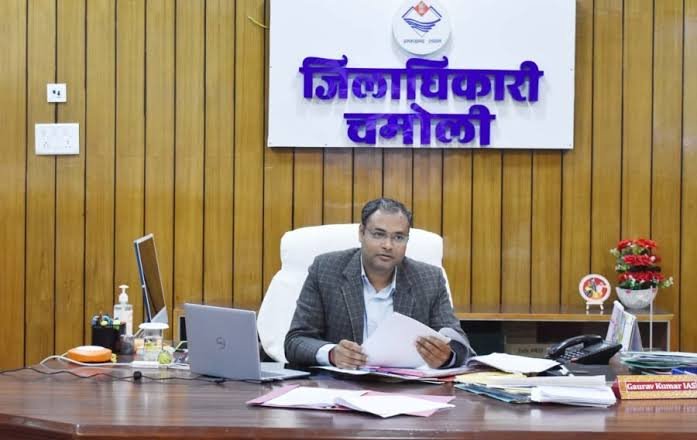
IAS Gaurav Kumar is currently serving as the District Magistrate of Chamoli district in Uttarakhand. He assumed office on October 12, 2025. Prior to this, he served as the Block Development Officer and Additional Secretary of August Muni. He is known for his ground-level understanding, result-oriented work style, and sensitive administrative approach. He was born on December 3, 1985 in Uttar Pradesh. He holds a BSc and MSc in Physics from Chaudhary Charan Singh University, Meerut. He also completed a Master of Arts in Organizational Management from Jawaharlal Nehru University between 2017 and 2019. After clearing the UPSC Civil Services exam, he worked for over 10 years as a Health Physicist at the Nuclear Power Corporation of India Limited in Rawatbhata before joining the Uttarakhand Kadar 2017 batch. Acclaimed Career and Key Positions Experienced in revenue, judicial, and regulatory functions early in his career. He received considerable local acclaim for his outstanding development work at the grassroots level. Before becoming the District Magistrate of Chamoli, he served as Additional Secretary in various state-level policy-making departments. Officially assumed the position of District Magistrate of Chamoli on October 12, 2025. Key Tasks In June 2026, when tensions arose between two groups over a parking dispute in Karanprayag, he immediately invoked Section 163 of the CrPC before the situation escalated. He also took strict measures to prevent any religious or communal comments on social media and restored harmony in the area by convening a peace committee. He is also known for directly inspecting work in the field. In January 2026, he conducted a foot and field inspection of the beautiful Niti Valley along the China border, where he directly interacted with local villagers amid snowfall and difficult conditions, addressing their problems on the spot. He has strengthened infrastructure in the hilly and strategically important district of Chamoli and has established direct coordination with local displaced families and officials to resolve pending issues related to infrastructure, roads, and power transmission projects like Pitkul in the district. Chamoli district is highly vulnerable to disasters and is home to the famous Badrinath Dham and Hemkund Sahib. During the pilgrimage season, he personally monitors the safety of pilgrims, traffic management, and the disaster control room. Awards and Honors Recognized for his outstanding work in implementing rural development schemes and ensuring effective groundwork while serving as Block Development Officer in August Muni Block, Rudraprayag district. Special recognition from the public for personally touring the Niti Valley on foot in sub-freezing temperatures to address local residents’ problems on the spot.
Uttarkashi DM Prashant Kumar Arya Bridges the Gap Between Public and Bureaucracy
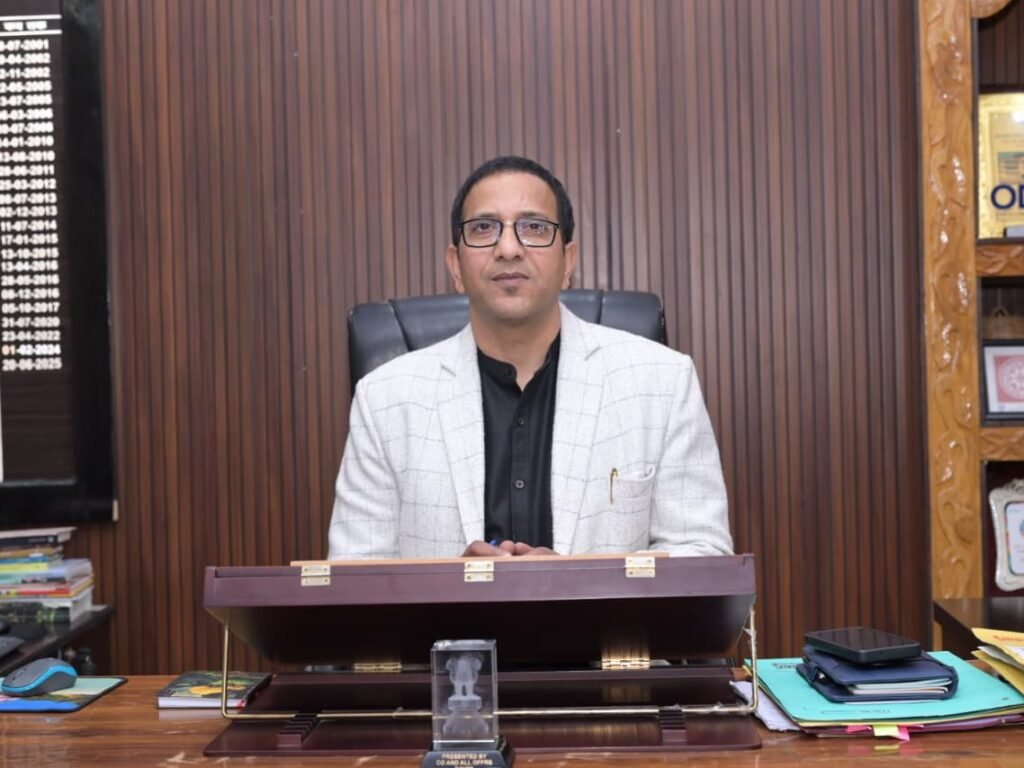
Prashant Kumar Arya, District Magistrate of Uttarkashi district in Uttarakhand, is a 2017 batch Indian Administrative Service (IAS) officer of the Uttarakhand cadre, having joined the state civil service. Previously, Prashant Kumar held the responsibility of the Sachchidanand Extension in Dehradun and also held key positions such as Chief Development Officer and SDM in Pauri district. IAS officer Prashant Kumar was born on November 26, 1977. He is known for his honesty, diligence, and work ethic. He is also known for his easy communication with the public. He expects timely and transparent work from his employees and does not place any emphasis on partisanship in the administration of law and order and development projects. His approach to work is focused on promoting public participation and working with officers in a spirit of fairness. Till now he has held the following important positions: Chief Development Officer, Pauri Garhwal, Secretary, District Panchayat Dehradun, Director, Women and Child Development Department, Excise Commissioner, Uttarakhand, Director, Sports and Youth Welfare Department, Managing Director, Garhwal Mandal Vikas Nigam. Key Tasks His key responsibility is to manage the travel arrangements for the Gangotri and Yamunotri shrines located in Uttarkashi district. he continuously monitors infrastructure along the pilgrimage routes for the safety and convenience of pilgrims, and ensures traffic management and the availability of essential services along the routes. During heavy rains, she receives daily updates on the situation and weather in the tehsils directly from the control room. he coordinates with the Public Works Department to immediately reopen national highways and major connecting roads blocked due to landslides, and issues high alert orders. he maintains police, health, electricity, and SDRF teams on 24-hour alert to address emergencies. He reviewed pending forest land transfer cases to address bottlenecks in development projects and directed officials to take prompt action. he also closely monitored the progress of Jal Jeevan Mission projects related to drinking water supply in rural areas. Issued official orders for strict disciplinary action against district and block-level officials who ignore calls from public representatives and ordinary citizens, and increased transparency so that remote villagers do not have to repeatedly visit the district headquarters to lodge their complaints. Previous Positions Key Honors and Achievements
Zero-Tolerance Approach to Dilapidated Schools – Sabeen Bansal
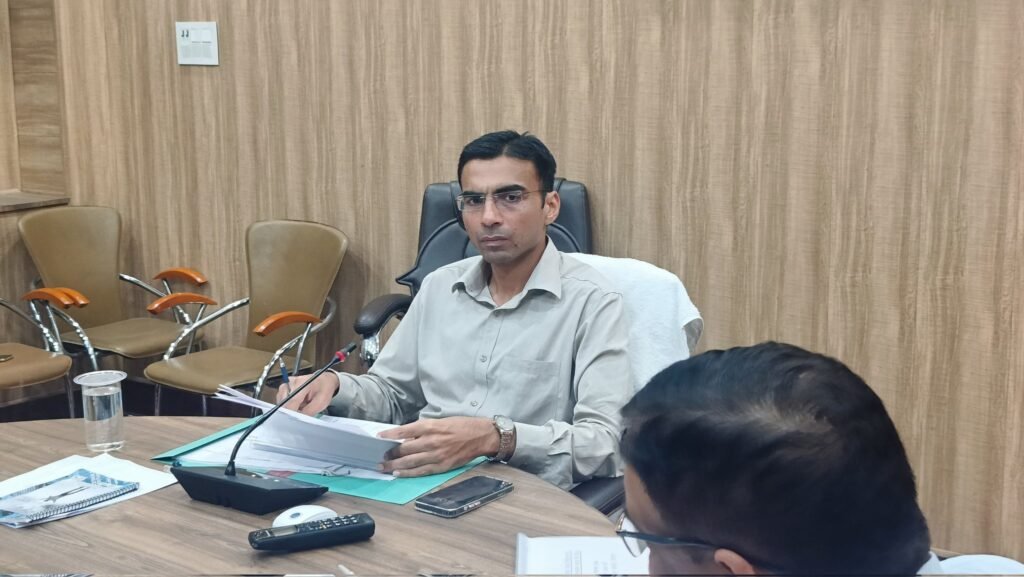
Sabeen Bansal, a popular IAS officer of the 2009 batch of the Uttarakhand cadre, is known for his direct engagement with the public, his tough decisions, and his exceptional work ethic. He currently serves as Secretary, Excise Department, and Secretary, Planning, in the Uttarakhand government. He was born on August 23, 1984, in the state of Haryana. He received his early education from DAV Public College, Ambala, Haryana. He completed his mechanical engineering from NIT Kurukshetra University and his master’s degree in Risk and Resilience from the world-renowned University College London, London, UK. He passed the Civil Services Examination without any interruption in 2008, securing an All India Rank of 34.He also completed his IAS foundation and administrative training from the Lal Bahadur Shastri National Academy of Administration, Mussoorie. He has served as the District Magistrate of Almora, Nainital, and most recently, Dehradun in Uttarakhand, and has also held important positions as Additional Secretary in various state government departments. He has also been the project director of the disaster management project run in Uttarakhand with the cooperation of the World Bank and the Asian Development Bank. Key Tasks During his tenure in Dehradun, he prioritized the safety of children and ordered the demolition and renovation of 79 dilapidated government school buildings. He also upgraded primary schools with modern furniture, whiteboards, digital screens, and mandatory outdoor activities. He also launched a special initiative to provide financial assistance of up to ₹100,000 to promising female students struggling with difficult circumstances. To strengthen women’s safety, he established dedicated pick-up police squads in urban areas and launched a large-scale rescue and rehabilitation campaign to rescue children from beggary and reconnect them with mainstream education. To address the parking problem in a city like Dehradun, he implemented a modern mechanical parking system and allocated a special budget for the installation of charging stations in the city’s main centers to promote environmentally friendly electric vehicles. Upon seeing the systemic changes in the monitoring of cleanliness and garbage collection in the Municipal Corporation, he changed the working system that had been in place for 21 years and redefined its responsibility and gave a strict 45-day ultimatum to private companies for improvement. In Nainital, he himself visited the liquor shop as a common customer and suspended and punished the sellers who were over-charging on the spot. While serving as Additional Secretary at the state level in Disaster Management, he successfully led a major disaster rehabilitation and risk reduction project funded by the World Bank and the Asian Development Bank in Uttarakhand. Honors and Awards
IAS Manish Kumar’s Unique Eco-Friendly Governance
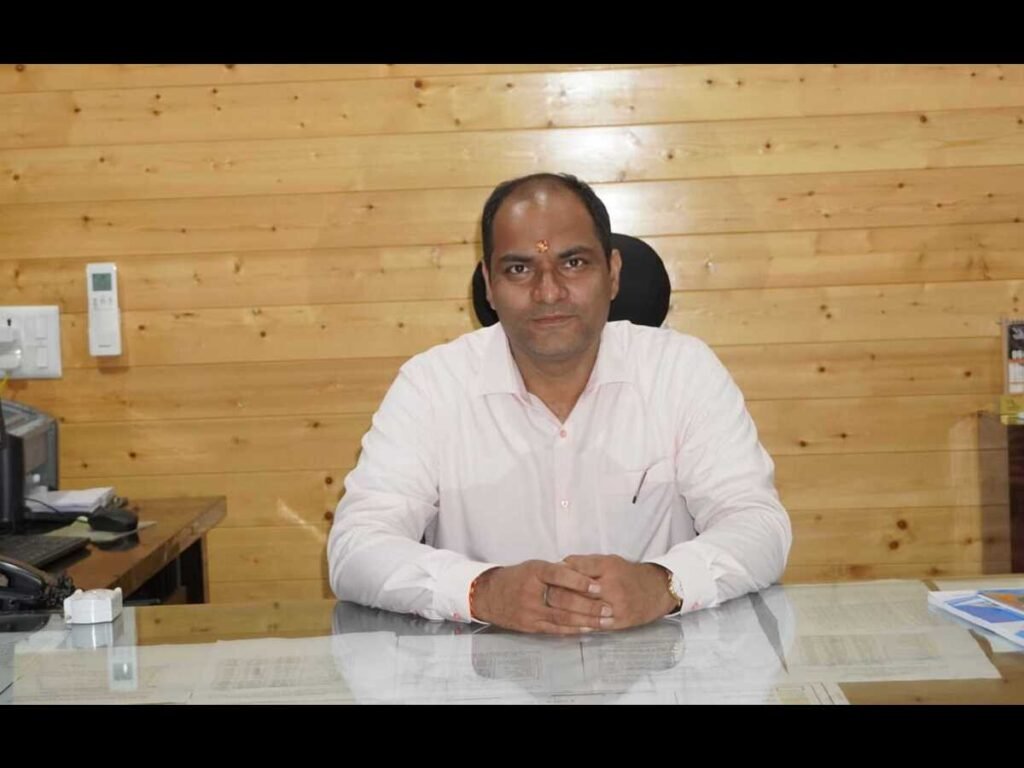
Manish Kumar, the current District Magistrate of Champawat, is a 2018 batch officer of the Indian Administrative Service (IAS). During his tenure, he has held various positions in Uttarkashi, Dehradun, Tehri, and Udham Singh Nagar. Due to his commendable work ethic, he is known as a sensitive, simple, and down-to-earth officer. He was born on January 15, 1989, in Bihar, completed his primary education there, and earned a B.Tech in Industrial Engineering from the Maulana Azad National Institute of Technology. Prior to his position as District Magistrate of Champawat, he held several positions Work Style and Key Initiatives Environmental and Social Initiatives
Administrative journey of young IAS officer Prateek Jain

Prateek Jain, a 2018 batch IAS officer of the Uttarakhand cadre, is known for his courageous disaster management, people-centric administrative work, and direct engagement with the public. He is prominently included among the youngest District Magistrates of Uttarakhand, having passed the UPSC exam at the age of just 25. During his tenure, he has cultivated a recognizable public image. Born on July 25, 1993, in Ajmer, Rajasthan, he received his primary education at St. Stephen’s School, Ajmer, and higher education from British Pilani, where he earned a BA (Hons) in Mechanical Engineering and an MSc in Biological Sciences. He also earned an MA in Public Management from Jawaharlal Nehru University, New Delhi. In 2016, he passed the Union Public Service Commission’s Forest Service examination on his first attempt, securing an All India Rank of 3. He trained as an IFS officer for approximately a year. In 2017, he passed the Civil Services Examination on his second attempt, achieving an All India Rank of 3. He became an IAS officer of the 2018 batch of the Uttarakhand cadre. He served as the District Magistrate of Rudraprayag from 2025 to February 2026, during which he conducted a foot inspection of the Kedarnath Yatra arrangements, a video of which went viral on social media. From February 2026 to February 2026, he also served as the Managing Director of the Garhwal Mandal Vikas Nigam. In 2026, he was appointed as the GST Commissioner and Inspector General of Registration and Stamp Duty of Uttarakhand. Prior to this, he held positions such as MD of SIDCUL, Director General of Industries, Chief Development Officer of Haridwar, and Deputy Collector/SDM of Nainital. His work has impressed people, and he has received overwhelmingly positive, respectful, and emotional reactions on social media. Among the people of Rudraprayag, Pratik Jain maintains a reputation as a public servant and a role model for youth. He is remembered with respect for his public welfare work and commendable transparency. Key Responsibilities Achievements
Deepshikha Sharma: The Tech-Savvy IAS Officer Driving Transparent Governance and Sustainable Development in Ferozepur
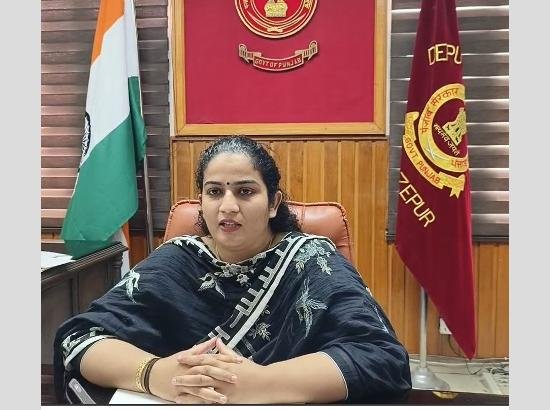
Deepshikha Sharma is a 2015-batch IAS officer (Punjab cadre) currently serving as the Deputy Commissioner and District Magistrate of Ferozepur. Since assuming office on September 13, 2024, she has focused intensely on making the administration more transparent, accountable, and citizen-centric. With a background in Electronics and Communication Engineering, she is known for integrating technology and data-driven governance into effective administrative practices. As the head of the district administration, she has accorded top priority to disaster management and public safety. Her proactive monitoring, swift decision-making, and coordinated strategies during situations such as flood threats and rising water levels have strengthened the relief and rescue mechanisms. Under her leadership, the administration has emphasized advance preparedness to mitigate risks and ensure the safety of vulnerable areas. She has also made significant contributions to the conservation of natural resources. She has promoted scientific water planning and sustainable agricultural practices, while fostering groundwater and aquifer management through initiatives like NAQUIM 2.0. Her objective has been to devise long-term solutions to water-related challenges and encourage farmers to optimize resource utilization. She has played a pivotal role in environmental conservation and the strengthening of democratic processes. To tackle the issue of stubble burning, she facilitated coordination among various departments, farmers, and experts; simultaneously, in the realm of election administration, she oversaw activities such as the Special Intensive Revision (SIR) to ensure the accuracy and transparency of electoral rolls. Her working style exemplifies an effective balance between development, environmental sustainability, and good governance.