
From Electrical Overload to Poor Rescue Access: Why City Fires Turn Deadly in India
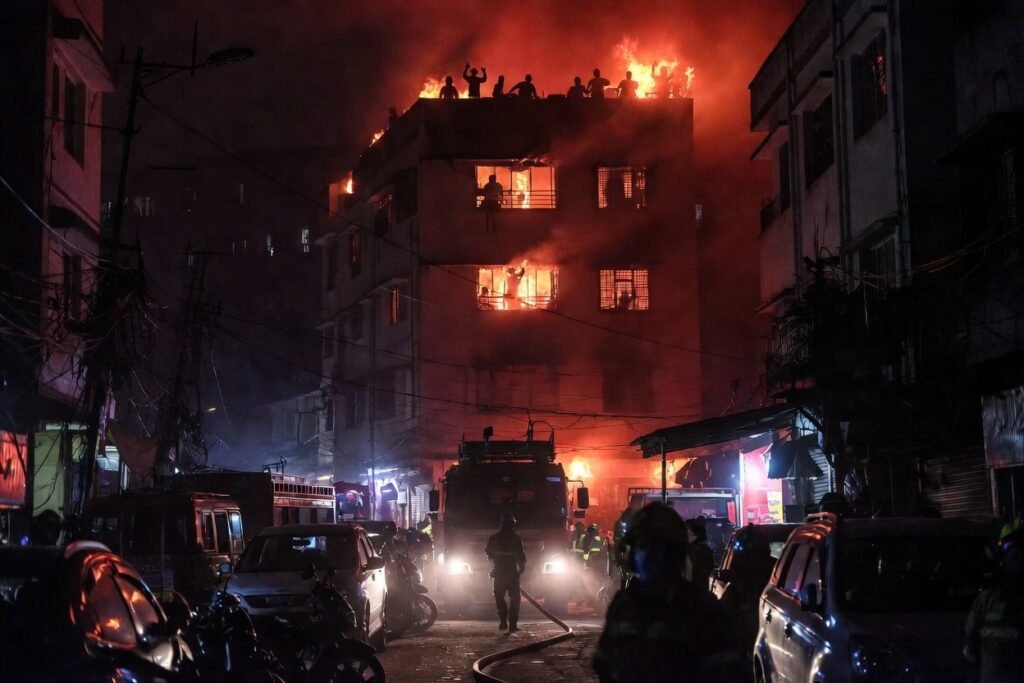
Every major fire accident in cities that causes deaths shows different reasons and problems behind it. The recent fire in Shahdara, East Delhi, showed that there was not enough planning for safely evacuating people during emergencies, especially fires. Nine people died and around 15 others were seriously injured in the accident.The residential building had a ground floor and four upper floors with eight houses. Some security features of the building became dangerous during the fire. The electronic door locks could not be opened, the terrace was difficult to reach, and metal grills around the balconies and building blocked rescue work. Firefighters had to cut the grills to save people.Another fire in Palam in March, where nine members of a family died, showed the difficulties fire services face in Delhi. The building, which was used for both residential and commercial purposes, did not have enough firefighting equipment. Witnesses also said that the hydraulic lifts used by firefighters were not working properly.Although fire services said they reached the Shahdara fire on time, response times in Delhi have often been slow. In another fire in Dwarka in 2025, fire engines could not enter a housing society because its name board blocked the way.There is definitely a need to improve fire safety and firefighting systems in Delhi, but one major issue that is often ignored is electrical faults, which cause many fires in Indian cities. During summer, people usually blame air-conditioners for such fires, like in the Shahdara fire. The real problem is often overloading. On very hot days, appliances like air-conditioners use a lot of electricity. Many electrical wires are not strong enough to handle this heavy load, so they heat up and catch fire. Circuit breakers, which are supposed to automatically stop the power supply for safety, often fail to work properly.In many Indian homes, too many high-power appliances are used even when the electrical system is not designed for them. People usually want appliances to keep running all the time, but the automatic tripping of overloaded equipment is actually an important safety feature.City authorities talk about using modern technology like drones and robots to fight fires, but even basic safety measures and prevention systems are still missing in many places.
Kerala Assembly Polls: UDF Back in Power
Riding a strong anti-government wave, the Congress-led United Democratic Front (UDF) returned to power in Kerala on May 4 after spending 10 years out of government. After its big defeat in 2021, the alliance carefully planned its comeback. It won four bye-elections, the 2024 general election, and local body polls last year before winning the Assembly election through smart campaigning and teamwork. The UDF also benefited from growing public anger against the Left Democratic Front (LDF) government led by CPI(M) leader Pinarayi Vijayan.The BJP also improved its position by winning three seats, finishing second in six constituencies, and gaining a noticeable share of votes in different parts of Kerala. Even though its vote share is still low, the party is slowly growing in the State. The outgoing Left government had focused on development by improving infrastructure, attracting private investment, and promoting sustainable industries while continuing welfare schemes and public services. However, many people were unhappy with the lack of accountability and the arrogant attitude of some senior CPI(M) leaders.The Left also tried to attract Hindu voters through programmes like the Global Ayyappa Devotees’ Meet, while attacking the Indian Union Muslim League (IUML), accusing it of supporting political Islam. In response, the IUML worked hard to defeat the Left not only in its stronghold of Malappuram but also in other areas of Kerala. Before the election, there was also unrest within the Left because of allegations of nepotism and too much power being concentrated in one leader who was treated like a cult figure. The UDF used these issues effectively during the campaign. As a result, several long-time Left strongholds fell, creating a wider impact across the State.Now back in power, the Congress and the UDF must focus on fulfilling their promise of teamwork and choosing an efficient and popular leader for the Cabinet. Winning 102 seats, including support from independents, gives the alliance a strong mandate to form a government that is accessible, capable, and connected to the people.However, after voting ended and before the results were announced, senior Congress leaders publicly competed for the Chief Minister’s post, which attracted criticism from the public and disappointed party leaders and allies. For democracy to work better, Congress leaders should put aside personal ambitions and work together for the larger public good.