Rachita Juyal: The IPS Officer Who Cleared UPSC in Her First Attempt
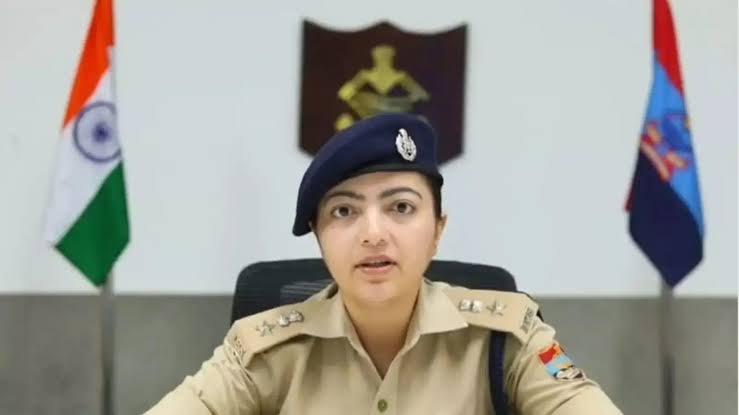
Rachita Juyal, a former Indian Police Service officer of the 2015 batch of the Uttarakhand cadre, passed the UPSC exam on her first attempt. She served as Superintendent of Police (Vigilance). She was born in Dehradun. Her father, B.D. Juyal, was an inspector in the police department, and her grandfather, J.P. Juyal, was also a police officer, who inspired her to join the police service from an early age. She received her primary education from Carbon School in Dehradun, and her higher education, including a BBA and MBA, from a private university. She then began preparing for the UPSC CSE 2014, securing an all-India rank of 215, becoming an IPS officer.During her 10-year tenure, she held several important positions, including Superintendent of Police (Vigilance), and resigned from her post in 2015. She is primarily known for her strict action against corruption and impartial investigations of high-profile cases. Known for her active involvement in social causes and social service, she has been honored several times at the local level for her work during the COVID-19 pandemic and on a regular basis through various NGOs. Her main works: Haridwar Municipal Corporation Land Scam This has been the most controversial case of her career. Rachita Juyal was appointed to lead a five-member special vigilance team formed on the instructions of Uttarakhand Chief Minister Pushkar Singh Dhami. Following an impartial investigation, she suspended two IAS officers, one PCS officer, and approximately 12 other government officials and employees. The investigation resulted in the cancellation of land claims related to the scam and the recovery of any losses to the government treasury. Crackdown on corruption within the police department. While serving as Vigilance Superintendent of Police, she took action against corrupt elements within the police department, catching the Dehradun ISBT outpost in-charge red-handed while accepting bribes and sending him to jail. This strong action was widely discussed in the court circles. Cyber Crime and Safety of Devotees During the Char Dham Yatra, she launched a campaign against cybercriminals who were duping pilgrims from India and abroad under the guise of helicopter tickets and tour packages. Under her direction, the Uttarakhand Police blocked more than 37 fake social media platforms and fake websites that were defrauding devotees by posing as IRCTC. Administrative and Regional Appointments She also served as ADC to the Governor of Uttarakhand, where she handled important protocol and administrative tasks for the Governor. She held the positions of Senior Superintendent of Police (SSP) and Superintendent of Police (SP) in districts like Almora and Bageshwar, where she focused on strengthening local law and order and women’s safety.
Meet Lieutenant Commander Yashasvi Solanki, the First Woman Naval ADC to the President of India
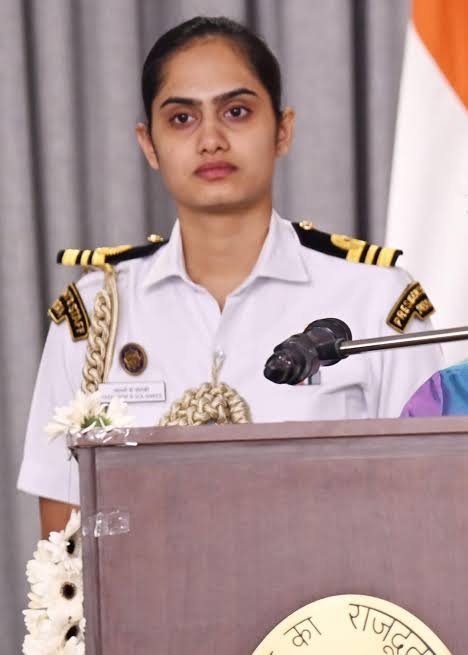
Lieutenant Commander Yashasvi Solanki, currently serving as the Aide-de-Camp (ADC) to the President of India, is the first female officer from the Indian Navy to hold this position. Her appointment is not merely a personal achievement but reflects the evolving role of women and the growing confidence placed in them within the Indian Armed Forces. Early Life and Education Yashasvi Solanki was born into an ordinary family in Haryana. Her father was a government school teacher; consequently, values of discipline, education, and a spirit of service to the nation were instilled in her from childhood. She decided as early as the seventh grade that she wanted to serve the country in uniform. From that moment on, she began aligning her studies and physical training with her goal. During her school days, she was active in sports alongside her academics. She had a particular interest in badminton and participated in numerous competitions. After completing her schooling, she joined the National Defence Academy (NDA). Upon completing rigorous military training, she was selected for the Indian Navy, where she began her career as an officer. Career in the Indian Navy Yashasvi Solanki was commissioned into the Indian Navy in 2012 through the Short Service Commission. She was assigned to the Navy’s Logistics branch, where her duties involved managing military resources, supply chains, administrative coordination, and providing essential support for naval operations. She successfully discharged various administrative and operational responsibilities within the Indian Navy. Her work ethic—characterized by discipline, punctuality, and a strong sense of responsibility—led to her being entrusted with significant duties. It was this outstanding service record that made her a prime candidate for a prestigious role at Rashtrapati Bhavan. Historic Journey to Becoming the President’s ADC In May 2025, Lieutenant Commander Yashasvi Solanki was appointed as the Aide-de-Camp (ADC) to the President of India, Droupadi Murmu. She is the first female officer from the Indian Navy to be appointed to this position. To become an ADC to the President, one must meet several criteria, including an excellent service record, leadership qualities, discipline, and professional competence. The role of an ADC extends beyond merely accompanying the President at formal events; it involves coordinating the President’s military engagements, ensuring adherence to protocol at official ceremonies, facilitating coordination between various military units and the President’s Secretariat, and serving as the President’s military aide at significant domestic and international events. Awards and Honors Her appointment as the first female Naval ADC to the President of India is considered a significant milestone in the history of the Indian Armed Forces and is widely recognized as a mark of honor and distinction.
Major Navya Shekhawat Creates History as First Female Indian Army Officer to Become President’s ADC
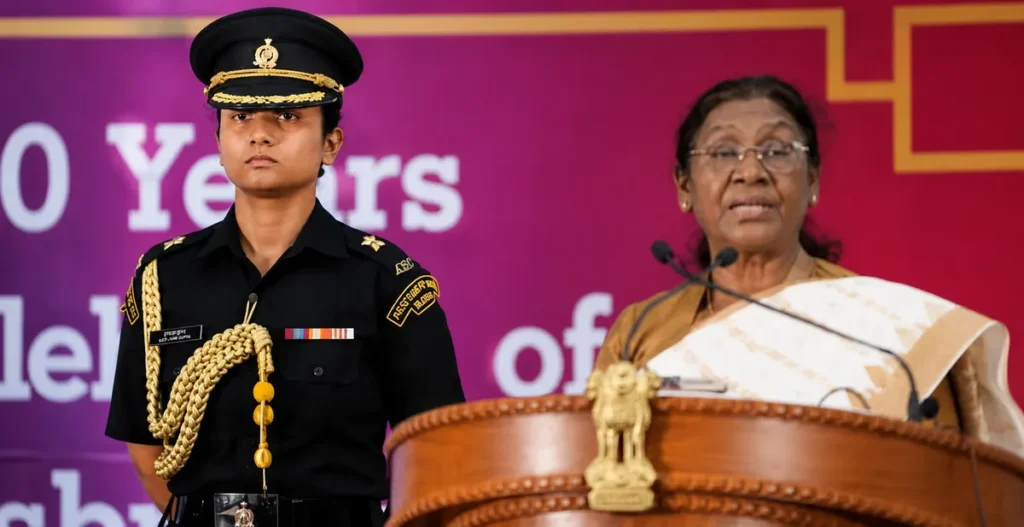
Major Navya Shekhawat is among the select few female military officers who have achieved a historic milestone through their dedication, discipline, and leadership capabilities. She is the first female officer from the Indian Army who has appointed as an Aide-de-Camp (ADC) to the President of India on second week of July 2026. The role of the President’s ADC is not merely ceremonial; it is a prestigious responsibility entrusted to the most trusted and outstanding officers of the Indian Armed Forces. Her achievement is seen as a symbol of the growing participation and leadership potential of women within the Indian Army. Major Navya Shekhawat’s journey of education and military training has been truly inspiring. She cleared the Combined Defence Services (CDS) examination. Subsequently, she was selected under the Short Service Commission and underwent military training at the Officers Training Academy (OTA) in Chennai. Training at the OTA is not just a test of physical endurance; it also fosters leadership, strategic thinking, discipline, and the ability to make decisions under pressure. It was this training that molded Major Navya into a capable military officer. Upon completing her training, Major Navya Shekhawat began her service with the Army Service Corps (ASC). This corps is considered the backbone of the Army’s logistics, handling transportation, fuel, food supplies, and essential military provisions. While discharging these responsibilities, she demonstrated exceptional administrative efficiency, leadership, and organizational skills. Major Navya earned the confidence of senior officers through her competence across all areas and consistently distinguished herself through her performance. A major milestone in her career was reached when she was appointed as the ADC to the President of India. She is the first female officer from the Indian Army to hold this position. The responsibilities of the President’s ADC include the military coordination of the President’s official engagements, representation at ceremonial functions, assistance with various aspects of security arrangements, and duties related to military counsel. Her appointment has become a source of new inspiration for women in the Indian Army. Her success conveys the message that opportunities in the Indian Army today are granted based on talent and capability, irrespective of whether the officer is male or female.
“The Soldier Behind the President: 4 Para SF’s Major Rishabh Singh Sambyal Managing VVIP Protocol”
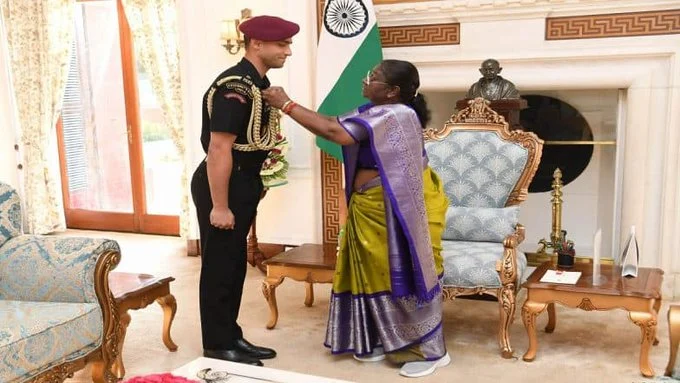
Major Rishabh Singh Samayal is a highly decorated officer of the Indian Army, belonging to the elite Para and Special Forces unit. He currently serves as the ADC to the President of India, Mrs. Draupadi Murmu, and has become a viral internet sensation for his outstanding dedication to duty. Major Rishabh was born into a traditional Dogra family in the Samba district of Jammu and Kashmir, where he completed his primary education and primary schooling at Sainik School Kapurthala in Punjab, where he instilled in him a sense of military discipline and patriotism. He first came into the limelight in 2021 when, as a Captain in the Jat Regiment, he led his contingent in the Republic Day parade, which was awarded the Best Marching Contingent Trophy. He is currently serving as the ADC to the President, one of the most prestigious responsibilities for an Indian Army officer. Major Rishabh Singh Sambyal remains in the news on social media. It is often said that the President treats him like her own son. The ADC’s job is as the personal assistant to the national president, the Governor, or senior military officers. In this role, a deep understanding of discipline and protocol and being vigilant at all times is essential. As ADC, Major Sambyal manages the President’s programs. He also coordinates the President’s travels and official events and ensures compliance with all security and protocol regulations. He also serves as a liaison between the President and various departments. He is always present at important functions. Major Rishabh Singh Shyam Dayal’s Early Military Career Main duties and responsibilities in this VVIP position: Accompanying the President as an ADC on all official engagements, both inside and outside Rashtrapati Bhavan, and maintaining the President’s security schedule and protocol during domestic and foreign visits, state functions, and official meetings. Serving as a Special Forces ADC. Upon completion of his tenure, he will return to his parent unit, where he will conduct the most difficult and secret military operations abroad. Major Awards During the 2021 Republic Day parade, then-Captain Rishabh Singh Samayal led the Jat Regiment contingent on Rajpath. For his excellent marking, coordination, and discipline, the Jat Regiment was awarded the Best Marching Contingent Trophy by Defense Minister Rajnath Singh. This is considered the highest honor for any Para Special Forces commando. It is awarded only to select commandos who become part of the Indian Army’s most demanding Para Special Forces and perform difficult military operations. Other Military Medals
From Engineer to District Magistrate: The Career of IAS Officer Nitin Singh Bhadauria
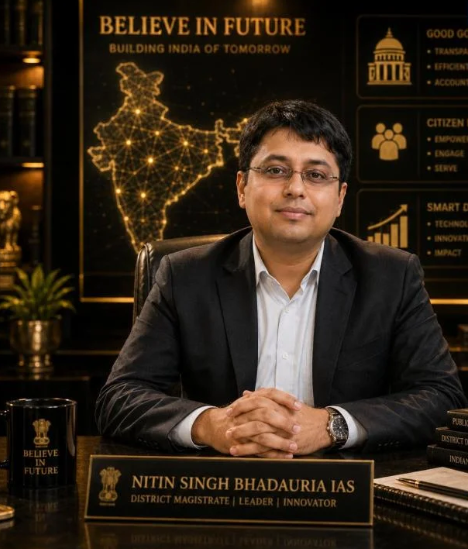
Nitin Singh Bhadauria is an Indian Administrative Service (IAS) officer belonging to the 2011 batch of the Uttarakhand cadre. He was selected as a direct recruit through the Union Public Service Commission’s (UPSC) Civil Services Examination. Although he hails from Uttar Pradesh, he was allocated the Uttarakhand cadre for his administrative service. Currently, Nitin Singh Bhadauria has been serving as the District Magistrate of Udham Singh Nagar since November 30, 2024. This position represents the highest executive authority in district administration, entailing critical responsibilities such as maintaining law and order, effectively implementing development schemes, disaster management, revenue administration, and coordinating between various government departments. His educational background reflects a balanced blend of technical and management studies; he holds both a Bachelor of Engineering (B.E.) degree and an M.B.A. His engineering education has equipped him with analytical thinking and problem-solving capabilities, while his management studies have further strengthened his administrative decision-making, resource management, and leadership skills. Over the course of his administrative career spanning approximately 15 years, he has served in various capacities across different regions of the state. To date, he has held 15 distinct postings and served in seven different locations. This extensive experience has provided him with a comprehensive understanding of the state’s diverse administrative, social, and developmental issues. Currently, Nitin Singh Bhadauria serves at Pay Level-13 of the IAS pay matrix, a position that signifies senior administrative responsibility. Throughout his tenure, he has discharged significant duties related to administrative leadership, policy implementation, and public service across various departments and districts. His work style is characterized by an emphasis on administrative efficiency, coordination, and a result-oriented approach.
Dr. turns IPS Officer, Kunwar Bhushan Singh, leading railway policing in Siliguri
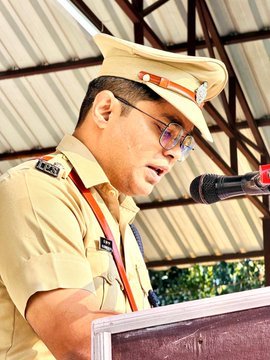
Dr. Kunwar Bhushan Singh is an Indian Police Service (IPS) officer of the 2014 batch, belonging to the West Bengal cadre. He was appointed through direct recruitment via the Civil Services Examination conducted by the Union Public Service Commission (UPSC). He joined the Indian Police Service on December 22, 2014, and hails from Uttar Pradesh. Academically, Dr. Singh has a background in medical science; he holds an M.B.B.S. degree. After completing his medical education, he chose a career in administrative and police services, reflecting a multifaceted educational and professional journey. Since joining the police service, he has held various responsibilities within the West Bengal cadre. Over time, he has undertaken diverse roles involving law and order, administration, and police leadership, thereby continuously broadening his professional experience. He has received two promotions between 2018 and 2026 and has completed 12 years of service, marking his steady professional progression. Currently, Dr. Kunwar Bhushan Singh has been serving as the SRP (Superintendent of Railway Police) in Siliguri since October 3, 2024. In this role, he serves at Pay Level-10, discharging his administrative and operational responsibilities within the West Bengal Police.
From Maharashtra to Uttarakhand: IPS Akshay Konde’s Inspiring Journey of Service and Sacrifice
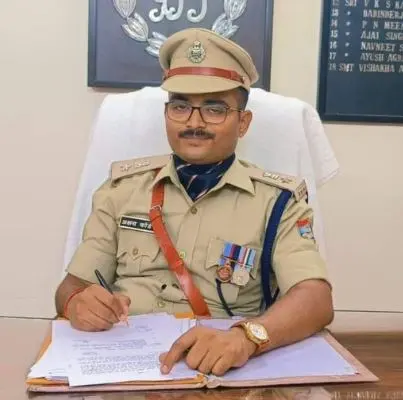
IPS Akshay Prahlad Konde is one of the young and energetic officers of the Uttarakhand Police, having joined the Indian Police Service (IPS) as part of the 2018 batch. He is known for his calm demeanor, professional work style, and a sensitive approach towards law and order. He secured his place in the IPS after clearing the prestigious Civil Services Examination conducted by the Union Public Service Commission (UPSC) and is currently counted among the key officers of the Uttarakhand cadre. Early Life and Education Akshay Prahlad Konde hails from Maharashtra. From childhood, he maintained an interest in understanding society and the administrative system alongside his academic pursuits. He completed both his early and higher education in Maharashtra. The UPSC Journey Akshay Konde cleared the UPSC Civil Services Examination in 2017, leading to his induction into the Indian Police Service (IPS) in the 2018 batch. Initially allotted the Tripura cadre, he was later transferred to the Uttarakhand cadre on the grounds of marriage. This inter-cadre transfer was effected in August 2020 through a notification issued by the Ministry of Home Affairs, Government of India. Police Service Journey After completing his training at the Sardar Vallabhbhai Patel National Police Academy in Hyderabad, he undertook various responsibilities within the Uttarakhand Police. Key responsibilities held during his career include: In every role, he placed special emphasis on maintaining law and order, ensuring road safety, controlling crime, and fostering better communication with the general public. His administrative competence and leadership qualities led to his posting in a district like Rudraprayag, which holds significant religious importance and is considered a sensitive area. Akshay Prahlad Konde’s wife, Akansha Konde (née Akansha Verma), is an Indian Administrative Service (IAS) officer of the 2018 batch, serving in the Uttarakhand cadre. Akshay Konde’s cadre was transferred from Tripura to Uttarakhand following their marriage. Work Style Akshay Konde’s work style reflects a balance between discipline and sensitivity. He views policing not merely as a means to enforce the law, but as a way to build trust within society. His priorities included— His administrative role has been particularly significant in a mountainous state like Uttarakhand, which hosts the Char Dham Yatra and other major religious events.
Kimnei Changsan’s Three-Decade Journey Culminates in IAS Promotion
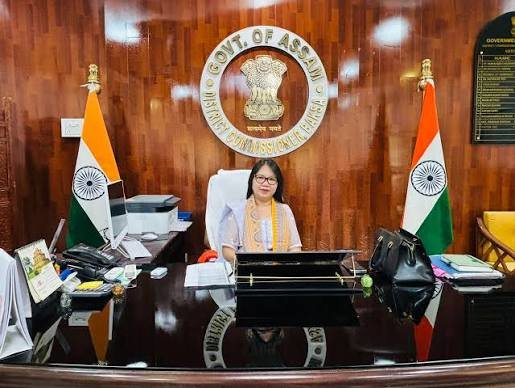
Kimnei Changsan is an Indian Administrative Service (IAS) officer who was inducted into the service through promotion from the Assam Civil Service. Belonging to the Assam-Meghalaya cadre, she is known for her extensive experience in administration. She has held responsibilities in several key departments, including Science and Technology, the Home and Political Department, and district administration. Early Life Kimnei Changsan was born on September 23, 1971, in the Dima Hasao district of Assam. She belongs to a Scheduled Tribe community known as ‘Hill’ (Hill Tribes). She had an interest in education and administrative services from a young age, which led her to choose a career in government service. Education Regarding her education, Kimnei Changsan holds a Bachelor of Arts (B.A.) degree. She began her career with the Assam Civil Service on July 1, 1995. Over an administrative tenure spanning nearly three decades, she has discharged significant responsibilities across various departments. Department of Science and Technology She served as Joint Secretary and subsequently as Additional Secretary in the Department of Science and Technology, Government of Assam. During this period, she was involved in departmental policy-making, administrative coordination, and the implementation of scientific projects. Director, Guwahati Planetarium Kimnei Changsan also served as the Director of the Guwahati Planetarium. In this role, she played a key part in popularizing science, organizing astronomy-related programs, and conducting awareness activities for students. Home and Political Department Since March 2024, she has held responsibilities at the Additional Secretary/Secretary level in the Home and Political Department of the Government of Assam. She has played a significant role in matters concerning law and order, administrative coordination, and policy-related functions within this department. Promotion to the Indian Administrative Service (IAS) In December 2025, the Government of India promoted five officers from the Assam State Civil Service to the Indian Administrative Service (IAS). Kimnei Changsan was included in this list and was allocated the Assam-Meghalaya cadre. She is among the senior officers who attained IAS status through promotion from the State Civil Service (SCS). Current Administrative Responsibilities She was entrusted with a Secretary-level role in the Personnel Department of the Government of Meghalaya. She also underwent administrative training at the Lal Bahadur Shastri National Academy of Administration (LBSNAA). Leadership and Work Style Kimnei Changsan is regarded as a seasoned and composed administrative officer. She has worked in diverse sectors such as Science and Technology, Home Administration, and District Administration. Her work style is characterized by an emphasis on coordination, discipline, and the public interest in administrative decision-making. Kimnei Changsan’s career represents a remarkable journey from the State Civil Service to the Indian Administrative Service. Over a span of approximately 30 years, she has contributed to various facets of governance and administration while serving in different departments. Her experience in Science and Technology, Home Administration, and District Administration establishes her as a capable and experienced administrative officer. Although public information regarding her personal life, detailed educational background, and awards is limited, her administrative contributions are considered significant within the administrative systems of Assam and Meghalaya.
Driving Educational Reform: The Administrative Contributions of Sri Krishnendu Basak
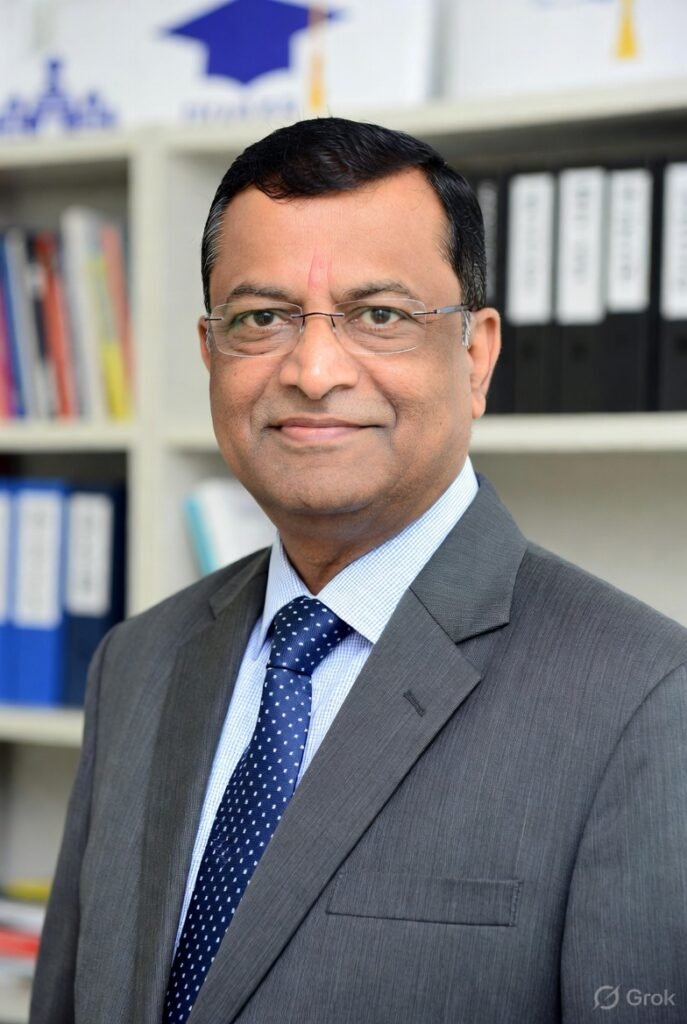
Sri Krishnendu Basak is a senior administrative officer in the Higher Education Department of the Government of West Bengal. He is an officer of the West Bengal Civil Service (Executive) – WBCS (Exe) cadre and has played a significant role in policies, projects, and institutional development related to higher education in the state. His contribution, particularly to the implementation of the Rashtriya Uchchatar Shiksha Abhiyan (RUSA), is considered noteworthy. Early Life and Education Similarly, detailed, government-verified information concerning his schooling, undergraduate and postgraduate studies, or other academic qualifications is not available in the public domain. Therefore, no specific university or degree can be authoritatively cited regarding his education. Administrative Career Sri Krishnendu Basak began his administrative career as an officer of the West Bengal Civil Service (Executive). Over time, he undertook various responsibilities within the Higher Education Department of the Government of West Bengal. He served in the capacities of Officer on Special Duty (OSD) and Ex-Officio Deputy Secretary. In this role, he coordinated administrative tasks, policy decisions, and higher education reform programs concerning the state’s universities and colleges. Role in RUSA One of Sri Basak’s most significant responsibilities involved work related to the Rashtriya Uchchatar Shiksha Abhiyan (RUSA). He served as the Deputy State Project Director. His key responsibilities in this position included: Contribution to the Higher Education SectorSri Krishnendu Basak participated in numerous administrative initiatives aimed at the development of higher education institutions in West Bengal. During his tenure: Key Highlights Shri Krishnendu Basak is an experienced civil servant associated with higher education administration in West Bengal. He is primarily recognized for his administrative leadership within the Higher Education Department and in key government projects like RUSA. Although limited public information is available regarding his personal education, family life, and awards, his administrative role and contributions to the higher education sector are clearly documented in official government records.
Breaking Barriers in Uniform: Captain Shivani Becomes First Female Aide-de-Camp to COAS General Dhiraj Seth
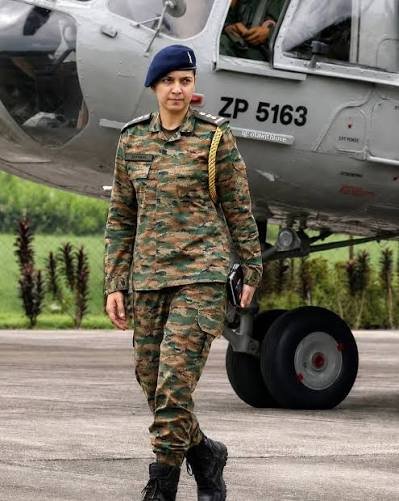
Captain Shivani Sehrawat, a young regular officer in the Indian Army, recently created history by becoming India’s first female ADC (Aide-de-Camp). This historic appointment is considered a major step towards providing greater leadership opportunities to women in the Indian Army based on their merit, professional competence, and credibility. A service chief typically appoints three ADCs, and Captain Shivani is one of these selected officers. She is also the first female ADC to General Dheeraj Seth, who will assume office as India’s 31st Chief of Staff on June 30, 2026. In 2013, Lieutenant Garib Lal Ji became the first female ADC to an Army Command Commander, and Captain Shivani is the first female officer to directly become ADC to a Chief of Staff. Before joining the Army, she earned a bachelor’s degree in Electronics and Communications Engineering and completed rigorous military training at the prestigious Officer Training Academy in Chennai, after which she was commissioned into the Indian Army. Responsibilities of the ADC Position- The ADC serves as the personal staff officer to the Army Commander. Captain Shivani Sehrawat recounts her journey as a young Army officer in the Indian Army before being appointed ADC of the Army.