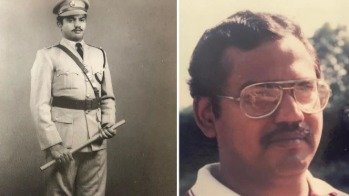
Ajit Kumar Doval currently serves as India’s National Security Advisor. He is widely regarded as India’s “James Bond” and the “Chanakya” of the modern era. Ajit Doval has held the position of National Security Advisor since May 30, 2014, making him the fifth individual to hold this office.
Regarding his early life and education, Ajit Kumar Doval was born on January 20, 1945, in the village of Ghiri Banelsyun in the Pauri Garhwal district of Uttarakhand. His father, Major G.N. Doval, was also an officer in the Indian Army. He received his early education at the Ajmer Military School in Rajasthan and graduated with a degree in Economics from Agra University in 1967.
In 1968, Doval cleared the Civil Services Examination and joined the Indian Police Service (IPS) under the Kerala cadre. Shortly after beginning his career, he was credited with single-handedly restoring peace—without the use of force—during the 1971 communal riots in Thalassery, Kerala, by engaging with local leaders. Subsequently, in 1972, Doval moved to the Intelligence Bureau, shifting his focus from traditional policing to covert operations and counter-terrorism. He played a pivotal role in quelling the insurgency led by the Mizo National Front and successfully reintegrated numerous insurgents into the mainstream. Furthermore, Doval spent several years working undercover, a period that included living clandestinely in Pakistan.
During Operation Black Thunder in 1988, he infiltrated the Golden Temple in Amritsar disguised as a rickshaw puller; this operation helped gather critical intelligence that played an instrumental role in flushing out the terrorists. Additionally, in 1988, Doval became the first police officer to be awarded the Kirti Chakra, an honor recognizing his distinguished record of covert service.
In 1999, Doval was one of the three negotiators involved in the talks for the release of passengers from the hijacked IC-814 aircraft in Kandahar. He was involved in resolving 15 aircraft hijackings involving Indian Airlines that occurred between 1971 and 1999.
In January 2005, Ajit Doval retired from the post of Director of the Intelligence Bureau. Following his retirement, Doval was appointed as India’s fifth National Security Advisor on May 30, 2014. In July 2014, he ensured the safe return of 46 Indian nurses who were held captive in a hospital in Tikrit, Iraq. He is the longest-serving incumbent in this position and a powerful bureaucrat holding the rank of a Cabinet Minister. Strategic Achievements: He played a pivotal role in several major strategic and diplomatic initiatives, such as the 2016 ‘Surgical Strikes,’ the 2019 ‘Balakot Airstrikes,’ and the abrogation of the special status accorded to Jammu and Kashmir.