IAS Swati S. Bhadauria Balances Strict Action with Social Compassion The Multi-Faceted Governance
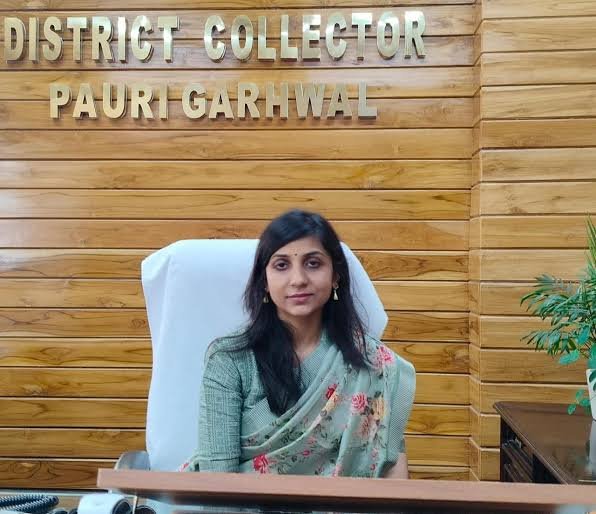
Swati Shrivastava Bhadauria, a 2012 batch Indian Administrative Service officer of the Uttarakhand District, was born on August 23, 1987, in Uttar Pradesh. She successfully passed the Union Public Service Commission’s Civil Services Examination, securing the 74th rank. She currently serves as the District Magistrate of Pauri Garhwal. Since January 2022, she has served as Additional Secretary in the Office of the Governor of Uttarakhand. Previously, she has held positions such as Managing Director, Chief Executive Officer, District Collector, Magistrate, and Joint Secretary. She holds a B.Tech in Electronics from the Uttar Pradesh Technical University and a certificate course in French language from the French University in Dehradun. Before joining the administrative service, she also worked for the Reserve Bank of India for approximately six months. Initially, she served in the Chhattisgarh District, after which she was transferred to the Uttarakhand District in 2015, where she also served as SDM in Mussoorie and Dehradun. She also served as the District Magistrate of Chamoli district from 2018 to 2021, during which she demonstrated commendable transparency and public welfare in the remote areas. In June 2025, in a major reshuffle, she was appointed as the District Magistrate of Pauri district. Swati Bhadoria is known for her transparent work, quick decision-making, and humane approach to connecting directly with the public. Key Works During the Ibhisen Glacier Disaster in Chamoli in February 2021, she was on the front lines, successfully managing relief and rescue operations. Her efficient disaster management, including rescuing workers trapped in a tunnel and promptly delivering aid to affected villages, was praised nationwide. To increase public confidence in the government system, while posted in Chamoli, she enrolled her son in a local Anganwadi center instead of an expensive private school. Her simple gesture made headlines nationwide and set a unique example of breaking the VIP culture. She initiated the Panch Badri Prasadam project, employing local self-help groups to prepare official Prasadam containing incense sticks and holy water, using locally sourced herbs to make them self-reliant. She also implemented the Bachpan project, advocating for the modernization and equipping of Anganwadi centers for the nutrition and better mental development of her fellow children. In 2026, during the intense heat wave in Pauri district, she conducted a surprise inspection of the Water Supply Department office following complaints of water shortages. She immediately took strict action against a fellow junior engineer for resting at home while on duty, leading to a resentment among the entire staff. Considering the difficult geographical conditions of the mountainous region, she strengthened the digital complaint tracking system and the CM Helpline Monitoring Cell so that villagers do not have to rush to the district headquarters for minor problems. Awards and Honors While serving as District Magistrate in Chamoli, she effectively implemented river conservation, plastic waste management, and cleanliness campaigns at the grassroots level under the “Namami Gange Mission” and was honored by the Central Government with the country’s most prestigious award in the field of public administration. To empower women in Uttarakhand and strengthen self-help groups, she initiated the “Panch Badri Prasadam project”, which improved the income of hundreds of local women.
DM Gaurav Kumar Swiftly Defused the Karnaprayag Crisis..
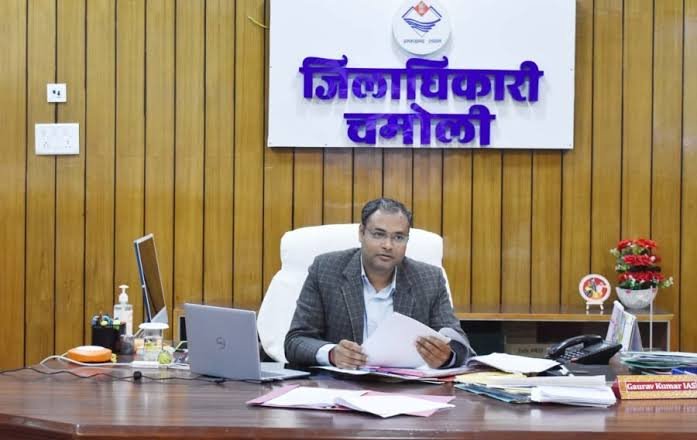
IAS Gaurav Kumar is currently serving as the District Magistrate of Chamoli district in Uttarakhand. He assumed office on October 12, 2025. Prior to this, he served as the Block Development Officer and Additional Secretary of August Muni. He is known for his ground-level understanding, result-oriented work style, and sensitive administrative approach. He was born on December 3, 1985 in Uttar Pradesh. He holds a BSc and MSc in Physics from Chaudhary Charan Singh University, Meerut. He also completed a Master of Arts in Organizational Management from Jawaharlal Nehru University between 2017 and 2019. After clearing the UPSC Civil Services exam, he worked for over 10 years as a Health Physicist at the Nuclear Power Corporation of India Limited in Rawatbhata before joining the Uttarakhand Kadar 2017 batch. Acclaimed Career and Key Positions Experienced in revenue, judicial, and regulatory functions early in his career. He received considerable local acclaim for his outstanding development work at the grassroots level. Before becoming the District Magistrate of Chamoli, he served as Additional Secretary in various state-level policy-making departments. Officially assumed the position of District Magistrate of Chamoli on October 12, 2025. Key Tasks In June 2026, when tensions arose between two groups over a parking dispute in Karanprayag, he immediately invoked Section 163 of the CrPC before the situation escalated. He also took strict measures to prevent any religious or communal comments on social media and restored harmony in the area by convening a peace committee. He is also known for directly inspecting work in the field. In January 2026, he conducted a foot and field inspection of the beautiful Niti Valley along the China border, where he directly interacted with local villagers amid snowfall and difficult conditions, addressing their problems on the spot. He has strengthened infrastructure in the hilly and strategically important district of Chamoli and has established direct coordination with local displaced families and officials to resolve pending issues related to infrastructure, roads, and power transmission projects like Pitkul in the district. Chamoli district is highly vulnerable to disasters and is home to the famous Badrinath Dham and Hemkund Sahib. During the pilgrimage season, he personally monitors the safety of pilgrims, traffic management, and the disaster control room. Awards and Honors Recognized for his outstanding work in implementing rural development schemes and ensuring effective groundwork while serving as Block Development Officer in August Muni Block, Rudraprayag district. Special recognition from the public for personally touring the Niti Valley on foot in sub-freezing temperatures to address local residents’ problems on the spot.
Independent India’s first female IAS officer created history by defying stereotypes : Anna Rajam Malhotra
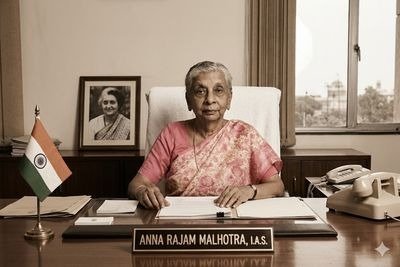
Anna Rajam Malhotra was the first Indian woman to join the Indian Administrative Service, serving as an IAS officer of the 1951 batch. She was born on July 17, 1927, in Kerala. She received her early education in the Ernakulam district of Kerala and earned a Master’s degree in English Literature from the University of Madras. After passing the Civil Services Examination in 1950, the interview board advised her to choose foreign or central services, citing it as difficult for women. However, she remained adamant and chose the latter. Her appointment letter also included a condition stating that she would have to leave the post upon marriage. She believed this position was not suitable for women, but she remained confident in her victory. Madras Chief Minister C. Rajagopalachari, instead of giving her charge of a district, posted her directly to the Madras Secretariat, where she worked with seven Madras Chief Ministers. She also played a key role in organizing the 1982 Asian Games. It was under her leadership that the country’s first computerized container port was built in Mumbai. She was married to former RBI Governor Ran Malhotra. During her illustrious administrative career spanning 40 years, she accomplished many landmark milestones for the country’s development. She was responsible for the construction and launch of India’s first fully modern and computerized container port, Nhava Seva, near Mumbai. As its chairperson, she successfully completed this landmark infrastructure project, for which she was awarded the Padma Bhushan in 1989. She worked closely with then-MP Rajiv Gandhi to ensure the success of this major global event, overseeing all the logistical and financial preparations for the 1982 Asian Games held in Delhi. Strengthened the country’s agricultural systems by serving as Chairperson of the National Seeds Corporation and also toured eight states to review food production with former Prime Minister Indira Gandhi. She was the first woman in the country to hold the position of Secretary in the Ministry of Education and Culture of the Government of India. She worked closely with seven different Chief Ministers in several important departments such as Agriculture, Revenue, and Public Administration under the Government of Madras. She also represented the country as Executive Director of India at the International Monetary Fund in Washington, D.C. Major Honours The Padma Bhushan was a civilian award bestowed upon her by the Government of India in 1989, specifically for her contributions to the country’s administrative sphere and for successfully completing the modern Jawaharlal Nehru Port Project in Mumbai. Furthermore, the distinction of becoming the first woman IAS officer of independent India is a major historical honor, opening the doors of the civil services for millions of Indian women to come.
From District Administration to Chief Secretary: The Journey of Dr. M. Sai Kumar
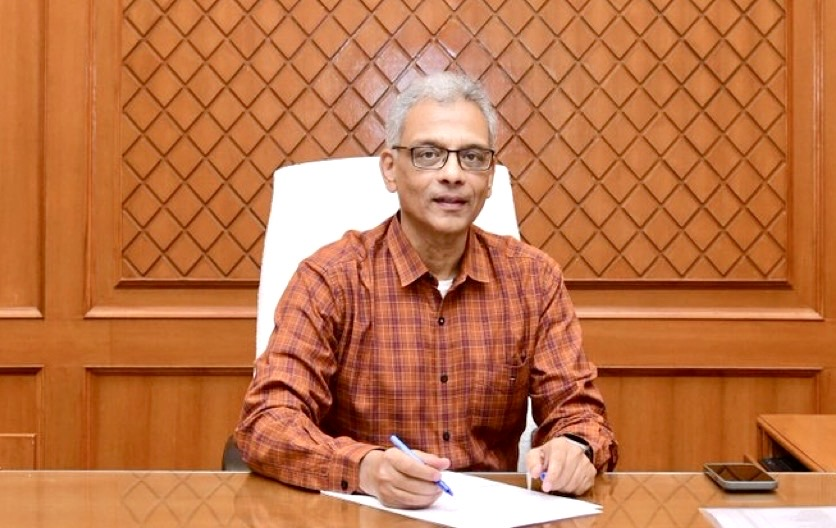
Dr. M. Sai Kumar is the Chief Secretary of the Tamil Nadu government and an Indian Administrative Service (IAS) officer of the 1990 batch. Hailing from Andhra Pradesh, Dr. Sai Kumar assumed the state’s highest administrative office in April 2026. In July 2026, the Central Government approved a six-month extension of his tenure, enabling him to discharge his duties as Chief Secretary until February 28, 2027. Education Dr. Sai Kumar possesses a strong academic background. He completed his M.A. in Political Science, subsequently earning M.Phil. and Ph.D. degrees. Throughout his administrative career, he has consistently participated in training and leadership development programs, including specialized courses at institutions such as the Lal Bahadur Shastri National Academy of Administration (LBSNAA), the Administrative Staff College of India (ASCI), and the Sri Sathya Sai Central Trust. Career Spanning an administrative career of over three decades, he has served in various key districts and departments across Tamil Nadu. In his early years, he held positions such as Assistant Collector and Additional Collector, and later served as the District Collector of Dharmapuri and Virudhunagar. His experience in district administration provided him with a deep understanding of grassroots governance, rural development, and public service delivery. Subsequently, he held several significant positions, including roles in Municipal Administration, the Public Works Department (PWD), and the Tamil Nadu State Marketing Corporation (TASMAC), as well as serving as the Chairman and Managing Director of the Tamil Nadu Electricity Board (TNEB) and TANGEDCO. His expertise in the management of energy, infrastructure, urban administration, and public sector undertakings is highly valued within the state administration. As Secretary-I in the Chief Minister’s Office and later as the Additional Chief Secretary of the Revenue Administration and Disaster Management Department, he spearheaded critical initiatives related to policy formulation, administrative reforms, and disaster management. He played a pivotal role in fostering coordination between the state government and various departments, a contribution that led to his appointment to the highest administrative post of Chief Secretary. Regarding awards and honors, available public records do not mention any major national or state-level individual award conferred upon Dr. M. Sai Kumar. However, he is recognized as a seasoned, composed, and result-oriented administrator. The state government has consistently demonstrated confidence in his administrative acumen and leadership capabilities by entrusting him with the responsibility of critical departments. Today, Dr. M. Sai Kumar is at the helm of the Tamil Nadu bureaucracy. As Chief Secretary, he plays a pivotal role in areas such as the implementation of state government policies, inter-departmental coordination, the oversight of budgets and development schemes, and disaster management. His extensive experience, strong academic background, and diverse administrative responsibilities have established him as one of Tamil Nadu’s most senior and influential civil servants.
DM Mahender Pal’s Roadmap for Fair Municipal Elections in Hisar
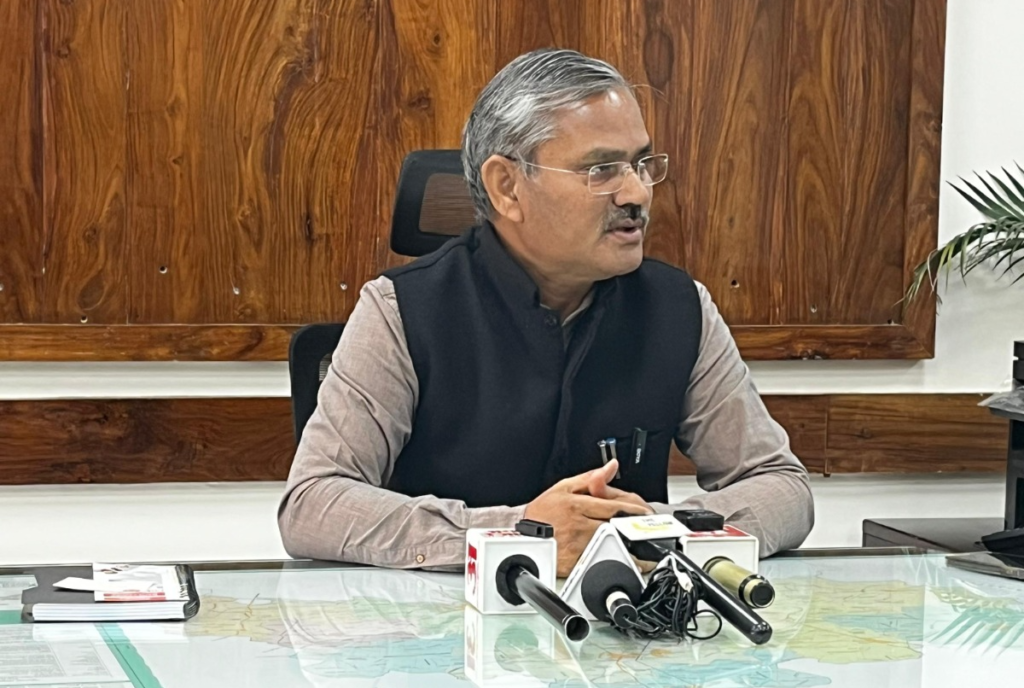
Mahendra Pal is an Indian Administrative Service officer currently serving as the Deputy Commissioner of Hisar district in Haryana. He is a 2017 batch IAS officer of the Haryana cadre, promoted from the State Civil Service to the IAS rank. He has been serving as the Deputy Commissioner of Hisar since November 30, 2025. He graduated with a degree in History and also holds a Master of Science degree in the subject. This master’s degree in both humanities and science provided him with a strong academic foundation for entering the administrative service. He has also led several notable development and law and order initiatives. Key Tasks He focused on ensuring that public grievances were resolved transparently and without delay. He also issued directives to provide relief to ordinary citizens by eliminating the need to repeatedly visit government offices for their work. He ensured timely completion of ongoing infrastructure projects in Hisar, such as roads, electricity, water, and civic amenities. He also regularly reviewed pending government projects and schemes, helping to expedite their completion. He instructed officers across all departments to work in a team spirit and be sensitive to public concerns. He also outlined a framework for each commendable officer to understand their responsibilities and implement government schemes at the grassroots level. As the District Chief, he worked to ensure better coordination between the Army and the local administration to resolve issues related to the welfare of soldiers, veterans, and the general public. He also worked with the District Police Administration, Mrs. Siddhant Jain, IPS, to maintain peace throughout Hisar district. Administrative officers typically receive awards for their efforts in specific civic reforms, election management, and grassroots implementation of government schemes. Major Awards Honors
SSP Ajay Singh Initiated Financial Inquiries Against Dehradun’s Drug Mafia..
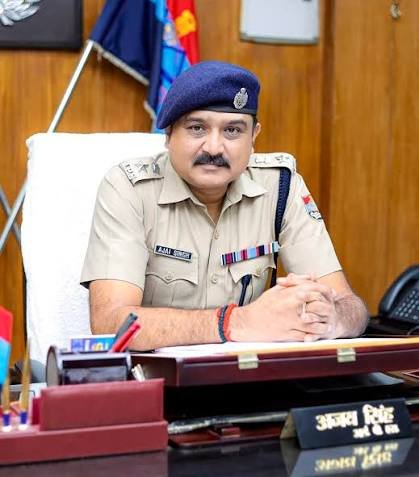
Ajay Singh is a 2014 batch Indian Police Service officer of the Uttarakhand cadre. He currently serves as the Senior Superintendent of Police of the Uttarakhand Special Task Force. He previously served as the Superintendent of Police of Dehradun from September 2023 to February 2026. In 2018, he was promoted from the State Police Service to the IPS. In February 2026, the Uttarakhand government transferred 20-year-old police officers to strengthen law and order. As part of this reshuffle, Ajay Singh was assigned to the STF, and IPS officer Parminder Singh Doval was appointed the new SP of Dehradun. Regarding his schooling, he completed his intermediate education in his home state. After obtaining an engineering degree, he passed the Provincial Police Service exam and joined the police force as a Deputy Superintendent of Police in 2005. Based on his excellent work and experience, he received a promotion in 2018 and was allocated the 2014 batch IPS cadre. Major Tasks During his previous tenure with the Special Task Force (STF), he exposed the Uttarakhand Subordinate Services Selection Commission (SSSC) recruitment exam scam. Under his leadership, the STF took a tough stand in this high-profile case, arresting and jailing over 54 accused of cheating mafia. While serving as the Superintendent of Police (SP) of Dehradun and Haridwar, he launched major campaigns such as the Drug Trust and surgical strikes against the sale of illegal narcotics at medical stores, under the Chief Minister’s vision of a Drug-Free Devbhoomi. He also organized a Saturday Chaupal in police stations to gather direct feedback from the public and dismantle the drug network by keeping the names of complainants confidential. After taking charge of Dehradun, he initiated operations, conducting extensive checking to apprehend all criminals and suspects who had come from other states without verification or with fake documents. He took strict action against land fraud and active land mafias and provided relief to those affected by illegal encroachments. He emphasized the need for a friendly police attitude towards the general public by ensuring prompt hearing of complaints at police stations. He was also honored with the FICCI Smart Policing Award in New Delhi for his efforts in excellent policing and traffic improvement. Honors and Awards He was specially honored by the State Government and the Chief Minister with the Chief Minister’s Meritorious Service Medal for his historic and impartial action as the Chief of the Special Task Force (STF) in the Uttarakhand Subordinate Services Selection Commission paper leak and recruitment exam scam.
Meet Bijnor SDM Ritu Rani: The MBA Graduate Who Secured AIR 34 in UPPCS 2019
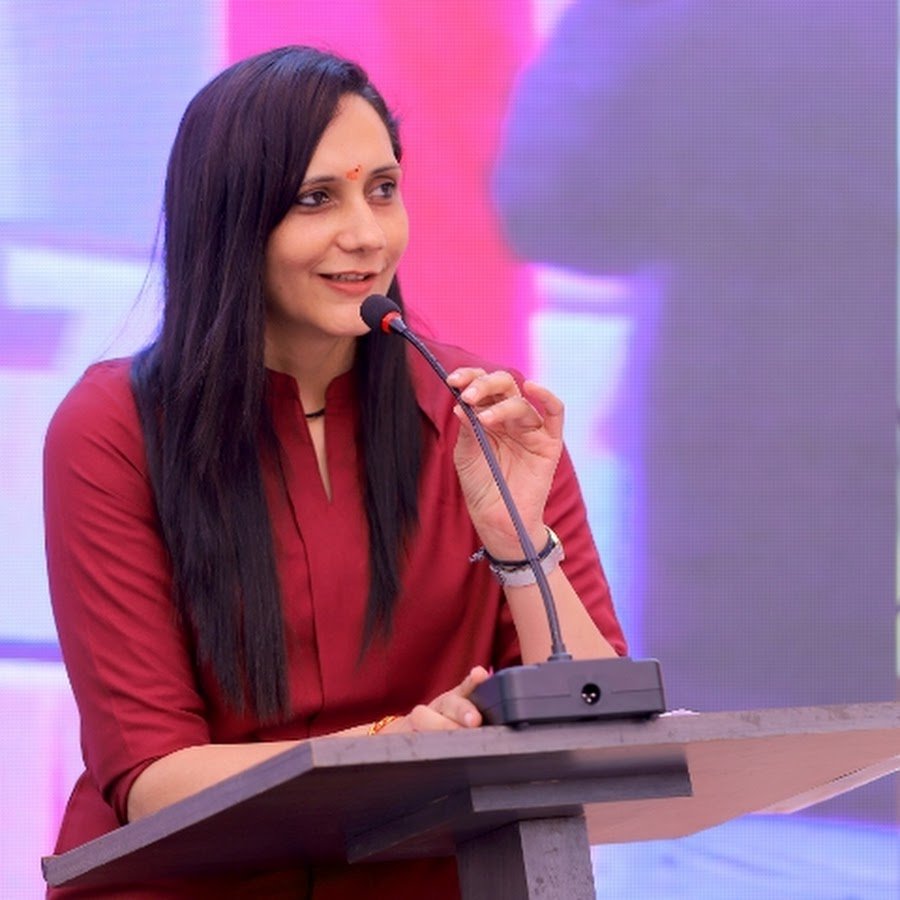
Ritu Rani is a renowned UP Provincial Civil Services (UPPCS) officer who secured the 34th rank nationwide in the 2019 UPPCS examination. She currently holds the position of Sub-Divisional Magistrate (SDM) in Bijnor. Hailing from a modest family in the Muzaffarnagar district of Uttar Pradesh, she is the daughter of a farmer who aspired to see his daughter become an officer. Ritu Rani is among the female officers of the Uttar Pradesh administrative service who have strived to discharge their administrative responsibilities with both sensitivity and discipline. Her work clearly demonstrates that administration is not limited merely to executing government orders; maintaining a continuous dialogue with various sections of society is also a crucial component of the role. Regarding her education, she completed an MBA before beginning her preparation for government examinations, eventually being selected for the Uttar Pradesh administrative service in 2021. Following her selection, Ritu Rani has fulfilled various administrative duties. Her key responsibilities as the SDM of the Dhampur Tehsil in Bijnor district have included: Currently serving as the SDM of Bijnor, Ritu Rani does not limit herself to office-based tasks; she also actively participates in various social and educational programs. While honoring female students at NSS events, she has encouraged the youth to engage in social service and become responsible citizens. Additionally, she has spoken at numerous schools and universities, emphasizing the importance of education, discipline, and goal-setting to students. She has also contributed to environmental conservation by participating in tree-planting drives, urging people not only to plant saplings but also to nurture them. SDM Ritu Rani made headlines in 2025 after receiving a death threat along with a demand for ₹15 lakh in extortion money. An unidentified individual issued the threat to her official mobile number. Following the incident, the police registered a case and launched an investigation, identifying the accused as a resident of Hyderabad; he was subsequently arrested.
Jasjit Kaur IAS : From UPSC Aspirant to Bijnor District Magistrate
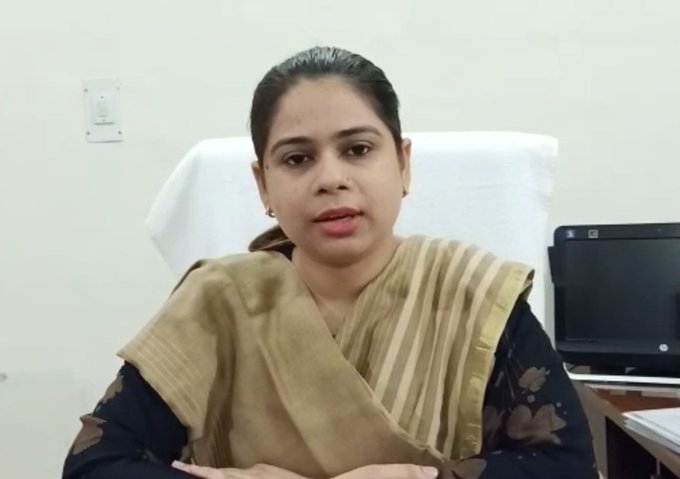
Born on October 14, 1984, Jasjit Kaur is an Indian Administrative Service (IAS) officer of the 2012 batch (Uttar Pradesh cadre). Known for her calm, sensitive, and result-oriented administrative approach, she has made significant contributions to good governance, development, and public service while discharging key responsibilities across various districts and departments. Education Jasjit Kaur possesses a multifaceted educational background. She pursued her Bachelor of Science (B.Sc.) in Economics from Guru Nanak Dev University (GNDU), Amritsar. Her understanding of economics provided her with a strong foundation in areas such as public policy, development schemes, and resource management. Subsequently, she obtained a Post Graduate Diploma in Computer Science from the University of Madras, Tamil Nadu. This education in information technology helped her develop an understanding of digital administration, e-governance, and the effective use of modern technologies. She also pursued her early higher education at BBK DAV College for Women, Amritsar, which played a pivotal role in shaping her academic and leadership skills. After successfully clearing the prestigious Civil Services Examination conducted by the Union Public Service Commission (UPSC), Jasjit Kaur was allocated the Uttar Pradesh cadre in the 2012 batch. Following her training, she served in various significant positions across the state’s districts and administrative departments. Administrative Career She began her administrative career as a Joint Magistrate, gaining practical experience in law and order, revenue administration, and development activities. Later, as Chief Development Officer (CDO), she played a crucial role in the effective implementation of schemes related to rural development, MGNREGA, sanitation, women’s empowerment, education, and health. Subsequently, she discharged policy-related and administrative responsibilities across various departments of the state government in the capacity of Special Secretary. Additionally, while serving as District Magistrate & Collector in various districts, she spearheaded efforts to maintain law and order and oversaw disaster management, the successful conduct of elections, revenue administration, investment promotion, and the effective implementation of public welfare schemes. Since January 16, 2025, she has been serving as the District Magistrate & Collector of Bijnor, Uttar Pradesh. In this role, she holds overall responsibility for the district’s administration, development projects, citizen services, law and order, and the implementation of government schemes. Under her leadership, special emphasis has been placed on making the administration more transparent, accountable, and citizen-centric. Jasjit Kaur is regarded as an officer who strikes a balance between sensitivity and discipline in administration. She places particular focus on regular public grievance hearings, field inspections, time-bound problem resolution, and inter-departmental coordination. She has been actively involved in sectors such as education, health, women and child development, rural infrastructure, sanitation, and digital governance. Jasjit Kaur is proficient in Hindi, English, and Punjabi. Her multilingual ability enables her to communicate effectively with people from diverse social and cultural backgrounds. According to publicly available reliable records, there is no official confirmation of Jasjit Kaur receiving any specific national or state-level individual award. However, her successful discharge of administrative duties, commitment to good governance, effective implementation of development works, and dedication to public service have earned her a reputation as a capable, honest, and impactful administrative officer. Jasjit Kaur is currently active in the Indian Administrative Service (IAS) and is leading the administrative and developmental initiatives of the Uttar Pradesh government as the District Magistrate & Collector of Bijnor. Her administrative journey is considered an inspiring example of dedication, transparency, public interest, and effective governance.
Haridwar DM IAS Mayur Dixit: AIR 11 in First UPSC Attempt, IIT-IIM Background
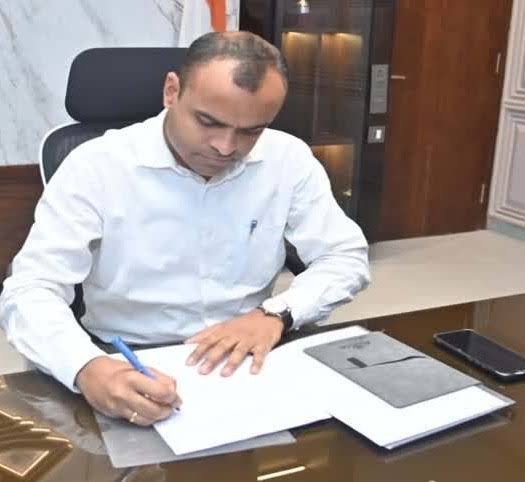
Mayur Dixit, a 2013-batch IAS officer of the Uttarakhand cadre, is currently serving as the District Magistrate (DM) of Haridwar. He secured All India Rank 11 in the UPSC Civil Services Examination in his very first attempt. Believing that a good education and one’s capabilities could best be utilized in the service of the people, he was drawn to the civil services. Born on March 12, 1987, Mayur Dixit hails from Rajasthan. He was an exceptionally bright student throughout his childhood. His wife, Pragya Dixit, is a social entrepreneur and the founder of the ‘Pragya Foundation.’ Her organization works to raise awareness about menstrual hygiene and bring about positive changes in the lives of women. Education: Mayur Dixit’s academic achievements are also highly inspiring. He completed his B.Tech in Mechanical Engineering from IIT Kanpur, securing the top position in his discipline. Subsequently, he completed his PGDM from IIM Bangalore. Despite receiving his education from two of the country’s premier institutions, he chose the path of public service over a corporate career. In 2013, he cleared the UPSC examination in his first attempt, securing AIR 11. His success was driven not only by hard work but also by clear goals and a firm resolve to contribute to society—a mindset that remains evident in his administrative work today. Throughout his administrative career, Mayur Dixit has shouldered several significant responsibilities. He has served effectively as an Assistant Secretary in the Ministry of Health and Family Welfare; Joint Magistrate in Haridwar and Roorkee; Chief Development Officer in Almora and Udham Singh Nagar; and District Magistrate of Uttarkashi, Rudraprayag, and Tehri Garhwal. He is currently the District Magistrate of Haridwar. Awards: He has been honored with several prestigious awards during his tenure. In 2019, he received the National Water Award, the National Award from the Ministry of Rural Development, and the Chief Minister’s Award for Excellence and Good Governance from the Government of Uttarakhand. In 2020, he was once again honored with the Chief Minister’s Award for Excellence and Good Governance, while in 2022, Haridwar received recognition as a top-performing district from the National Commission for Protection of Child Rights (NCPCR). In 2023, his efforts to foster effective collaboration with startups were also lauded under the Digital India Awards. Prior to this, in 2015, he received the prestigious Subhash Dua Memorial Gold Medal from LBSNAA and a Health Economics e-learning certification from the World Bank Group. His journey demonstrates that through the administrative service—backed by a solid education, a clear sense of purpose, and sincere effort—one can bring about real change in society.
Navneet Singh Bhullar IPS: Strengthening Law Enforcement in Uttarakhand
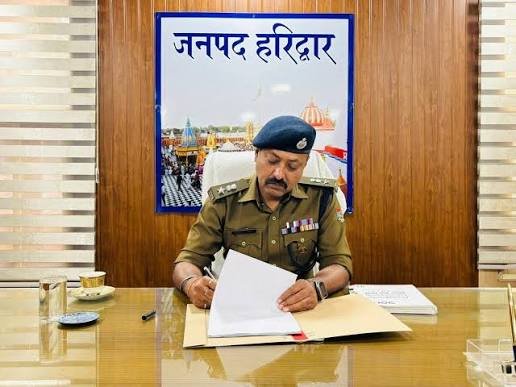
Navneet Singh Bhullar is a senior Indian Police Service (IPS) officer currently serving as the Senior Superintendent of Police (SSP) for the Haridwar district in Uttarakhand. He has established a strong reputation within the state police force due to his administrative acumen, ability to maintain law and order, and effective approach to crime control. His posting in a district as religiously significant and sensitive as Haridwar is considered a testament to his administrative competence and experience. Early Life and Education Detailed official information regarding Navneet Singh Bhullar’s schooling and higher education is not publicly available; therefore, no verified claims can be made about the specific schools, universities, or academic qualifications he attended or holds. However, according to available government records, he is an IPS officer belonging to the Uttarakhand cadre. He became an IPS officer of the 2015 batch through promotion from the State Police Service and was formally inducted into the Indian Police Service in 2019. Police Service Career Navneet Singh Bhullar has held various significant responsibilities within the Uttarakhand Police. Throughout his tenure, he has made notable contributions to law and order, crime control, public safety, and police administration. His key postings include— Senior Superintendent of Police (SSP), Tehri GarhwalSenior Superintendent of Police (SSP), Special Task Force (STF), UttarakhandSenior Superintendent of Police (SSP), Haridwar Upon assuming charge in Haridwar, he made it clear that there would be zero tolerance for drug trafficking, organized crime, or compromises regarding law and order. His priorities have included ensuring the security of religious sites, preparing for major upcoming events, and launching special campaigns to protect the youth from drug abuse. Administrative Style Bhullar is regarded as a disciplined, pragmatic, and result-oriented police officer. Key features of his working style include— Awards and Honors According to available official records, Navneet Singh Bhullar was awarded the ‘Police Medal for Meritorious Service’ in 2023. This honor is conferred for outstanding and dedicated police service. Current Responsibilities Currently, Navneet Singh Bhullar serves as the Senior Superintendent of Police (SSP) for the Haridwar district in Uttarakhand. Haridwar is one of the country’s major religious cities, attracting millions of pilgrims annually. In such a district, responsibilities—such as maintaining law and order, managing traffic, ensuring security for religious events, and controlling crime—are of paramount importance, and he is leading these efforts. Navneet Singh Bhullar is regarded as an experienced and responsible IPS officer within the Uttarakhand Police. His journey from the state police service to the Indian Police Service reflects his administrative acumen and dedication. His contributions toward crime control, anti-drug campaigns, and the maintenance of law and order are considered noteworthy. The Uttarakhand Police looks forward to continued effective leadership from him in the future.